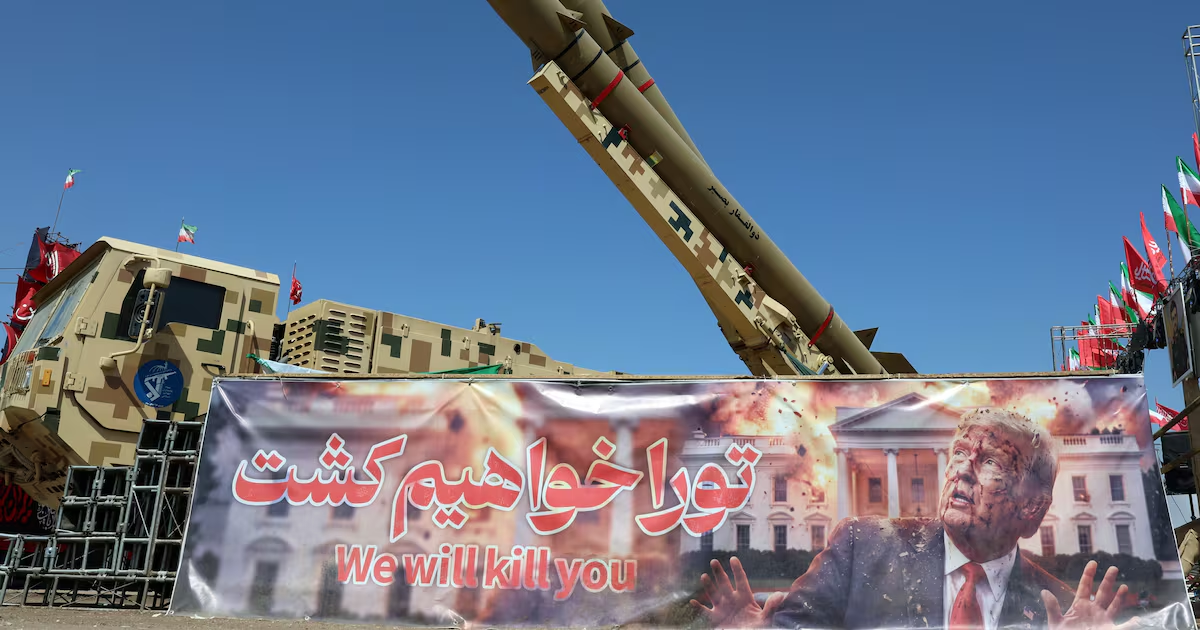
Iran has reportedly rejected the latest pressure campaign from the United States under President Donald Trump, according to former Iranian officials. The rejection comes amid heightened tensions between the two nations over nuclear capabilities and regional influence. Tehran has indicated its readiness to retaliate against any U.S. military action, escalating military deterrence in the region. This development follows a series of direct warnings from both sides, with the U.S. threatening strikes on Iranian infrastructure and Iran vowing to target U.S. military bases.
The current geopolitical tension has impacted prediction markets concerning the U.S. blockade of Iran. As of now, the market for the U.S. announcing the end of the Iranian blockade by August 31, 2026, remains at 55% YES. However, the latest developments suggest a decrease in the likelihood of a resolution before this date, as market participants interpret Iran’s defiant stance as decreasing the probability of de-escalation. The August 15, 2026, sub-market has seen a drop from 40% to 34.5% YES, reflecting these tensions.
Meanwhile, markets on the potential inclusion of Iran Reconstruction Funding in a U.S.-Iran deal in 2026 show a slight increase in YES odds, currently priced at 33.5%. This suggests some optimism remains for a diplomatic resolution, albeit tempered by the recent escalatory rhetoric.