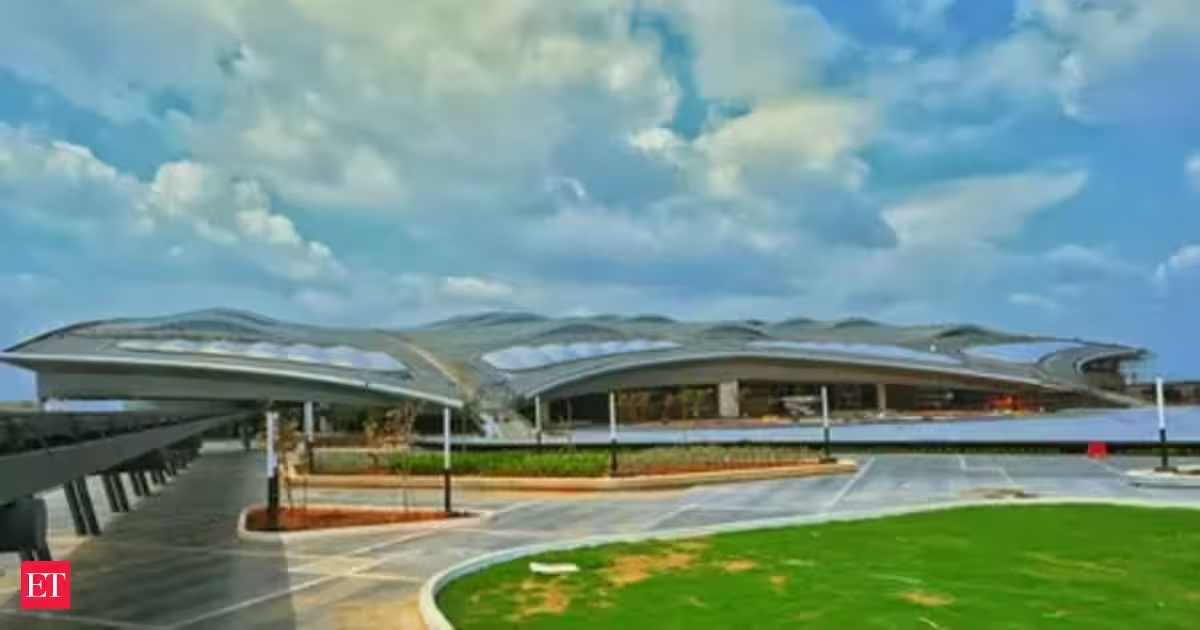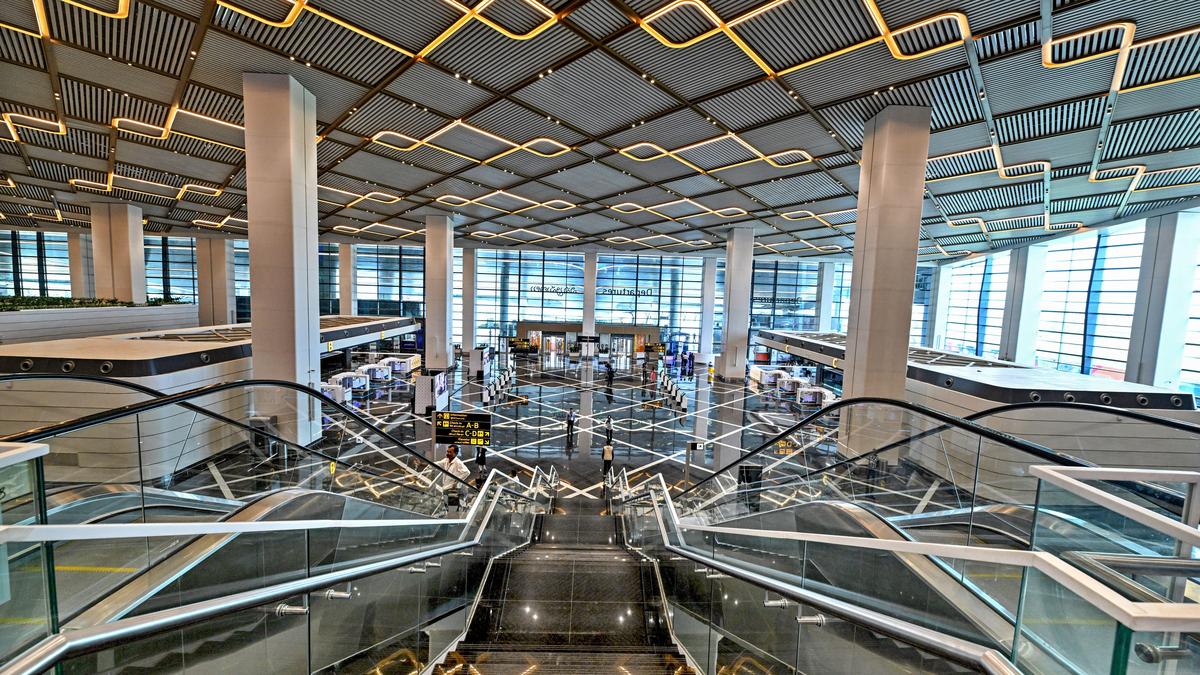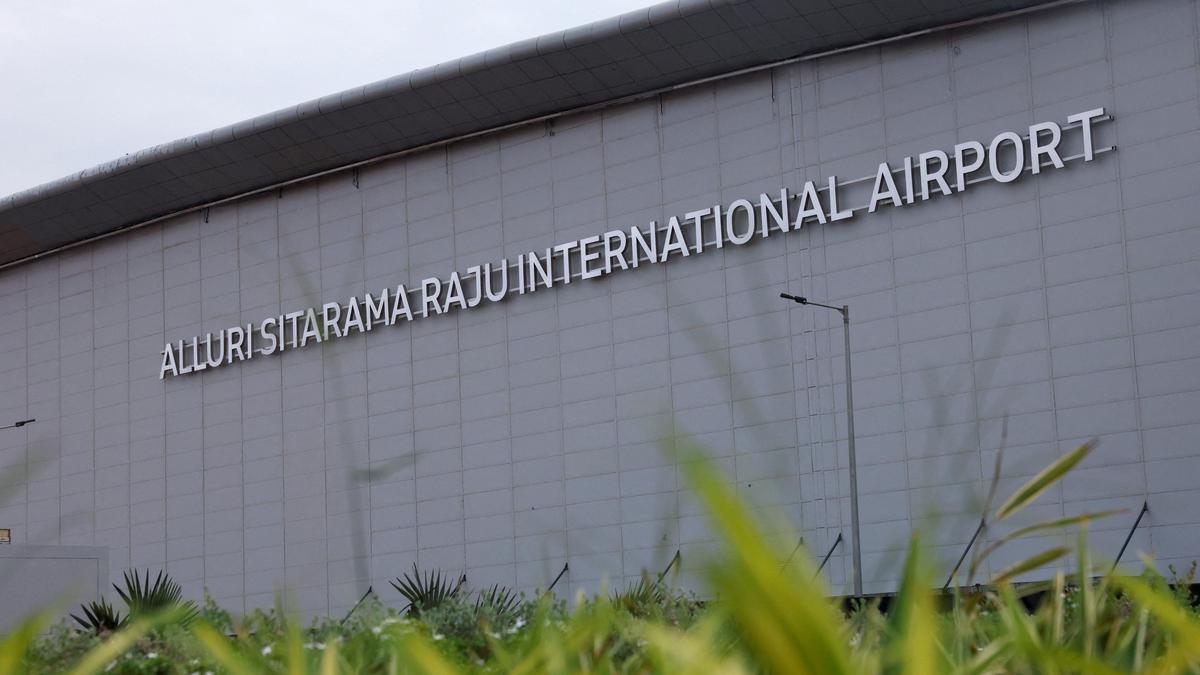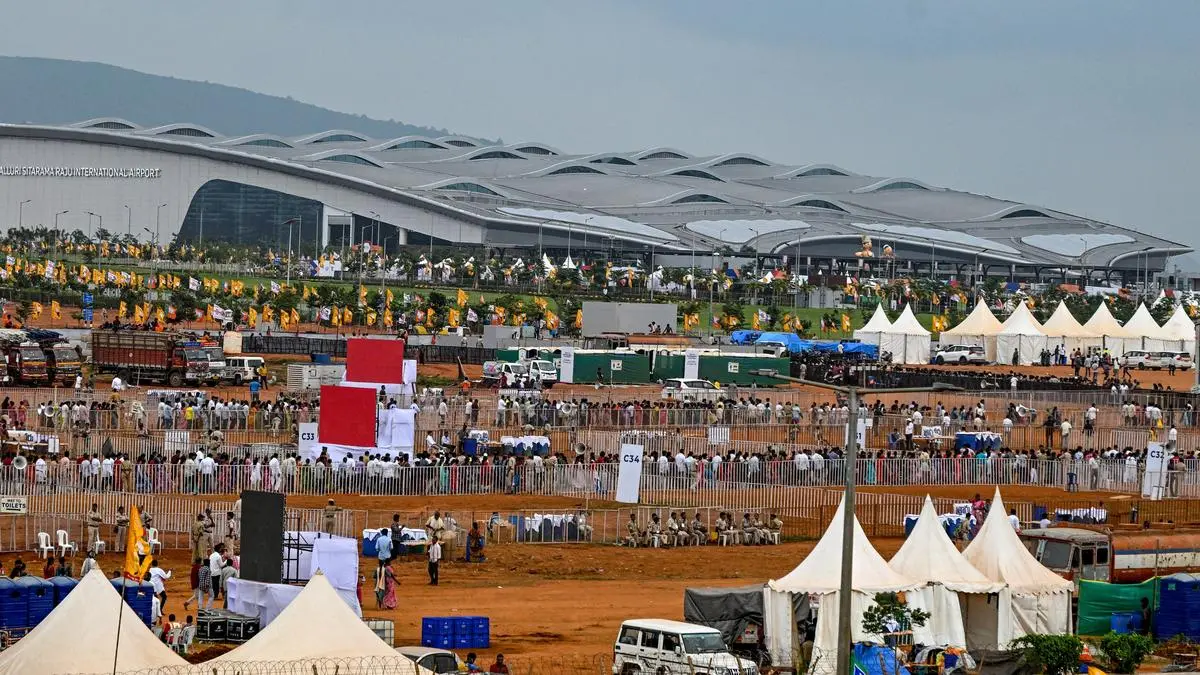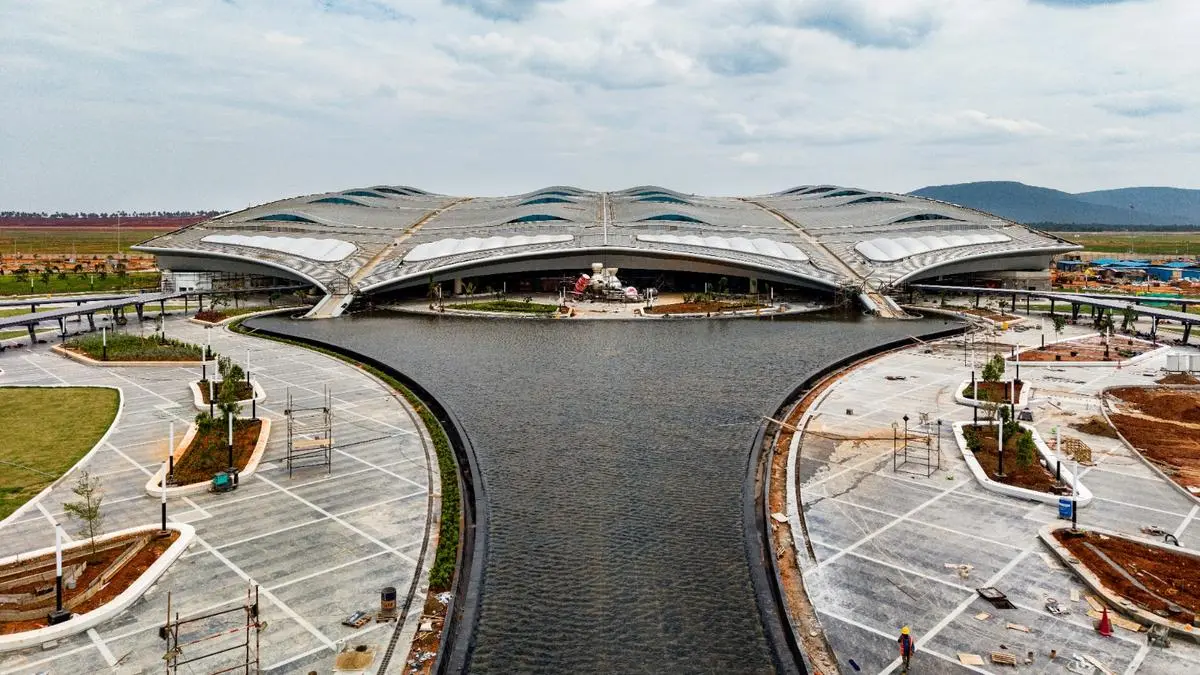
The facade of Bhogapuram airport
The newly inaugurated Alluri Sita Ramaraju International Airport at Bhogapuram is expected to reach its designed capacity of handling six million passengers annually within the next four to five years, driven by rapid economic growth, tourism and cargo demand in the Visakhapatnam region, according to GMR Group.“The Visakhapatnam region is developing rapidly and has tremendous potential for passenger traffic because of industrial growth, tourism and cargo,” I. Prabhakar Rao, Deputy Managing Director, GMR Group, told businessline. .The second phase of expansion of the airport would commence immediately after the passenger traffic reaches five million. The airport has been designed to scale up capacity to 40 million over next few decades.The greenfield airport, inaugurated on August 1, will commence commercial operations from August 17. Rao said all flight operations from the existing Visakhapatnam airport would be seamlessly shifted to the new facility.He said the airport is expected to attract domestic and international travellers from North Andhra who currently use other airports for overseas connections. The region also holds significant cargo export potential, particularly in pharmaceuticals and toys.The airport also seeks to emerge as a logistics hub with a 5,000-sq.-m cargo terminal capable of handling 25,000 tonnes annually. Dedicated cold-chain infrastructure has been built to facilitate exports of pharmaceuticals, seafood and other perishable cargo from the regionBuilt with an initial capacity of six million passengers a year—double the region’s current traffic of around three million—the airport has been designed for long-term expansion. “The infrastructure is scalable to handle up to 40 million passengers annually over the coming decades, depending on demand,” Rao said.TECH-DRIVENBeyond its physical infrastructure, the airport has been equipped with advanced operational technology. It features an AI-driven Airport Predictive Operations Control Centre that can forecast passenger and cargo flows and optimise airport functions in real time.“From operational planning to facilities management, including washroom maintenance, the airport uses advanced digital systems. Being our latest airport, it incorporates the best technologies developed from our experience in managing other airports,” Rao added.Given the coastal location, the airport is designed to withstand severe coastal weather, the terminal can resist wind speeds of up to 275 kmph, while the Air Traffic Control tower is engineered to withstand winds of 295 kmph, enhancing disaster resilience.The airside infrastructure comprises a 3,800-metre Code 4E runway, parallel taxiway, rapid exit taxiways, 18 aircraft stands and a 55-metre ATC tower, providing room for future expansion.Sustainability has been integrated into the project through a 5-MW solar power plant, natural lighting and adherence to global green building and energy-efficiency standards. Beyond aviation, the project includes an integrated ecosystem comprising a 154-acre Aerocity, 139-acre residential township and a 500-acre Aviation Hub to support MRO, manufacturing, logistics and other aviation-linked industries.Published on August 3, 2026