Singing about a boat.
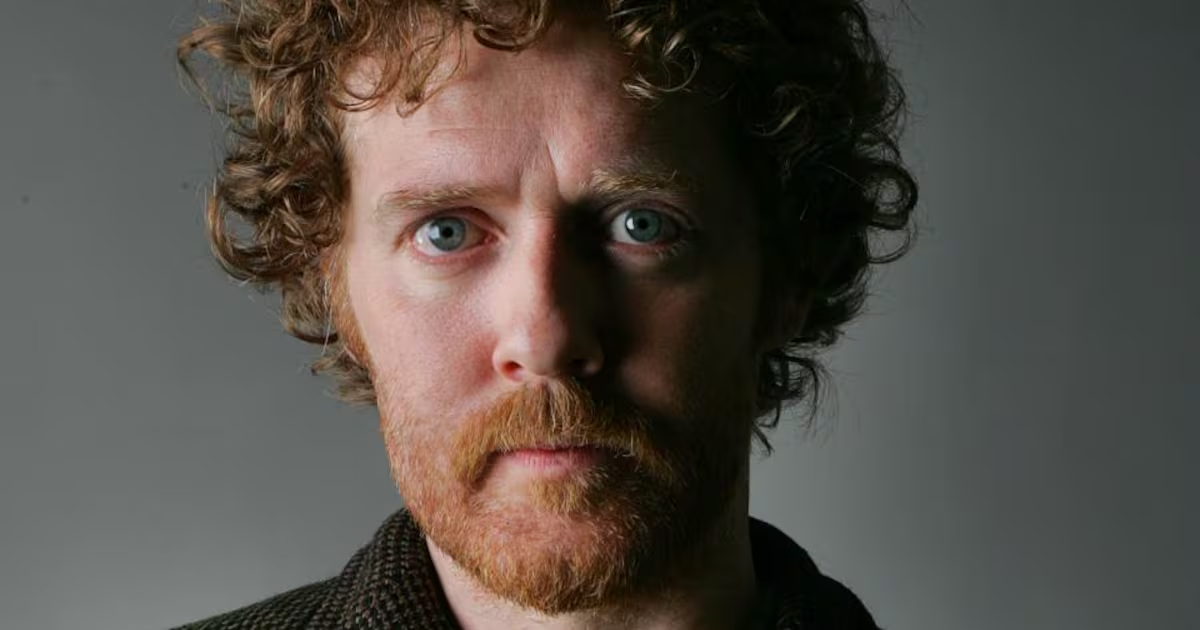
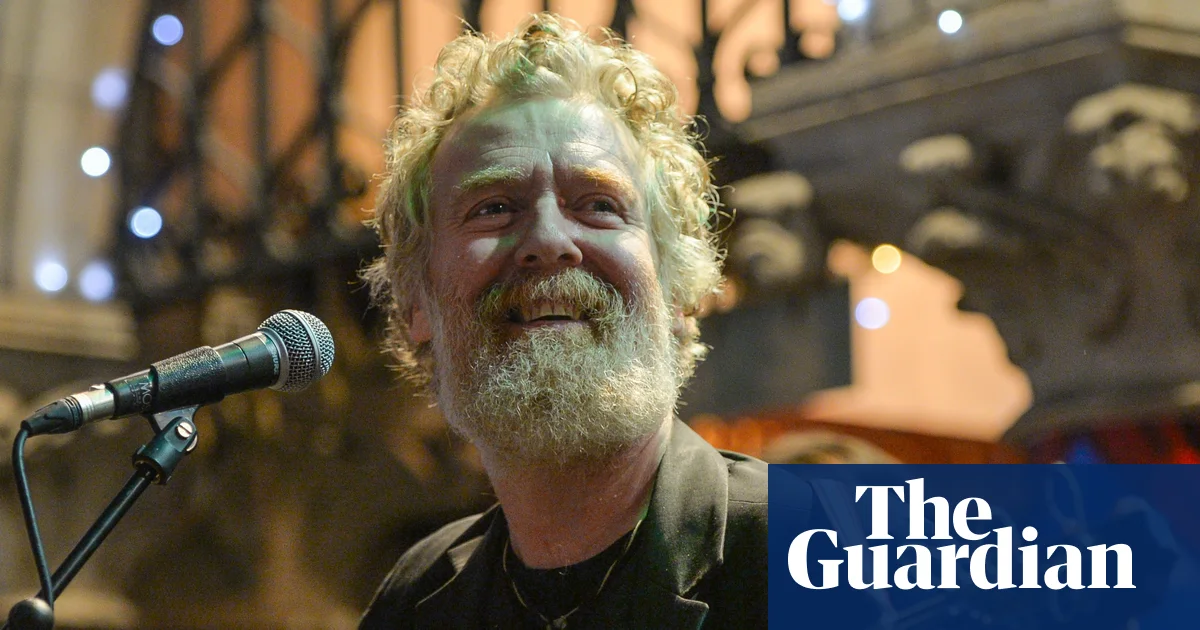
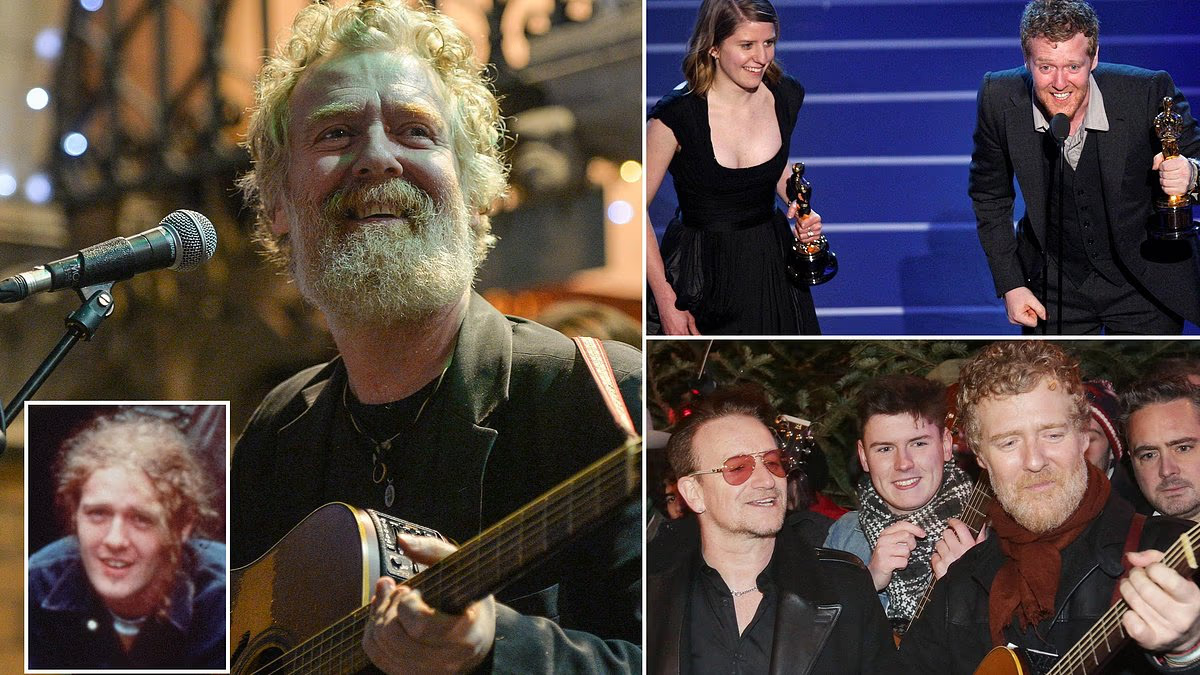
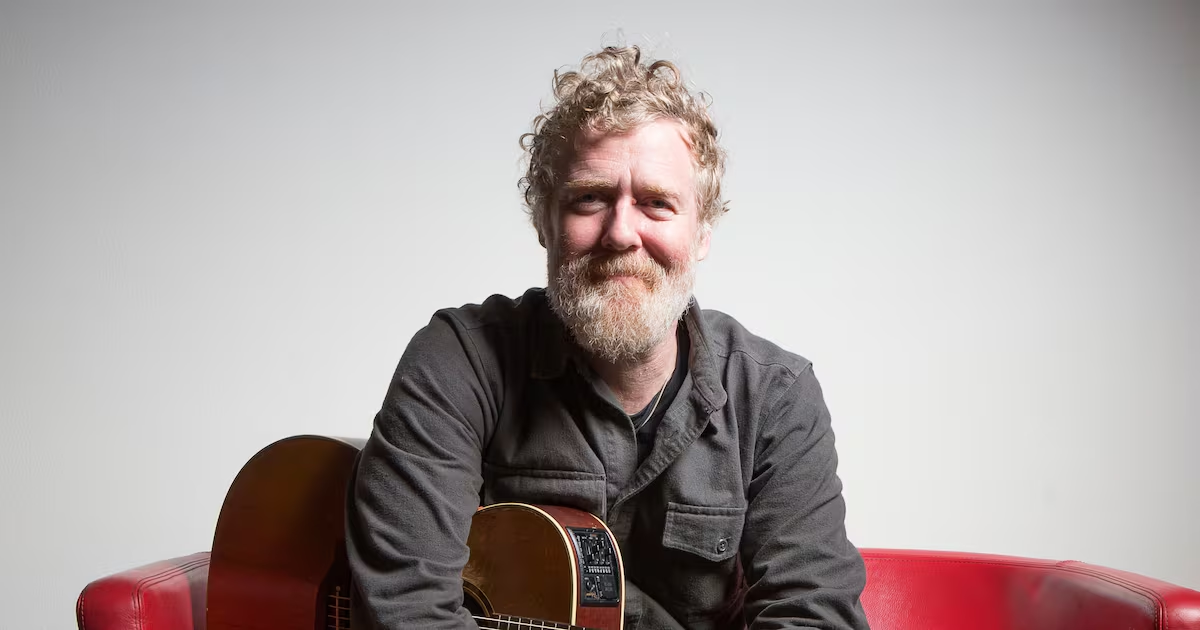
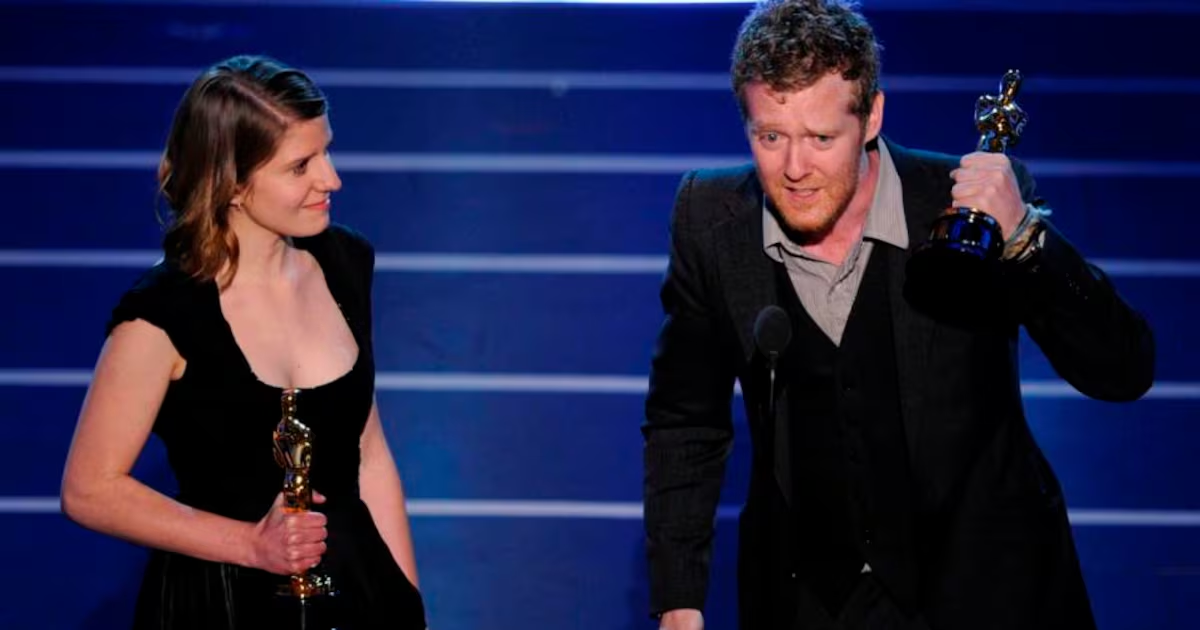
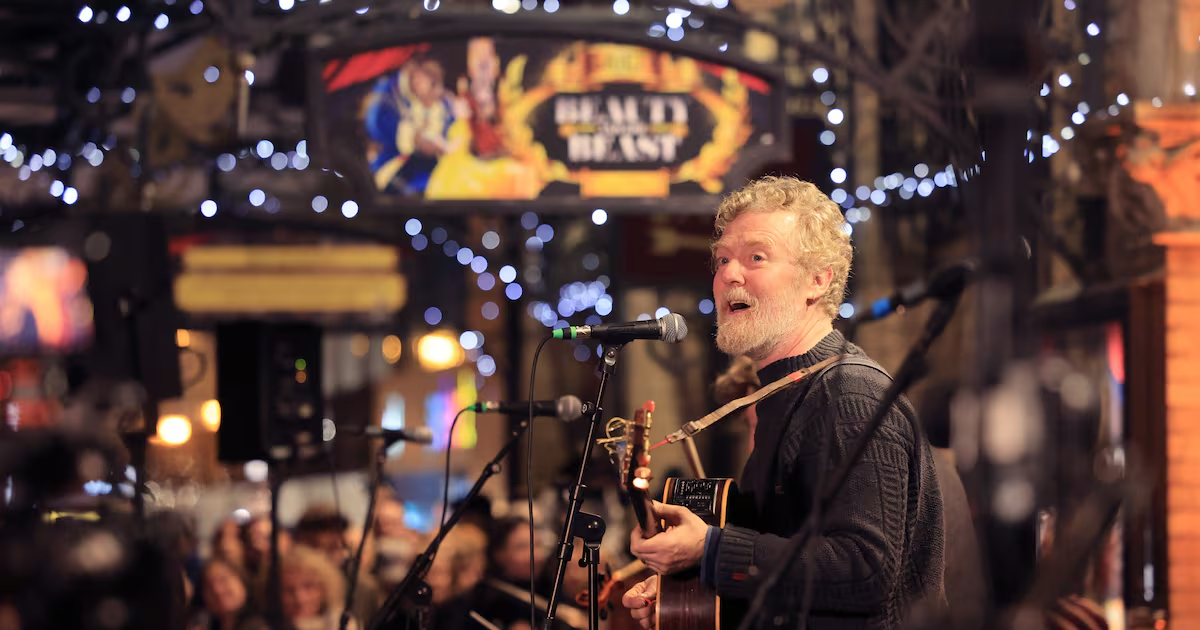
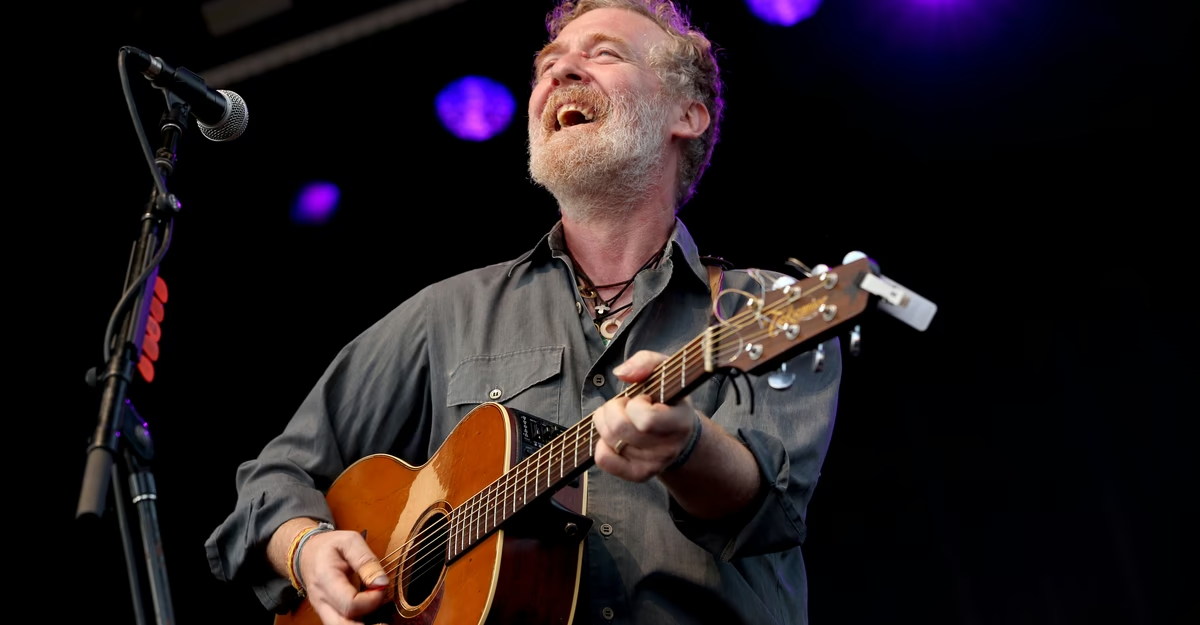
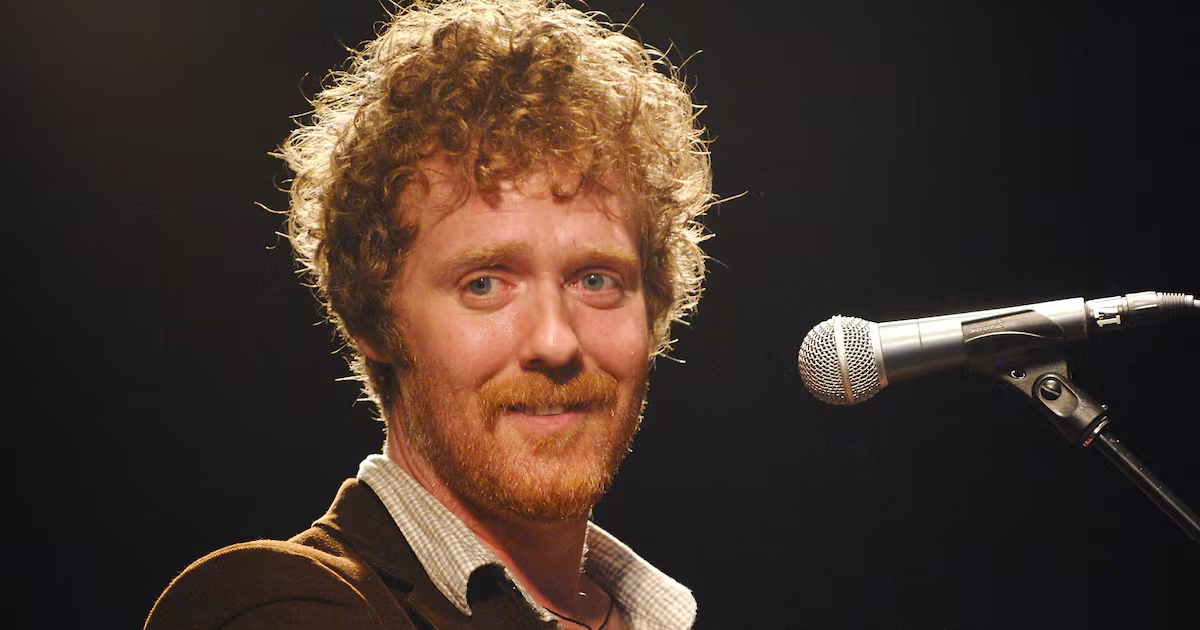
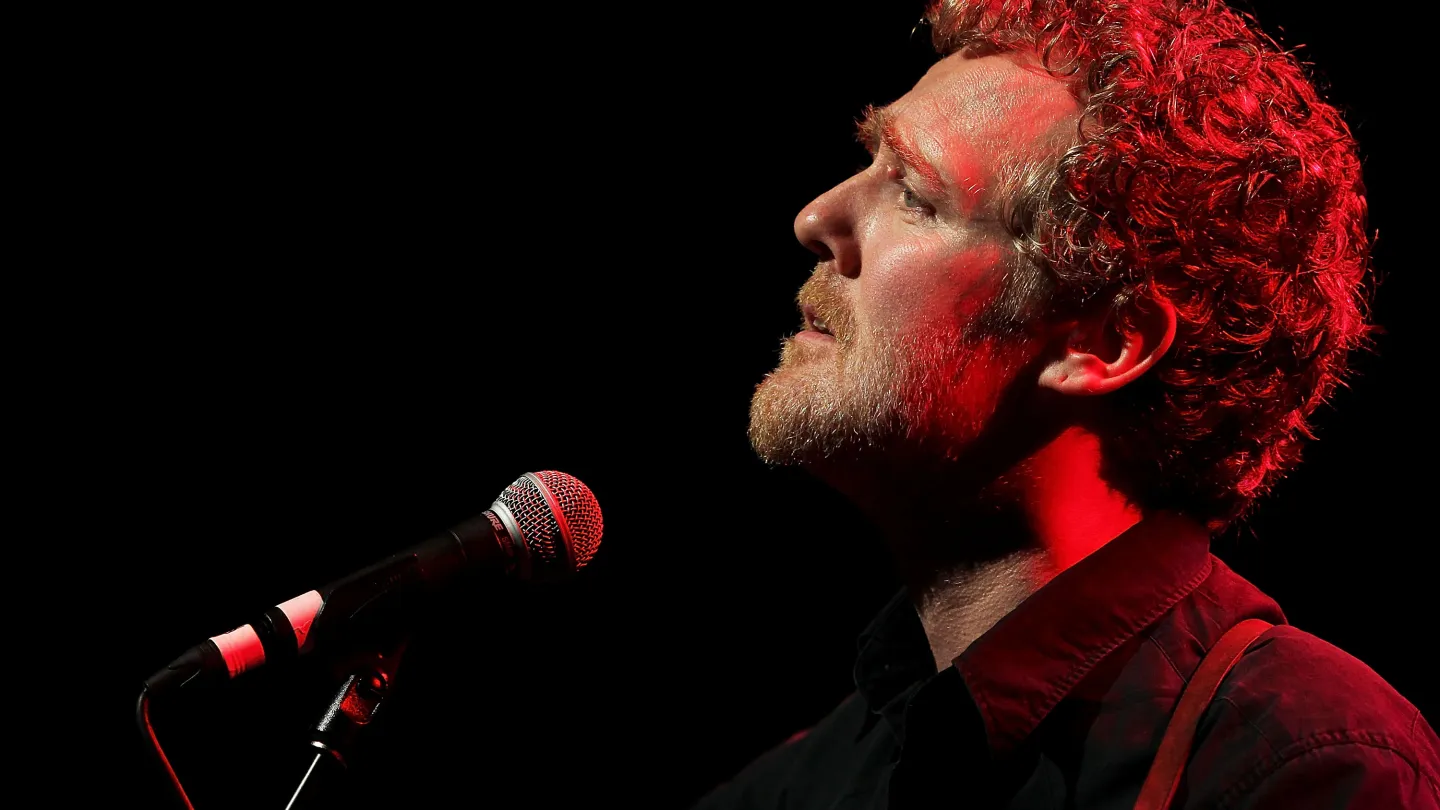
Actually, he was singing about a movie about a boat.A sunny Friday afternoon one indistinct summer in the 2000s, and I’d come out to New York’s South Street Seaport. There Hansard’s band The Frames had shown up to perform at a free concert — a kind of supersizing of his longtime busking tradition. My then-girlfriend and I had learned about The Frames after coming across the record The Roads Outgrown, Hansard’s reworking of songs from four previous studio albums. We were instantly infatuated. The band’s lo-fi sound and intermittent lush orchestrations felt exotic but somehow warm — the Irish counterpart to another contemporaneous example of the form, Scotland’s Belle and Sebastian. Only where that act would rarely depart from the whispered vibes, Hansard would often — jarringly, dramatically — break into a desperate wail, counterpointing all that sweet rumination with wild need.The album’s capper — and title track from the group’s second record — was “Fitzcarraldo.” Cinephiles will know it as Werner Herzog’s proto man-against-the-impossible movie from 1982, in which a young Icarus type in the Amazon tries to pull a ship over a mountain. More than a decade later Hansard had written a song about it, and dare I say it felt as cinematic as anything Herzog put on the screen — the intoxicatingly repeating guitar chords, the slow simmer of the orchestral strings and then, finally, the third act, a vocal burst into the urgent (“And her last words were ‘I’M ALWAYS THINKING OF YOU.'”)I don’t know if Hansard chose the venue that mid-2000’s day for its nautical theme, but he certainly made the most of it. He introduced the song by thrillingly narrating the story and acknowledging the location. As the songwriter began performing, building toward the song’s stirring crescendo, a giant boat docked in the harbor behind him loomed perfectly above Hansard’s head, dwarfing him, bobbing over him, looking like it might completely run him over — but also maybe, just maybe, if you looked at it in the right way, also positioning itself for Hansard to carry the ship on his back and lift it over the skyscrapers of lower Manhattan. Spielberg himself couldn’t have centered it better.Hansard of course died last week at 56 in a motorcycle accident in the late-night hours after performing at a traditional music session in an Irish pub. My first thought, after the traumatic shock, was “what a damn cinematic way to go,” like a La Bamba for our time. “The sky belongs to the stars,” a post-show Buddy Holly tells Ritchie Valens in Luis Valdez’s 1987 big-screen hit, before the propeller plane is seeing taking off on its ill-fated flight into the snowy Iowa night. One could only imagine such a scene unfolding now just before another great musician, after playing his own lively show, begins an ill-fated motorcycle ride into the Dublin night.In the six days since his death, I’ve found myself returning to Hansard’s “Fitzcarraldo” moment that Friday afternoon all those years ago, its improbable tableau so close I can touch it. Great music is memorable, but cinematic music lodges deep in our brain, the sounds and images tracking forever in unison. I’d thought about the Seaport concert occasionally over the years, but now, two decades later, it’s all I can see when I think of Hansard. Just him plaintive about a boat — plaintive, really, about doing the impossible. And for that one fragile moment, it seems like he could.Hansard had gotten cinematic in more literal ways. He came to fame as a young musician in his early twenties in The Commitments and then hit a new pinnacle with the 2007 Sundance charmer Once, in which he improbably starred, performed and eventually became an Oscar sensation. “We never dreamed we’d be in a room like this,” he said standing next to co-writer and -star Marketa Irglova at the big show in 2008, a far cry from the busking he did in the film (and in real life).But Hansard seemed like he stepped off a movie screen even when he wasn’t acting, his magnetism and his relatability entwining as one. There’s a reason his former bandmate John Carney cast him in Once, and it wasn’t so Carney could return to the band for some bass solos. The whole busker-to-recording star has a filmic rags-to-riches quality even before Hansard meta-ishly embodied it in the film. You could hear these textures in the remembrances of others, Bono’s “To be utterly yourself by being more interested in others … he could never walk by a person living rough without checking they were OK” is the stuff of film folk hero.Hansard was great because he intuitively understood the power of music but also intuitively understood the power of images — of cinema’s ability to take something as abstract as great music and pair it with something as concrete as people moving, loving, balking, living, whether a man standing in front of a store missing the woman he loves or standing by the water daunted by a new challenge to put on his back. Hansard is tragically gone, but we have much to summon, a chance to mentally replay those mini-movies he so wisely kept crafting for us.