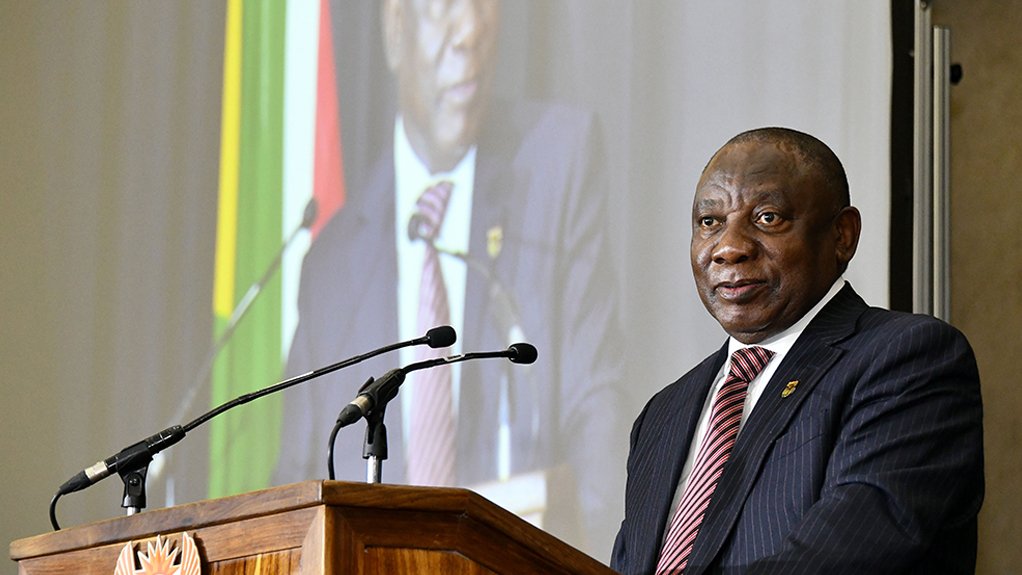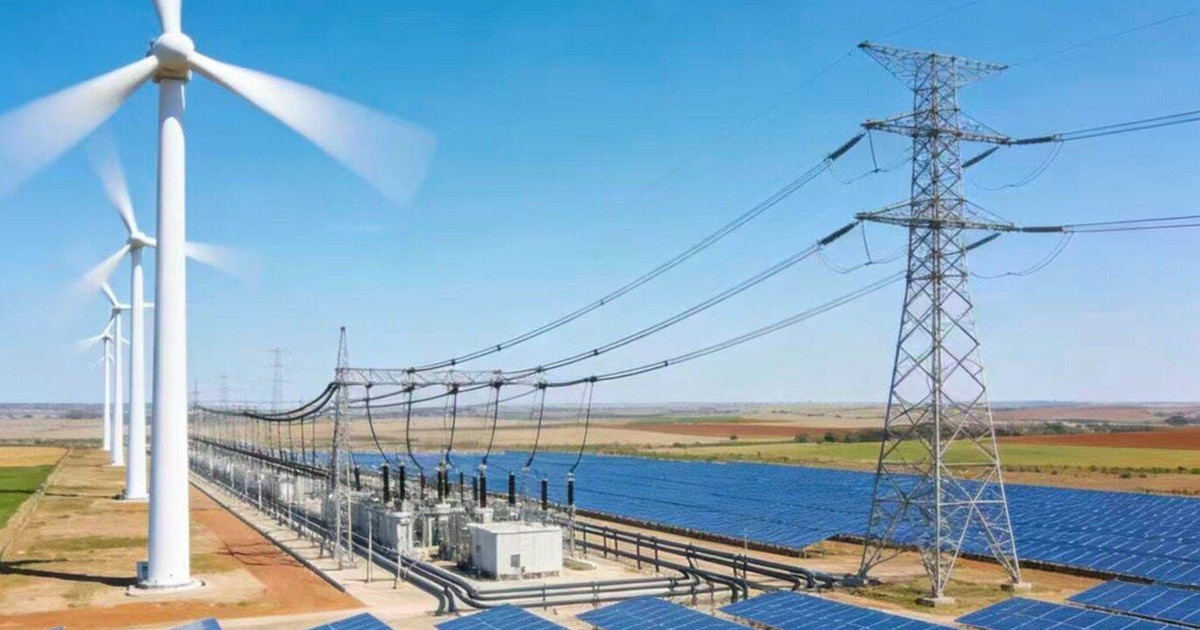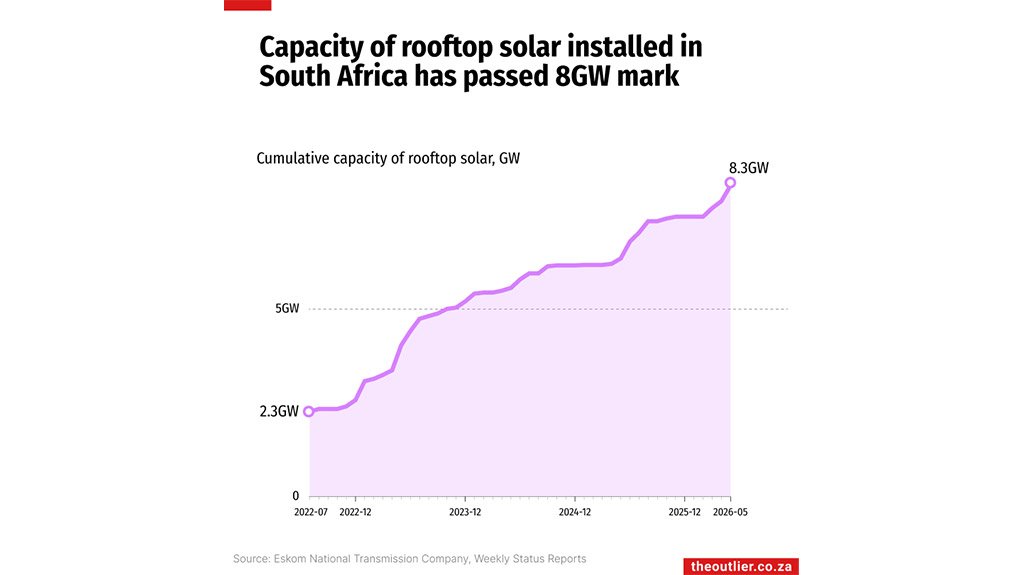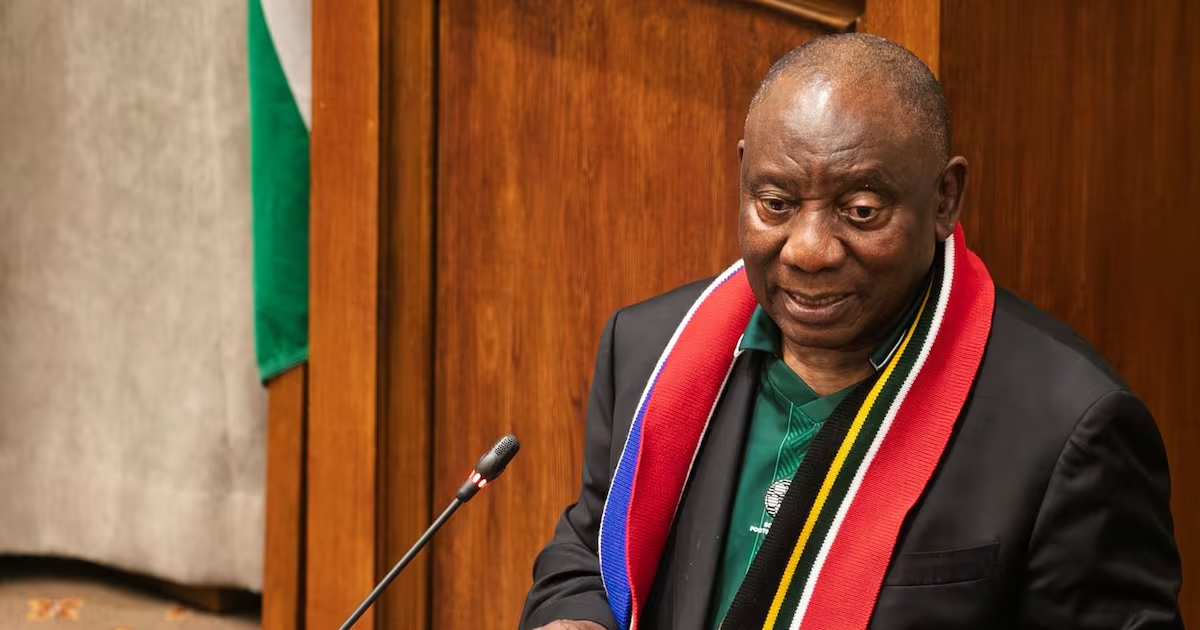
South Africa’s just energy transition is gaining momentum, with rising clean energy investment helping the country meet its climate commitments while driving inclusive economic growth and job creation, President Cyril Ramaphosa says.The uptake of rooftop solar by households and businesses has surpassed expectations, with the number of households installing solar panels rising by 86% over the past three years to 675,000 in 2025, he wrote in his weekly newsletter on Monday.More than R50bn in green energy investment commitments were announced at the 2026 South Africa Investment Conference. He highlighted the release of South Africa’s first “Energy Infrastructure Investment Prospectus”, which sets out a co-ordinated pipeline of investment-ready projects across the electricity value chain.“Secure, reliable and affordable energy is critical to growing industry, developing our economy and improving the lives of citizens. The just energy transition is not only about protecting affected communities, workers and businesses from the impact of the shift towards renewable energy.” Going green must also make electricity cheaper for consumers, he said. South Africa’s electricity sector reforms are aimed at creating a reliable, affordable and sustainable power supply by opening the grid to greater competition and improving the efficiency of electricity transmission. “On the Mpumalanga highveld, between the towns of Bethal, Davel and Morgenzon, are powerful symbols of South Africa’s energy future. Wind turbines rise above a landscape that was once dominated by the cooling towers of coal-fired power stations,” Ramaphosa said. “The wind turbines are part of the first phase of the Ummbila Emoyeni wind farm that entered into commercial operation last week. The facility has been built by Seriti Green, a subsidiary of Seriti Resources, a proudly South African company. This is a demonstration that South Africa’s clean energy investments are not only being driven from abroad but also by domestic firms with the foresight to invest in their country’s future.” The 155MW of clean energy generated by the 25 wind turbines would be wheeled through Eskom’s transmission network to supply Seriti’s coal mining operations, and once completed, “this 900MW hybrid energy cluster will comprise wind, solar and battery storage. Once fully operational, it will be the largest hybrid energy facility in the country.”“The Ummbila Emoyeni project is an important contribution to South Africa’s evolving energy mix. The 2025 Integrated Resource Plan aims to achieve a diversified portfolio of energy sources that relies more on wind and solar and a reduced share of coal, supported by gas, battery storage and nuclear power,” the president said. While coal continues to dominate South Africa’s energy mix, the growth of renewable energy is accelerating. According to Stats SA, in 2016 renewable energy supplied just 2% of locally generated electricity. By 2021 that number had risen to 6%, and by 2024 renewables accounted for 9% of local electricity generation, Ramaphosa said. “The country now has close to 16GW of installed renewable capacity, with 32GW of projects now in the grid connection process and expected to connect by 2030. “The installation of rooftop solar by households and businesses has exceeded expectations. According to Stats SA, there has been an 86% increase in households with solar panels over just a three-year period, totalling 675,000 households in 2025.” Ramaphosa said the investment in clean energy technologies, which was accelerated by load-shedding in recent years, was enabled by far-reaching legislative and regulatory reforms. “It is now incumbent on government, working with business, labour and civil society, to ensure that South Africa’s energy transition delivers for all. It must be a transition that is inclusive, that expands opportunity and that leaves communities stronger than before. Most importantly, it must deliver affordable electricity for all, now and into the future.” Business Times
Ramaphosa hails momentum in South Africa’s clean energy transition
Household rooftop solar installations surge 86% in three years as government unveils pipeline of investment-ready energy projects.
607 words~3 min read