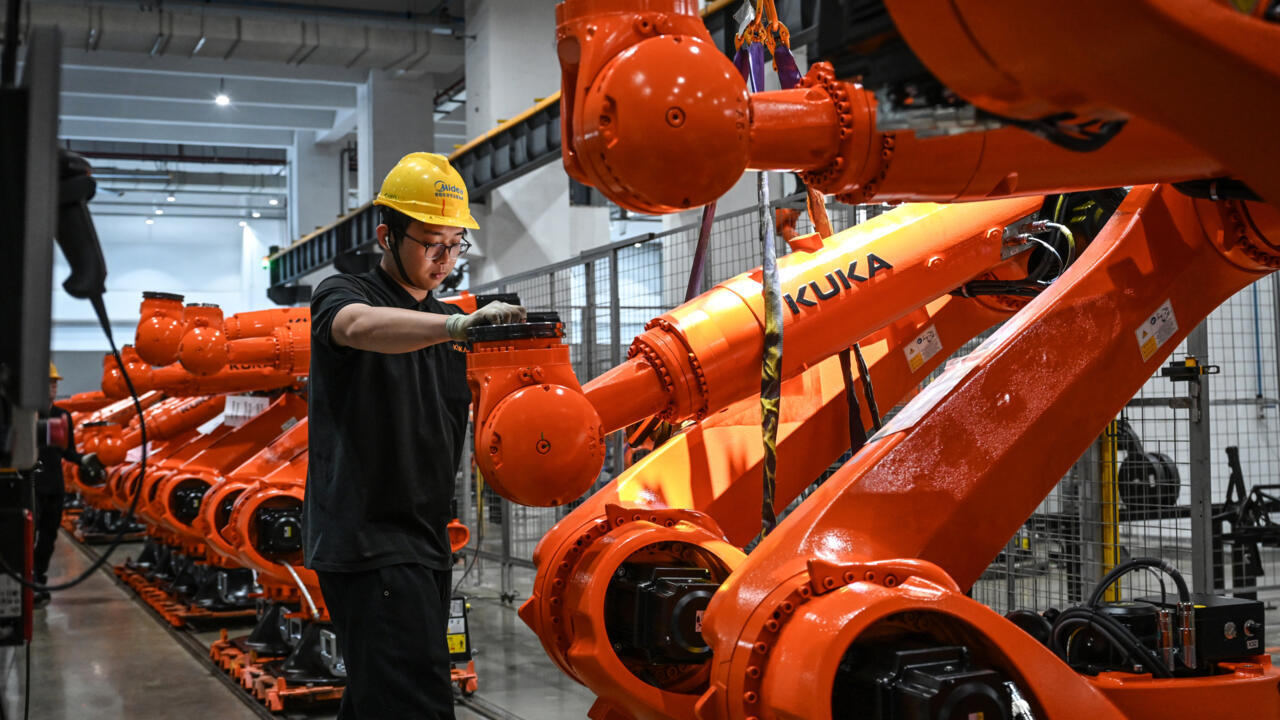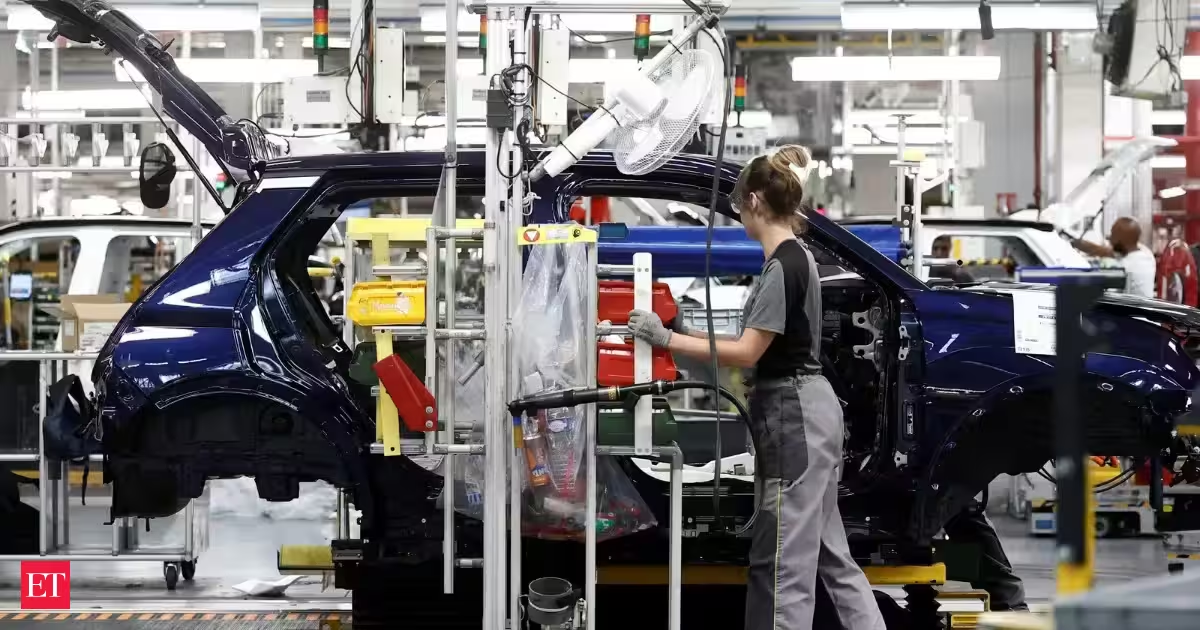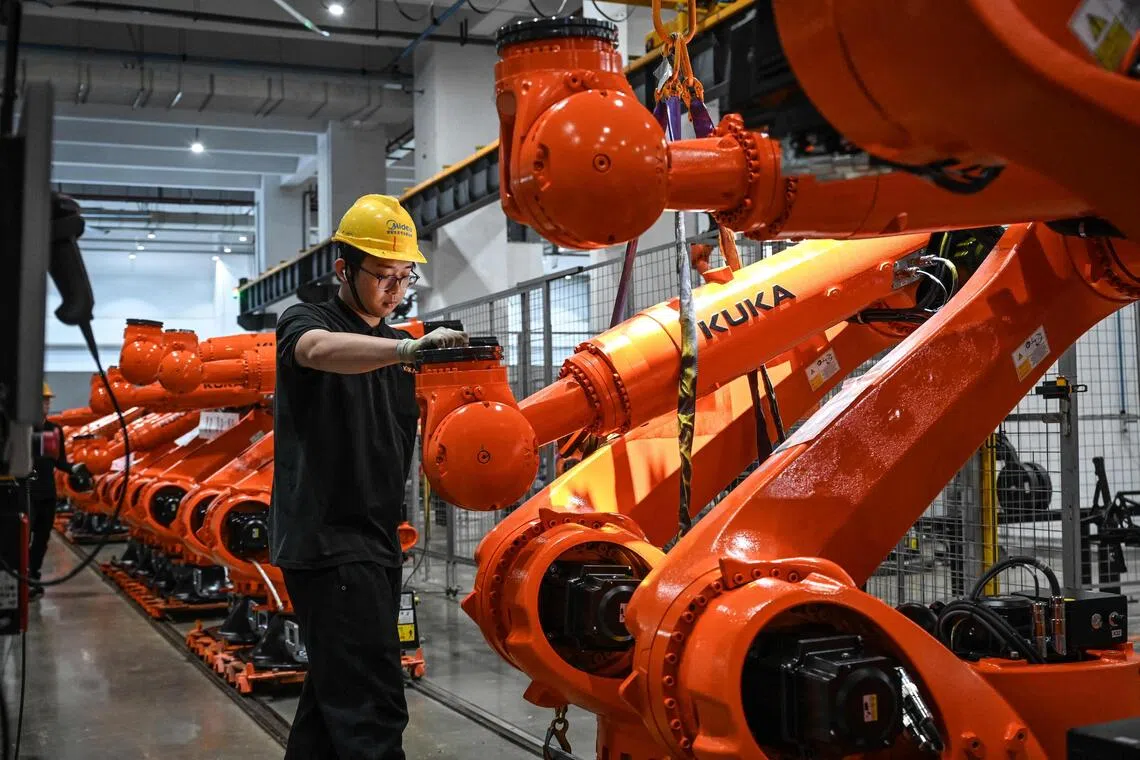
LONDON - Manufacturing activity in China slowed in July as the five-month-long war in the Middle East delivered weaker demand and elevated costs for the exporting powerhouse – a situation mirrored across much of Europe – surveys showed on Aug 3.The conflict has almost halted shipping through the Strait of Hormuz, a key transit route for the Gulf’s energy exports, sending manufacturers’ energy prices soaring.Factories in the world’s second-largest economy saw growth in new orders slow to its weakest pace since January, and although euro zone output surged, that was largely driven by firms clearing order backlogs rather than rising demand.The headline S&P Global Eurozone Manufacturing PMI INPMI=ECI rose to 51.9 in July from June’s 51.4, its highest reading since April but just below a preliminary estimate of 52.0. A reading above 50.0 indicates growth.“It’s a mixed bag, but with the main conclusion the euro zone economy is more resilient than feared ... but we’re clearly heading into at least a low growth environment,” said Carsten Brzeski at ING.“In the shorter term, I think it is weak but relatively sustained growth unless obviously something really bad happens in the Middle East. It’s not a situation in which the euro zone economy will all of a sudden take off and present a stellar performance.”Inflation in the common currency bloc rose to 2.9 per cent in July from 2.8 per cent a month earlier, official data showed last week, adding to an already strong case for another European Central Bank interest rate hike, which would likely add a further constraint on demand as households curtail spending.Factories across the globe faced elevated input costs last month, the PMIs showed.Germany, Europe’s largest economy, enjoyed a strong start to the third quarter as manufacturing activity expanded, but S&P Global said it was difficult to imagine this performance being sustained without a resolution to the Middle East conflict due to corresponding volatility in oil prices and uncertainty.French factory activity slipped back into contraction and Italy’s manufacturing industry saw growth slow.In Britain, outside the European Union, manufacturing activity expanded for a ninth straight month in July but at the slowest pace in four months, according to its PMI that pointed to a renewed impact from the Iran war towards the end of last month.Earlier PMIs showed India’s manufacturing sector expanded at its slowest pace in nearly five years as overall demand remained soft.But in contrast, Japan’s factory output expanded at its fastest pace in more than 12 years with across-the-board improvements in sub-indexes, including a 4½-year high surge in new orders buoyed by AI-related demand. REUTERS
Global manufacturing impacted by war and costs
Discover how the ongoing Middle East war is affecting global manufacturing, causing weaker demand and higher costs for key exporting nations. Read more at straitstimes.com. Read more at straitstimes.com.
429 words~2 min read