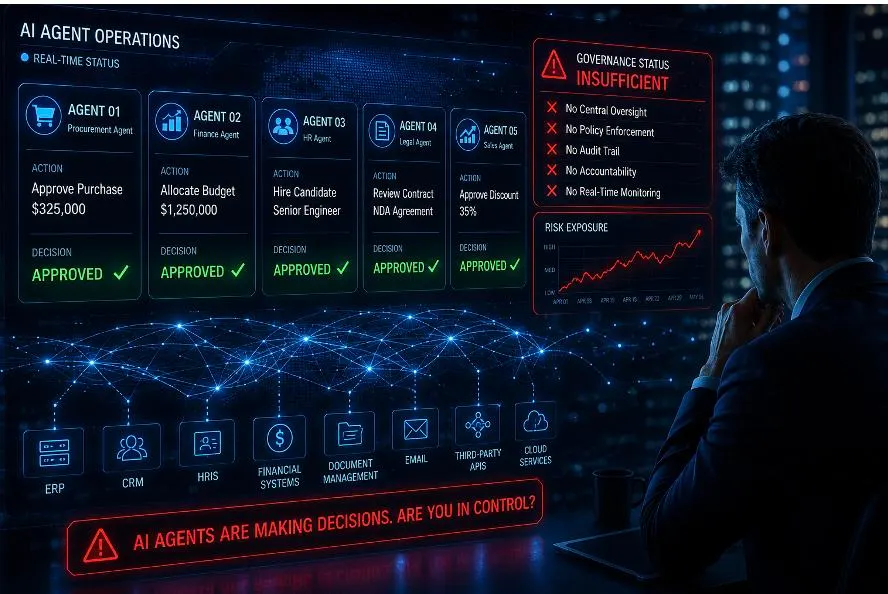
Enterprises are embracing agentic AI at speed, embedding autonomous AI agents into business processes and experimenting with agents in front-office activities such as marketing and customer service, as well as in operational areas such as shipment tracking, demand forecasting, and supply chain optimization.
Agentic AI builds on the economic potential of generative AI, which McKinsey has estimated could add US$2.6 to $4.4 trillion annually to the world economy. This represents the next stage of enterprise AI adoption: a shift from content generation to autonomous execution, and from isolated pilots to operational deployments.
Agent sprawl
That shift creates a new governance challenge. Agent sprawl occurs when AI agents are created, deployed, or connected across systems faster than the enterprise can inventory them, assign ownership, control permissions, monitor behavior, and optimize or retire them when they are no longer fit for purpose.
Underscoring this shift, a recently published agentic AI survey conducted by SAP LeanIX found that 98% of companies have already deployed AI agents or plan to do so. But as adoption accelerates, governance is struggling to keep pace. According to the same report, less than half of the organizations surveyed have visibility into an inventory of AI agents.