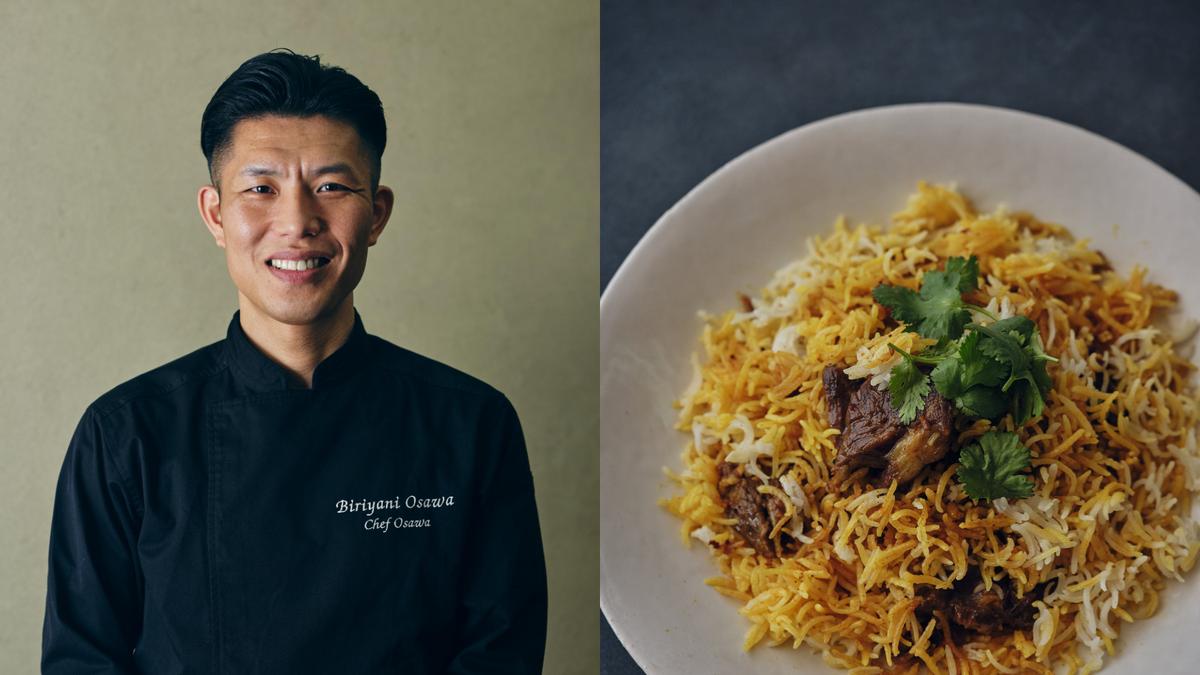
Takamasa Osawa did not travel to India in search of biryani. In fact, when he first arrived in Tamil Nadu in 2009, he barely knew what it was. Hungry, he ordered what seemed like just another rice dish. “The first time I tried it, it was so delicious that I wanted to try it again. Then I wanted to try another variety. It shocked me.”That first plate altered the course of his career.Over the next 16 years, the Tokyo-based chef would return to India repeatedly, travelling across the country, tasting regional styles, studying ingredients and refining his understanding of one of India’s most fiercely debated dishes. Today, his restaurant, Biriyani Osawa in Tokyo, has earned recognition from the Michelin Guide and is one of the city’s hardest tables to book. His recent collaboration with Indian Accent, Mumbai, where he served a limited menu over two evenings sold out well before he landed in India.For a Japanese chef to build his reputation around biryani may seem unusual. For Takamasa, however, the attraction was never novelty. It is the complexity of the dish. “Though the protein gives the biryani its umami, the rice should be delicious even on its own. But the balance of the spices decides everything. Finding that balance is what makes biryani,” he says.Among the many styles he has tasted, the Hyderabadi layered biryani remains his favourite. “In Hyderabad, if it isn’t layered, it’s pulao, not biryani,” he says with a smile. “The layering and the balance of spices are extremely important.”Takamasa speaks less like a chef protecting secrets and more like a scientist trying to perfect an experiment. Over the years, he has compared varieties of basmati rice, experimented with cooking temperatures and evaluated spices from different countries before settling entirely on ingredients sourced from India.“If I want to make the perfect biryani, I have to choose the best ingredients. I tried all the basmati rice available in Japan, but the one from Punjab was the best. Sadly spices grown in India taste different by the time they reach Japan as they are heat-treated before shipping. That changes their aroma completely,” he says.Chill factorTakamasa is particular about how he cooks. He does not make biryani in advance or reheat it before serving. “Biryani always tastes best when it’s made in large quantities. My secret is to always make biryani fresh and serve it immediately. While making the gravy and tenderising the meat, I cook over a high flame because higher temperatures create more aroma.”At his restaurant in Tokyo, diners are encouraged to begin eating together so that everyone experiences the biryani at the same moment. He serves it with enamel spoons because he believes they preserve the flavour better than metal and pairs it with cola chilled to minus one degree celsius, convinced that the temperature complements the richness of the dish.
From Tamil Nadu to Tokyo: A Japanese chef’s search for India’s best biryani
Nearly two decades after tasting his first biryani in Tamil Nadu, Japanese chef Takamasa Osawa now runs a Michelin Guide-recognised, biryani-only restaurant in Tokyo. At Indian Accent in Mumbai, he speaks about the curiosity that still drives his quest for the perfect pot
859 words~4 min read