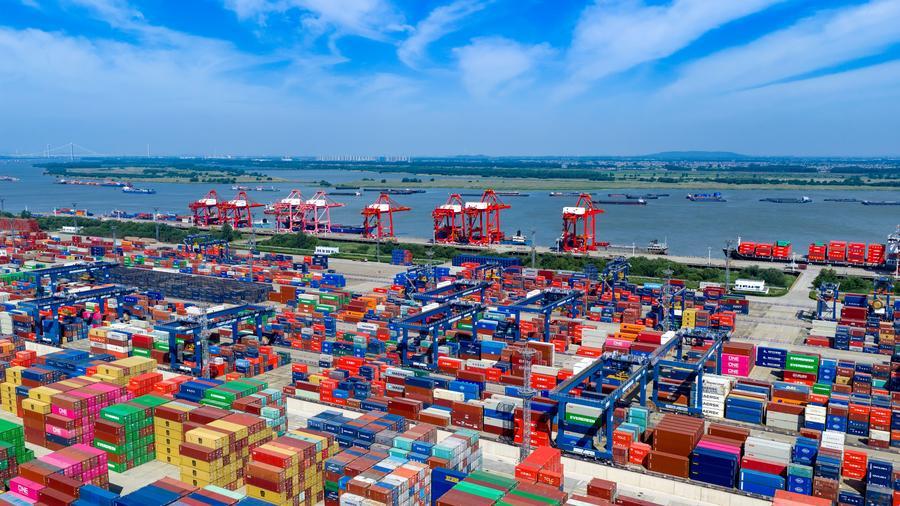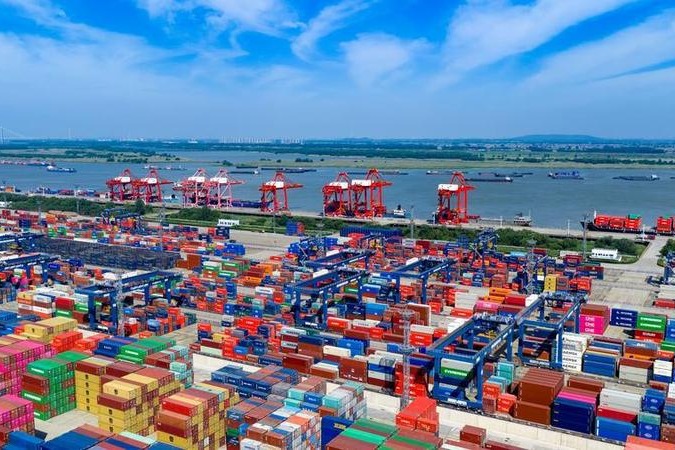
An aerial drone photo taken on May 17, 2026 shows a view of the Longtan Container Terminal at Nanjing Port, East China's Jiangsu province. [Photo/Xinhua]
China's economy can no longer be described simply as either strong or weak. Its defining characteristic is a structural transition accompanied by growing divergence, often described as K-shaped recovery. New growth drivers — such as artificial intelligence and advanced manufacturing — are gradually replacing traditional engines, including real estate and infrastructure. Against this backdrop, two trends stand out.
First, overall economic growth remains under pressure, as the property downturn continues to weigh on related sectors, including home appliances, furniture, ferrous metals and machinery, while also weakening local finances and local governments' capacity to support growth.
Second, economic divergence has become increasingly pronounced, as indicated by widening gaps between supply and demand, across industries, among income groups and between regions. This has created a gap between official macroeconomic indicators and the actual economic experience of households and businesses.
Over the medium and long term, China's economy has followed an L-shaped path. The slowdown began around 2010 when the country entered a period of growth deceleration and transition from old to new growth drivers. GDP growth fell from 10.6 percent in 2010 to 5 percent in 2025, more than halving in just 15 years. This year, growth has moved into the 4.5-5.0 percent range, marking the beginning of what may be called an era of "around 4 percent growth". Japan stayed in the 4-5 percent range for about two decades before slowing further, but by then its per capita GDP had reached around $30,000 and its social security system was relatively mature. China's per capita GDP remains below $14,000, making it essential to settle into a stable medium-growth range of 4-5 percent during the 15th Five-Year Plan (2026-30) period.