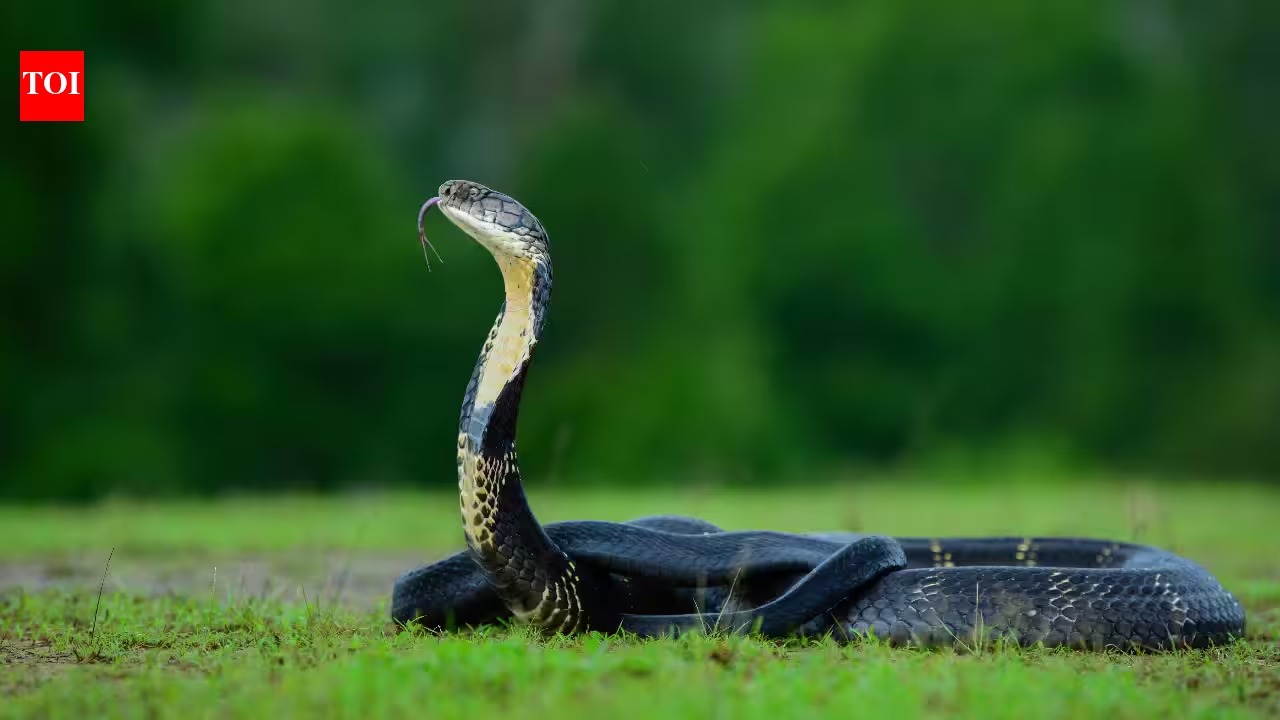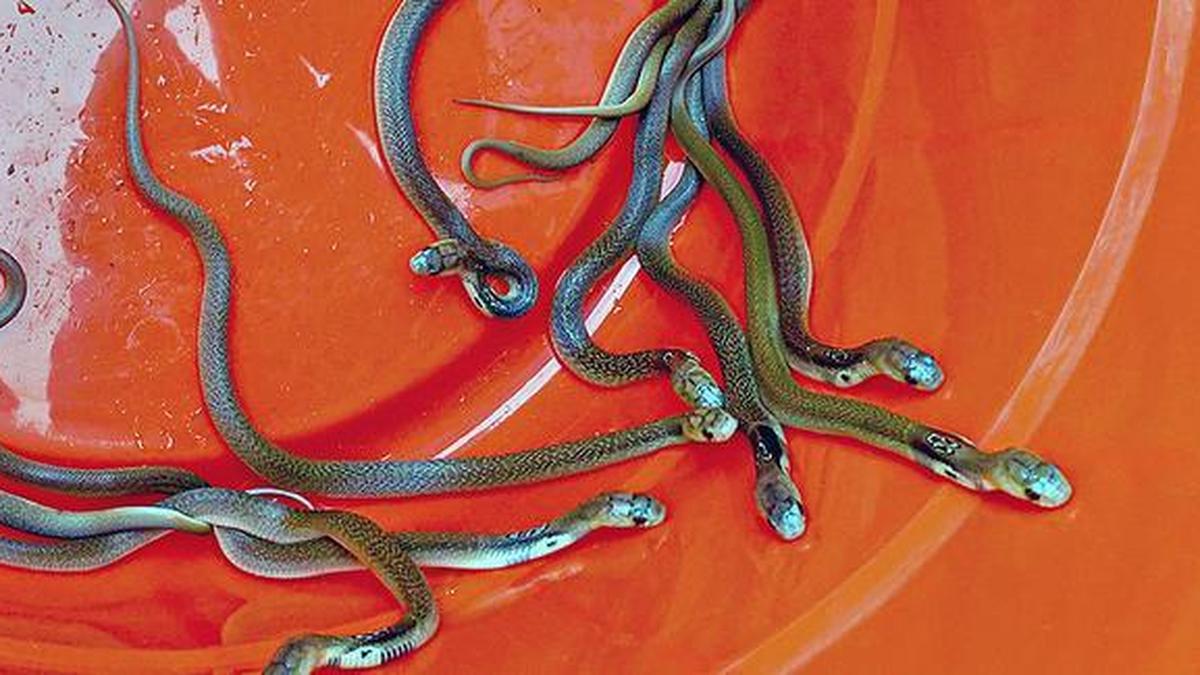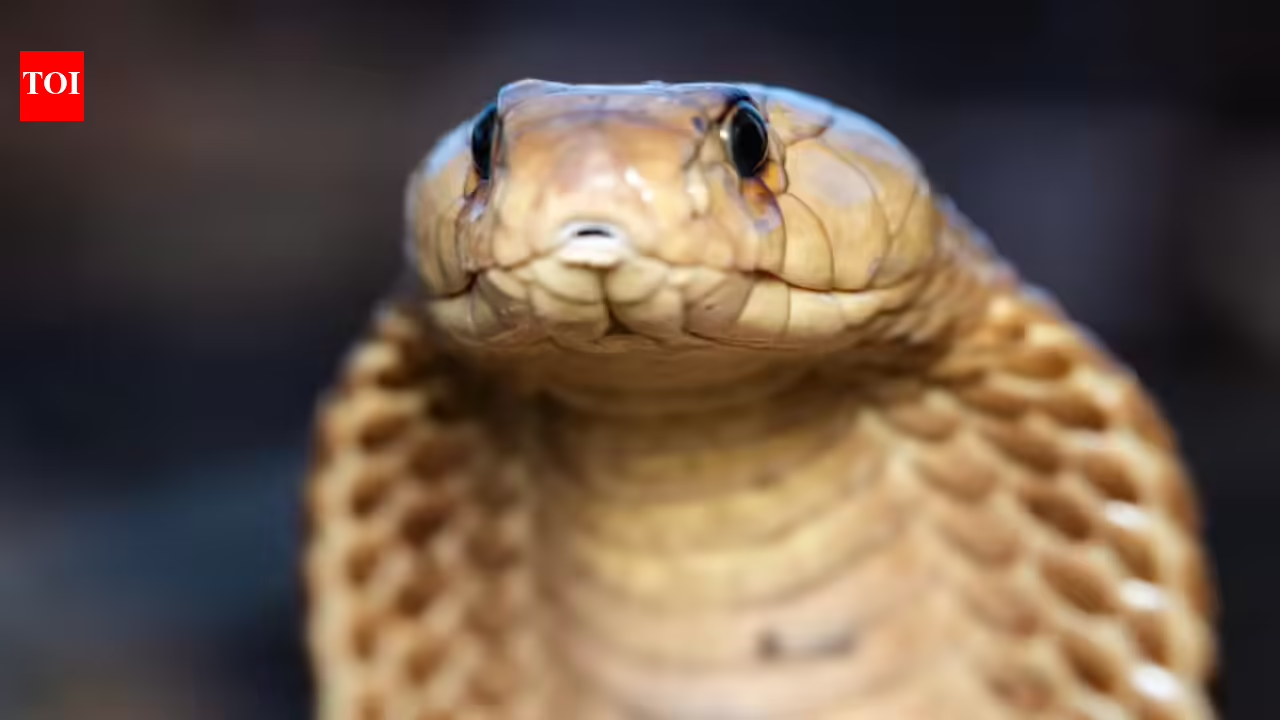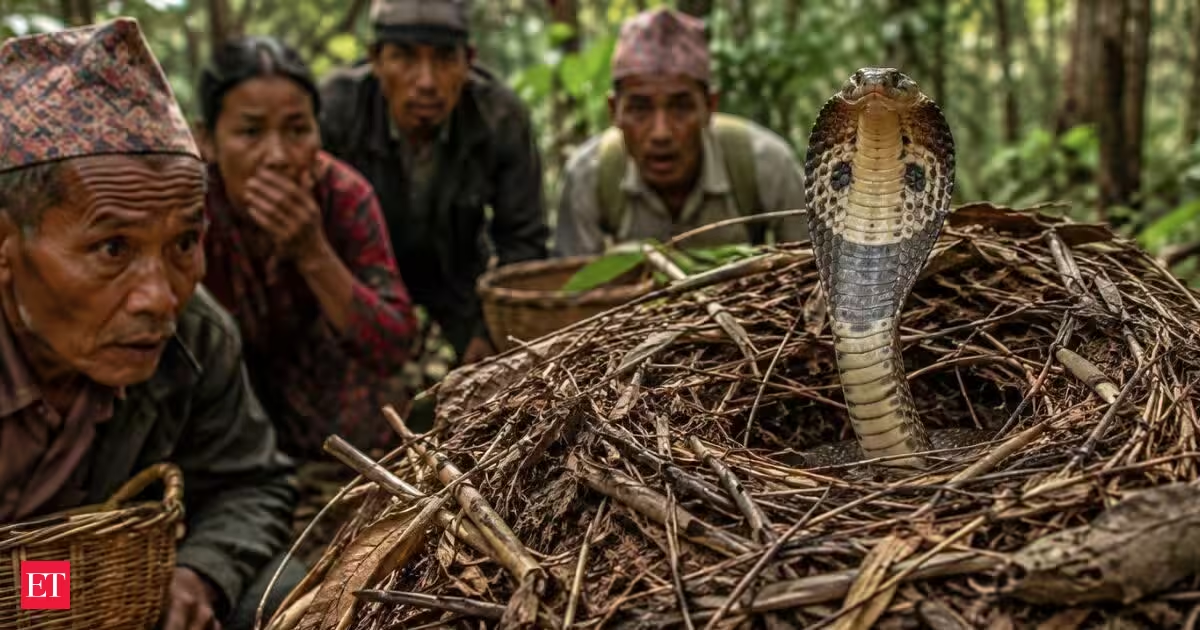
Some finds change the course of a normal day. For a group of villagers out gathering wild mushrooms in Nepal's Ambe Community Forest, that's exactly what happened, except what they stumbled on wasn't food. It was a nest. And not just any nest. It belonged to a king cobra, one of the most feared and least understood reptiles on the planet.The discovery, made near Jhakri Sota inside the forest on July 15, has since triggered a swift conservation response, with authorities restricting public movement in the area to give the snake, and her eggs, a fighting chance.How the nest was foundLocals from the Ambe Community Forest, located in Ghorahi Sub-Metropolitan City, were doing what they do most days: foraging for mushrooms along the forest floor. That's when they spotted something unusual, a mound of leaves, twigs and vegetation, arranged with a deliberateness that didn't look natural at first glance. It was, as it turned out, exactly that kind of construction.Word reached Kuldeep Neupane soon after. Neupane has spent close to four years rescuing snakes and running awareness campaigns in the region, and he moved quickly once he understood what the villagers had found. Along with forest officials, the site was cordoned off within hours to keep the nesting female undisturbed.The response didn't stop there. The Division Forest Office has since stepped up patrols around the area, and residents have been asked to stay away, no mushroom picking, no firewood collection, no grazing, until the eggs hatch and the mother moves on. Forest officials are now working closely with the local community forest users' committee to keep the site monitored through what conservationists are calling a delicate window.Why King Cobra Builds a HomeHere's what makes this find genuinely rare: king cobras are the only snakes on Earth known to build nests. Every other species simply lays eggs and leaves, some don't even stick around long enough to see them. Not the king cobra.A female will spend days gathering dry leaves and twigs, piling them into a mound where she deposits anywhere between 30 and 40 eggs. Then she stays. For roughly two to three months, she guards that nest, often refusing to leave even when threatened, until her young are ready to hatch.It's an unusual amount of dedication for a reptile, and it comes from a snake that can grow beyond 18 feet, making it the longest venomous species in the world. That combination of size, venom and maternal instinct is part of why king cobras occupy such an outsized place in both folklore and fear across South Asia.An Apex Predator Doing Its JobThere's a reason wildlife experts are treating this discovery as more than just a curiosity. King cobras eat other snakes, including venomous ones. In doing so, they quietly keep snake populations in check across the ecosystems they inhabit, which in turn can lower the odds of humans running into more dangerous encounters with other species.Lose the apex predator, and that balance doesn't hold. Conservationists have long pointed to this ripple effect as one of the strongest arguments for protecting a species that most people would rather avoid altogether.A Familiar Tension: People, Forests, WildlifeWhat's playing out in Ghorahi is a story repeating itself across much of Asia. Community forests like this one aren't just scenic backdrops, they're where rural families source mushrooms, medicinal herbs, firewood and fodder for livestock. At the same time, those same forests are home to species that need space, quiet and distance from human activity, especially during breeding season.A nesting king cobra sitting close to a path used daily by villagers isn't a small detail. Female king cobras are known to be particularly defensive around their eggs, and an accidental encounter could turn dangerous fast. Rather than remove the snake, which experts note could stress the animal and risk the eggs, authorities chose a quieter route: pause human activity in that one stretch of forest and let the natural cycle finish on its own terms.It's a small decision, but one that reflects a broader shift in how conservation is being handled on the ground, coexistence managed through patience rather than confrontation.What This Could Mean Going ForwardThe find has also reopened a conversation that's been simmering among Nepal's conservation circles for a while now. Internationally, the king cobra is listed as Vulnerable. Within Nepal, however, it doesn't currently carry protected status under national wildlife law, a gap that researchers and activists have flagged before.Cases like this one, where a community actively chose to protect rather than eliminate a dangerous animal, tend to add weight to those arguments. Whether it translates into policy change remains to be seen, but for now, in one quiet corner of Ghorahi, a mother king cobra is getting the space she needs, and a village is watching, at a respectful distance, to see what hatches.
They went into a Nepal forest searching for food. Then they stumbled upon a dry-leaf nest built by one of the world's fiercest snakes
Villagers in Nepal's Ambe Community Forest discovered a rare king cobra nest. Authorities restricted public movement to protect the snake and her eggs. King cobras are the only snakes known to build nests and guard their young. This apex predator helps maintain ecological balance by controlling other snake populations. The find highlights the need for protected status for king cobras in Nepal.
803 words~4 min read