There's a myth floating around every design review and dev standup: that you have to choose between a beautiful website and a fast one. Product wants the parallax hero. Design wants the custom typeface and the smooth scroll animations. Engineering wants a green Lighthouse score. Everyone assumes someone has to lose.
They don't. In almost every case where I've seen "performance vs. design" framed as a trade-off, the real problem wasn't the design intent — it was the implementation. A hero image can be visually stunning and load in under a second. A scroll animation can feel buttery and never touch the main thread. The tension usually comes from reaching for the heaviest tool available (a 300KB carousel library, an unoptimized 4K JPEG, five different font weights) instead of the lightest one that gets the same visual result.
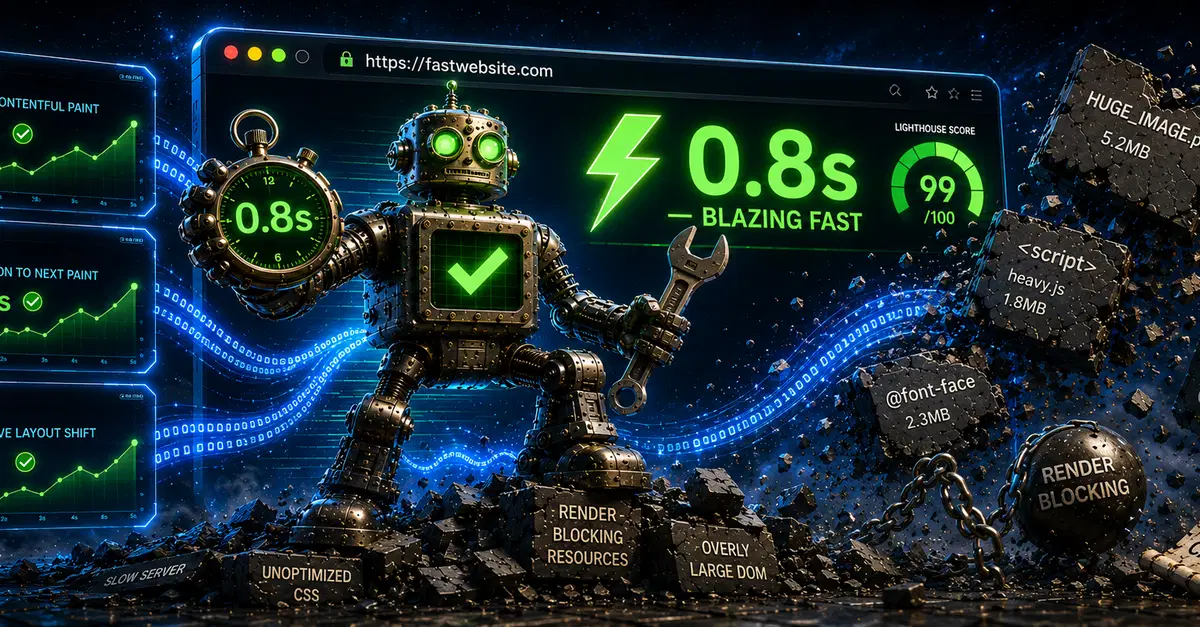
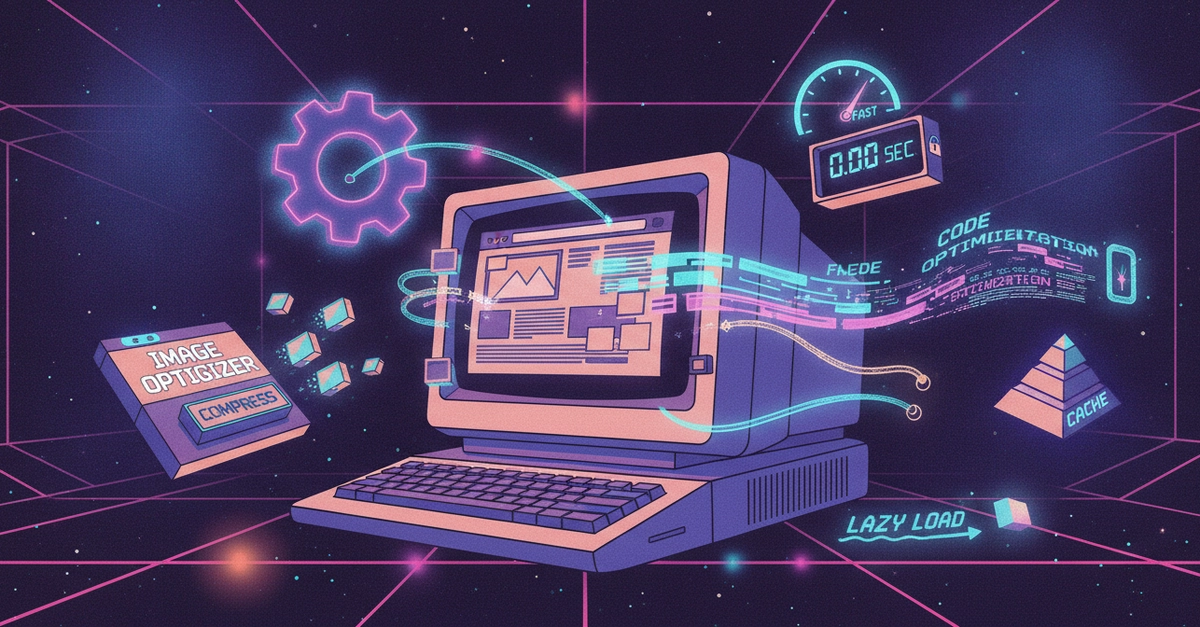
TL;DR — Most performance problems aren't design problems. They're image, font, JavaScript, and third-party-script problems wearing a design costume. Below are 12 concrete places to fix the delivery layer without touching the design itself.
Why this matters more in 2026 than it used to
Google evaluates real-world page experience through three Core Web Vitals, measured from actual Chrome users in the field (not just your local Lighthouse run):