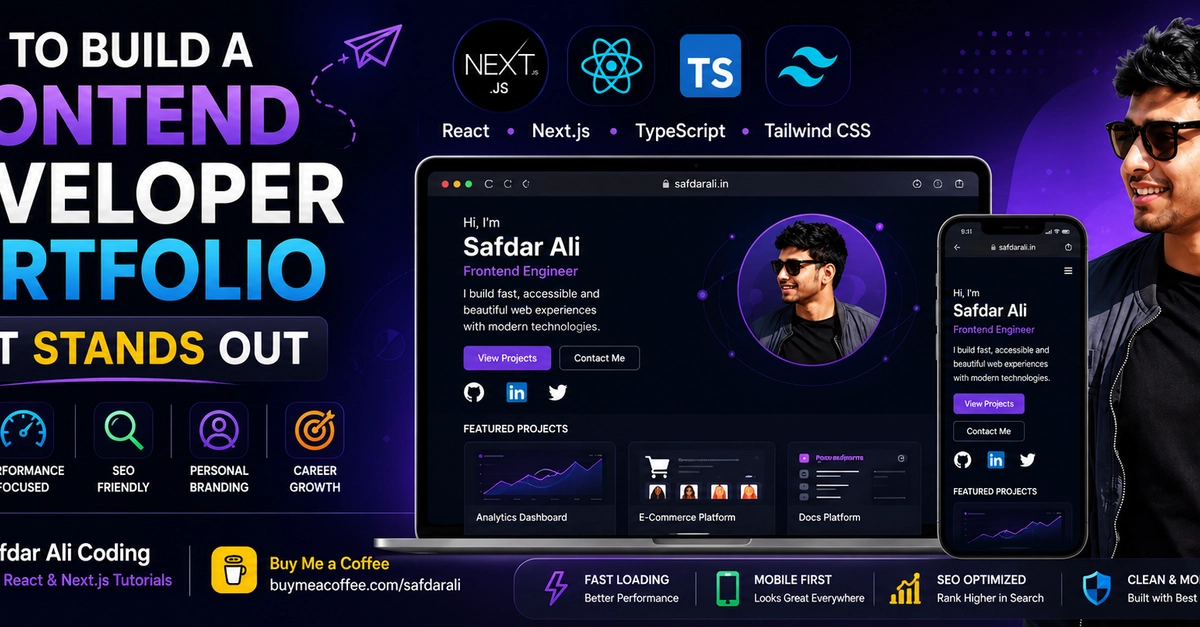
Your portfolio is often the first impression a recruiter, client, or fellow developer gets of you. If it loads slowly, ranks nowhere on Google, or is a pain to update, it's working against you instead of for you. Here's how I approached optimizing mine — covering performance, SEO, and everyday usability.
1. Start With a Lightweight Foundation
The biggest performance wins come before you write a single line of custom code.
Pick a lean stack. Static site generators (Astro, Next.js with static export, Hugo, or even plain HTML/CSS/JS) ship far less JavaScript than a full SPA framework for a mostly-static portfolio.
Avoid unnecessary UI libraries. A heavy component library for a five-page site adds kilobytes you don't need. Hand-roll simple components instead.