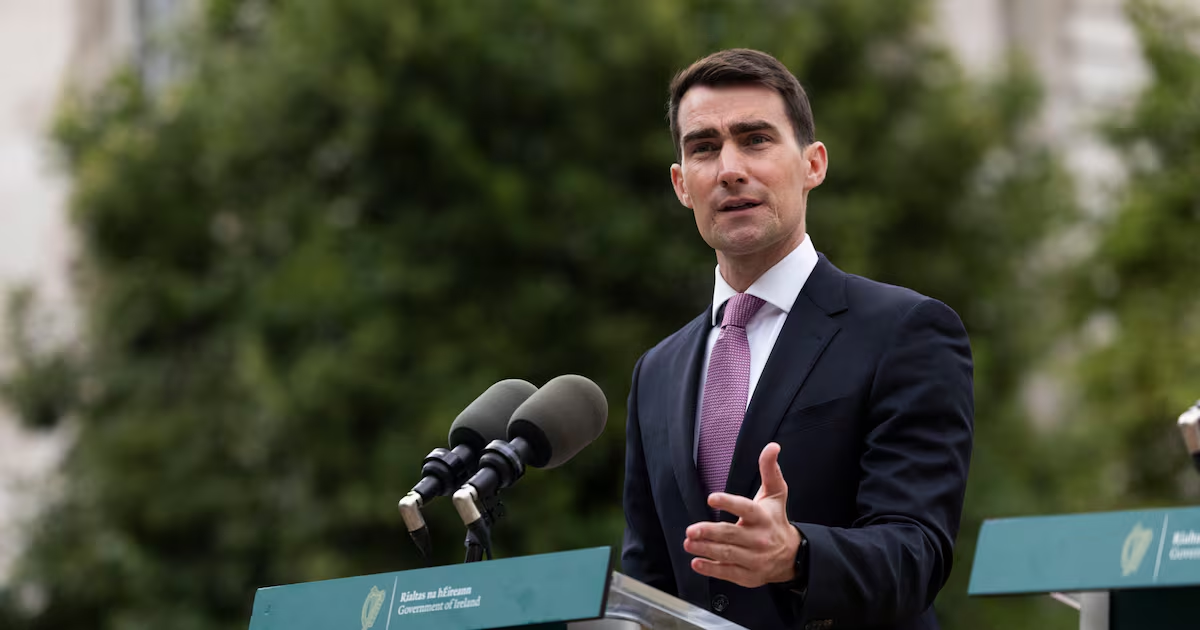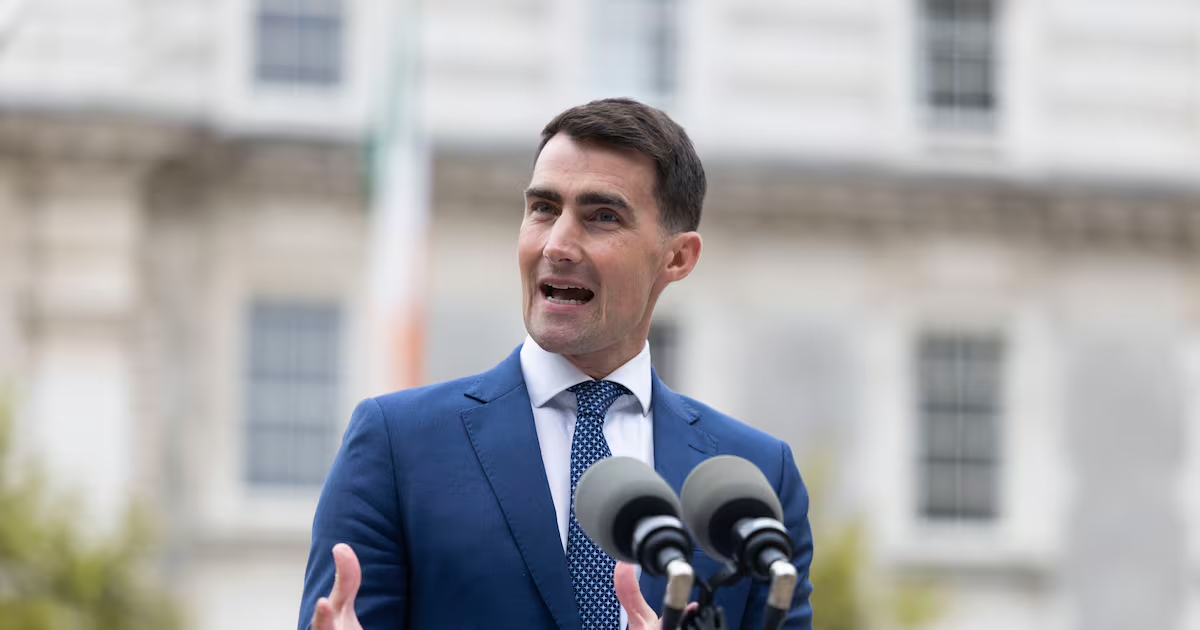
Officials proposed scrapping the “linchpin” of climate legislation earlier this year in a move which environmentalists say would have “ripped the heart” from climate governance. Files released under freedom-of-information (FOI) laws show Department of Public Expenditure (DPER) officials approached their counterparts in the Department of Climate with a proposal to entirely revoke section 15 of the Climate Act. The section requires public bodies, in so far as is practicable, to perform their functions in a manner consistent with the mitigation of greenhouse gas emissions, the most recent climate action plans, long-term climate action strategy and the furtherance of the national climate objective. It was described by the Supreme Court as a “climate sense check” to ensure decisions fit within national climate policy. Environmentalists have described it as “the most important accountability mechanisms in the Climate Act”.The move to scrap it was made as work was under way on the Critical Infrastructure Act, which ultimately disapplied this section to some large infrastructure projects only. The infrastructure Act was designed to speed up the delivery of big public projects.Records show that Minister for Climate Darragh O’Brien was briefed by his officials about an approach from DPER “at short notice”, asking about the policy implications on a “new potential proposal to directly amend the [climate Act] to revoke section 15 entirely”. Minister for Public Expenditure Jack Chambers has argued that disapplying the section – as was included in the final Critical Infrastructure Act – removes an “unnecessary layer that is driving a wider increase and risk around judicial reviews”. However, Green Party leader Roderic O’Gorman accused Fianna Fáil and Fine Gael of a “clear ideological approach ... looking to unpick and reverse pro-climate measures that were introduced during the last government”.He said section 15 was the “linchpin” of the Climate Action Act, accusing the governing parties of “basically saying that the Irish State doesn’t see a role for itself in climate action”.Environmental activists also reacted strongly to the previously unknown proposal to scrap the section entirely.“The proposal to remove it altogether would have ripped the heart out of Ireland’s climate governance and scuppered any notion that this Government takes climate action seriously,” said Friends of the Earth Ireland chief executive Deirdre Duffy.She described the proposal as “an extraordinary example of bureaucratic overreach for a central Government department to seek to dismantle one of the most important accountability mechanisms in the Climate Act.“This goes far beyond its own policy remit and into the realm of trying to concentrate power centrally and to reshape the political architecture of climate action itself.”In a draft response to DPER, also released under FOI laws, an official said section 15 relates to the “implementation of climate actions across the public sector more broadly, in terms of their plans, strategies and operational activities”. A DPER spokesman said climate commitments depend on the ability to deliver significant infrastructure rapidly. He said the report of the Accelerating Infrastructure Taskforce delivered last year identified an “increasingly complex and litigious planning and environmental judicial review system as one of a number of systemic barriers to timely infrastructure delivery”. [ Dublin and Cork look to lead on climate action in ambitious pilot projectOpens in new window ]The department said the final legislation disapplies section 15 only for designated critical infrastructure projects and programmes, and does not alter climate ambitions, reduction targets or environmental obligations. Sean O’Driscoll, the former Glen Dimplex chief executive who was a prominent member of the Accelerating Infrastructure Taskforce, said section 15 was “very fertile ground for people who want to weaponise environmental legislation against the citizens of the State”.He said the taskforce supported the disapplication but that he had no fixed view on whether the section should have been removed entirely. A Department of Climate spokeswoman said section 15 would be disapplied only in “very limited circumstances”.“Climate impact and considerations remain central to the ambition of this Government, although they must be balanced against other critical factors like housing and energy security when it comes to these projects of national importance.”
Officials proposed scrapping ‘linchpin’ of climate legislation
Move would have ‘scuppered any notion that this Government takes climate action seriously’, environmentalists say
670 words~3 min read