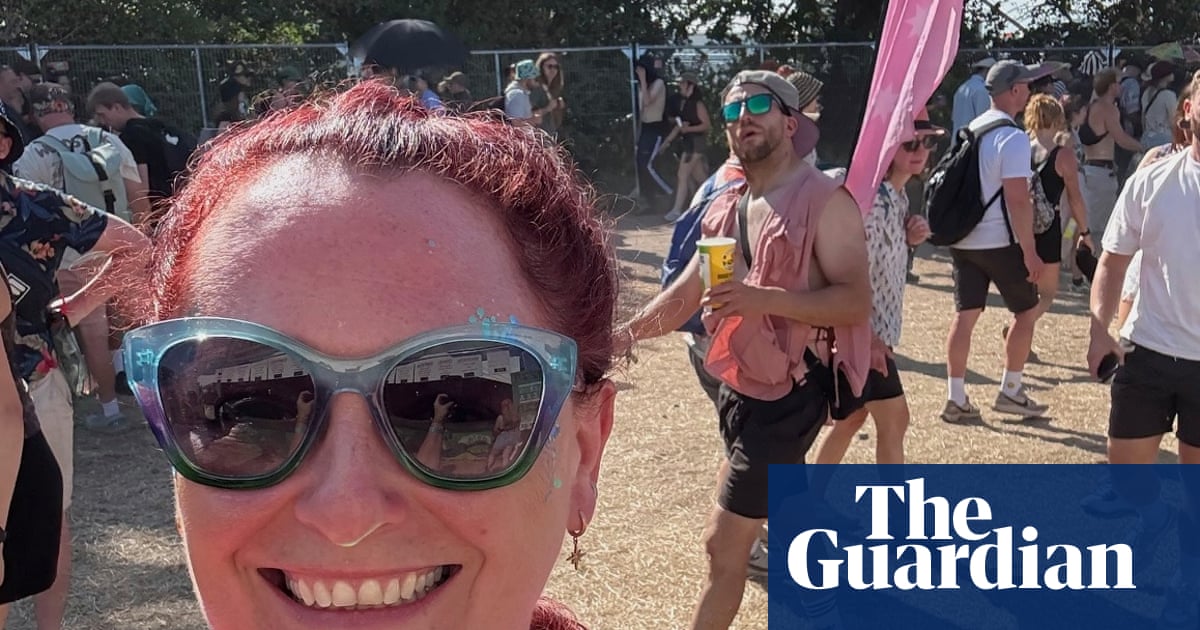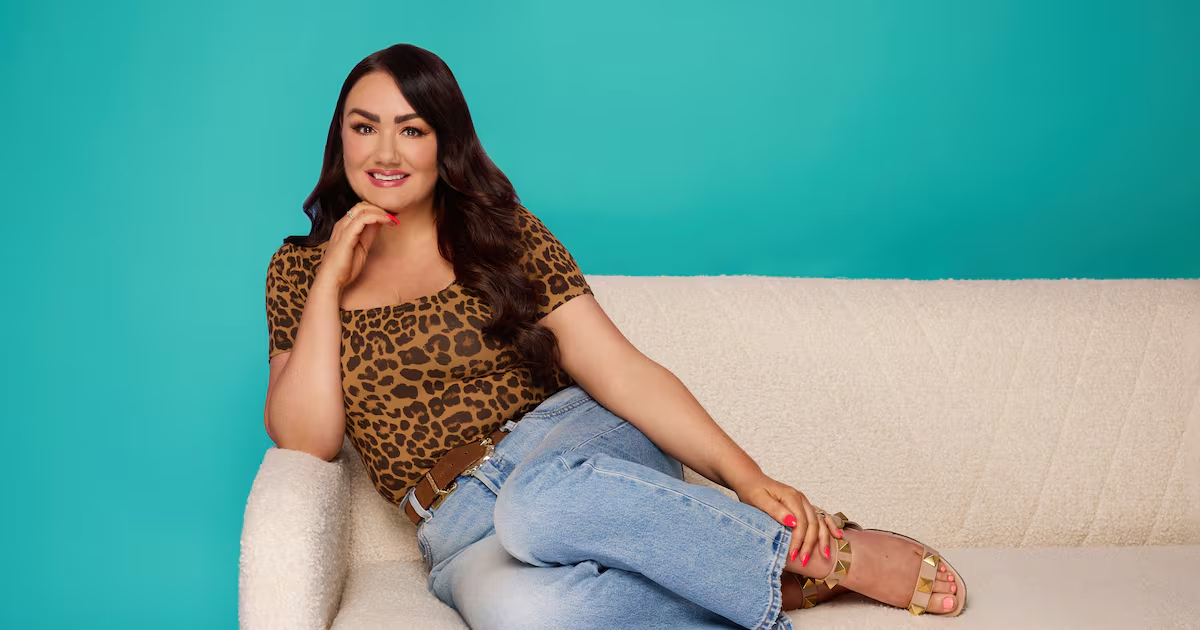
I’ve always been precocious. Perhaps it’s because I’m an only child and spent a lot of time around adults growing up, or maybe it’s due to the fact that I’m impatient by nature, but I spent my childhood and adolescence enthralled by the idea of being a proper grown-up. I didn’t fear ageing like many others seemed to; to me, being an adult with autonomy and independence was something to anticipate. And yet, I never considered being 40. In my mind, my 20s and 30s would be my prime, and anything beyond was an unthinkable abyss. I used to fear middle age because of how it was represented. I’d heard the phrase “life begins at 40” bandied about, but there were very few depictions around to back that up in literature or popular culture. Women were told we’d become invisible in this next chapter of our lives, that we’d be unripe, unattractive, overlooked. So what’s surprised me most is how fabulous it’s all been, thus far. Granted, I only turned 40 in January, but in all honesty I can say I’ve never felt more content. Sure, I can’t handle hangovers like I used to and I don’t have a steady salary any more since I left my management job in publishing to write novels. I’m also perimenopausal, according to my gynaecologist. I might not be bursting with fresh eggs, but what I do possess is a new confidence in myself and my life choices, the kind of wisdom that only comes with age. It’s fair to say that many Millennials were a little delayed getting going. A lot has been written about the apparent arrested development of my generation; we came out of college into a devastating recession. Jobs were scarce, tens of thousands were emigrating every year, and getting a foot on the career ladder was very tricky indeed. We’re said to be the first postwar generation to be financially worse off than our parents, despite more access to higher education and higher-paying jobs. I was one of the lucky ones. I secured a job at a magazine company at 22, just before the economy really tanked. I had stars in my eyes and didn’t care that the going rate was pretty insulting. I put the head down, paid my dues and worked my way up. By 27 I was editing national newspaper supplements. Over the following years and in no particular order I got married, bought a home, was diagnosed with a generalised anxiety disorder and was promoted to management. Burnout wasn’t something that was really talked about when I was 30 – you worked yourself to the bone, and admitting that it was frying you was seen as weakness. It took me until 37 to realise that I had a new dream to dream, and pivot out of journalism. My own second act has been equal parts refreshing, exciting and terrifying, yet I have no regrets. As I already knew I didn’t want children, freezing eggs or worrying about fertility timelines wasn’t a concern, but I’ve watched on as so many of my peers dealt with issues surrounding babies. And as I’ve watched, it has occurred to me that for women around 40 in this country, things are very different from a generation ago. The ability to control your own family planning would have been unthinkable in the Ireland I was born to, but the stronghold religion had on society loosened, divorce became legal and marriage optional. The social stigma around so-called “spinsters” thankfully went the way of the dinosaurs. We repealed the Eighth Amendment and legalised same-sex marriage. As someone who grew up with the Calor Housewife of the Year contest, when the Troubles abounded and the Roman Catholic church dominated, so much has changed. Things are far from perfect, but they are different and that’s what’s afforded us the opportunity to make decisions for ourselves. And as a result of all this change, Millennial women are finding ourselves in disparate situations, despite ostensibly being at the same stage of life. That was the thought that inspired my new novel, Anywhere But Here – has the rulebook been torn up for women now, and is that a good thing? My three main characters Sadie, Matilda and Jess are all around the same age but find themselves in polarising circumstances – one is an empty nester, one a newlywed, one single and highly cynical – and yet they are one another’s sounding boards, support systems and even objects of envy. That’s true to life, both the dissimilarities and tendency to compare ourselves to our peers. Some girls I went to school with have kids going to college, others are newly engaged, others trying to conceive either alone or with their partners. Some have been married over a decade, others are going on first dates, while others have ex-spouses. Some are living with parents while saving to buy a house, some left Ireland and never came back, some returned with families in tow. This variety, this ability to choose, has been normalised, and that in itself is progressive. Plus, those who can afford it have unfettered access to Botox and don’t look a day over 35.Author Vicki Notaro The dawn of the Y2K era was the beginning of the turn, culturally at least. I logged on to the internet in 1997 when I was 11 years old, the dial-up tone etched in my memory. We Millennials have looked on in a sort of fascinated horror as this thing you could only access via landline and PC has ended up in the palms of our hands, taken over the world and changed pretty much everything. I am of the SMS and MSN Messenger generation, the first teens able to chat to their friends and strangers from the comfort of their own home. Chunky mobile phones, Bebo, Facebook, Instagram – we were at the coalface of it all. We remember what life was like before being constantly accessible and online, and often lament it. There was also a whole wide world out there to explore. I travelled by train across Europe and the US with friends before I turned 21 and took cheap flights at the drop of a hat, something my parents couldn’t even have considered. More and more in the digital age, women began to seek careers and life experience over marriage, or at least in tandem. All of a sudden it seemed possible to “have it all”, a trope that had been floating around since the early 1990s.Over the past few months, I’ve been chatting to other women about their experiences of turning 40. Emma Kehoe is an influencer and life coach from Dublin, professions that were barely nascent a decade ago. She celebrated her 40th birthday in June. “Turning 40 has taught me to accept myself more. I thought I would have a home, a child, even be married by now,” she says. “I was almost at that place in my 30s and then my life took a U-turn for the better. I went on a new journey and had a chance to figure out who I was and what I truly wanted. So while my life mightn’t have turned out how I wanted it to then, it’s actually even better. Our mothers’ and grandmothers’ generations were totally different, now women have more choice and freedom whether in career, planning a family later in life, or even if you’re not happy in a relationship or marriage, you don’t have to stay in it.” Not everyone feels that way, however. “I think the perception is that the world is a completely different place to our mums’ generation, but I don’t feel like a whole lot has changed,” says Amy Coppola. “Life looks very different than I thought, and very different to my friends. I’ve been trying to conceive for six years, undergone IUI and IVF and had surgery for endometriosis. Who knows what the next year will bring, but I feel like I’m in a strange place of parking the life we thought we’d have if this next round of IVF doesn’t work and start living life again.”Jamie Cheevers, another friend, says turning 40 has been a largely positive experience. “In my younger days, I was led to believe that once I hit 40 I was going to become invisible. I got married before the big birthday because I convinced myself I didn’t want to be an old bride. I still feel young and I have more opportunity to do things that I want. Cost of living crisis aside, I have the financial means and I’m beyond grateful that I no longer have to make every cent count for fear I won’t make it to pay day. I bought my house at 38, but I’m very conscious that a lot of people I grew up with are only able to buy their own home at this age or older, which shouldn’t be happening. A lot of choice has been ripped away from people.” And still, some worry about ticking clocks. “I have a newborn and I guess I would have expected to be well in to parenthood by now – it took time with careers and mortgages,” says my friend Mary Dillon, another 40-year-old from Dublin. “Sometimes I feel a bit behind and panicked, and [under] pressure to be healthy and fit as I’m an ‘older’ mam.” No generation is immune to the pressures society imposes on us as women, but there’s certainly a far more open dialogue about what to expect, thanks largely to social media. Menopause has gone from being mysterious and hush-hush to openly discussed. Personally, I feel a lot more prepared than scared for the future. And unlike in the more conservative United States (not a sentence I ever thought I’d write) where they’re harking back to the traditional days of yore, we’re not long enough shot of that lifestyle to glorify it. Tradwives? You’re grand, thanks.I have no desire to be any younger, or to revisit my 2011 indie sleaze heyday. Being fabulous at 40, 50, 60 and beyond is much more appealing. And did I mention the Botox? Vicki Notaro’s new novel Anywhere But Here is published by Sandycove
‘I used to fear middle age, that I’d become invisible, unripe, unattractive, overlooked. But so far it’s fabulous’
I used to fear middle age, that I’d become invisible, unattractive, overlooked. But the rulebook has been rewritten for Millennial women like me, writes Vicki Notaro
1,708 words~8 min read