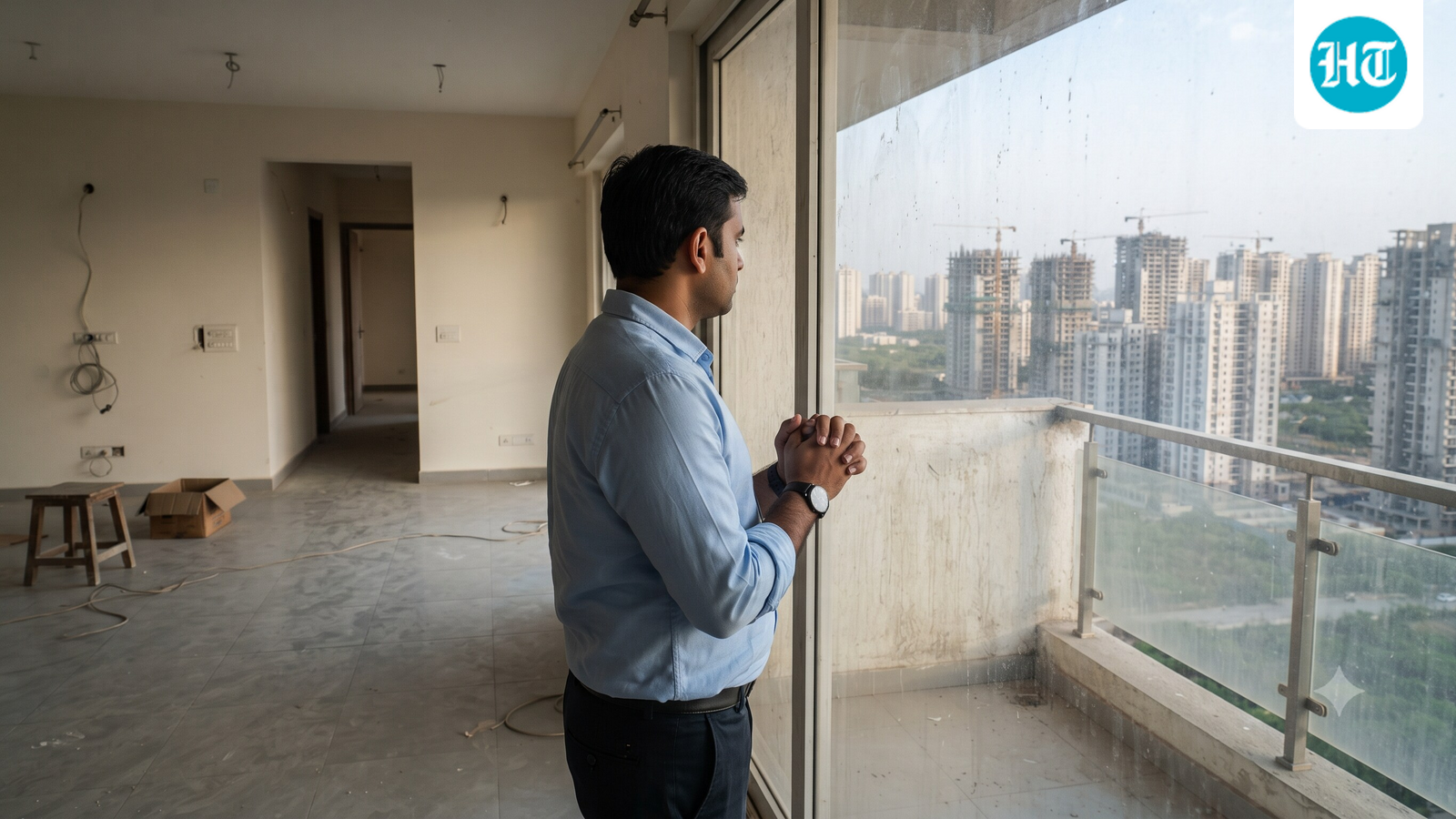
SynopsisNoida’s rising property prices highlight the growing gap between salaries and home affordability. Social media user Ankit Pandey compared a software engineer earning Rs 25 LPA with his father, who bought a similar home in 2005 at just 18 times his monthly salary. Current Noida property prices vary widely, while Reuters reports continued housing price growth. Experts also point to shrinking affordable housing supply, raising concerns about whether India’s middle class is earning more but paying disproportionately more.A software engineer who works in Noida, earns Rs 25 LPA, but is unable to afford the house his father bought decades back. (Istock- Representative image)A Rs 25 LPA salary sounds like a comfortable income, but buying a home in a major Indian city can still feel out of reach. A social media post by Ankit Pandey highlights this growing affordability gap through the example of a Noida software engineer earning Rs 25 lakh a year. Despite earning nearly four times what his father once did, he faces a far steeper challenge buying a similar home. The numbers raise an uncomfortable question about middle-class wealth.Rs 25 LPA salary, but a Rs 2 crore 3BHKAccording to Ankit Pandey, his friend, a software engineer who works in Noida, earns Rs 25 LPA. He wants to purchase a decent 3BHK apartment in the same city, but the estimated price is around Rs 2 crore. Pandey pointed out that the home would cost nearly 96 times the engineer's monthly gross salary. Financing such a property could also mean an EMI of around Rs 1.5 lakh every month for 30 years.For someone earning Rs 25 lakh annually, that represents a substantial long-term financial commitment, particularly when other expenses, investments and future goals also have to be considered.His father earned less but had an easier path to homeownershipThe comparison becomes more striking when Pandey looks at the engineer's father. According to the social media user, his father purchased a similar flat in the same city in 2005. At the time, the property cost around 18 times his monthly salary.The son, meanwhile, earns almost four times more than his father did. Yet the same type of home has become dramatically harder for him to afford. That contrast forms the central point of Pandey's post. A higher salary does not necessarily translate into greater purchasing power when essential assets such as housing rise much faster than incomes.— iamankitpande (@iamankitpande) The changing mathematics of middle-class homeownershipThe example highlights how home affordability is determined by more than annual income. Property prices, interest rates, loan tenures and the size of the required down payment all influence whether a family can comfortably purchase a house.A Rs 25 LPA salary may provide a relatively strong income, but a Rs 2 crore property changes the equation considerably. A buyer taking on a 30-year loan could spend decades servicing the mortgage. The comparison with 2005 also shows why salary growth alone may not tell the full story. Someone can earn significantly more than the previous generation while still finding it harder to purchase the same asset.‘Is the middle class earning more, or just paying more?’Pandey ended his post with a question that captures the broader concern: “Is the middle class earning more, or just paying more?”His comparison is not simply about one software engineer or one Noida apartment. It points to a larger conversation about how India's rising salaries compare with the cost of housing in urban centres. For younger professionals, the challenge is increasingly about converting higher earnings into actual wealth. A bigger pay cheque can improve lifestyle and savings, but if property prices have risen even faster, homeownership can remain stubbornly out of reach.What does data say?Magicbricks' July 2026 data shows Noida prices vary widely by locality, with examples including Rs 10,447 per sq ft in one location, Rs 14,585 in a second location, and Rs 16,605 in another. Based on a Reuters poll report in 2025, authored by Rahul Trivedi, average home prices in India are expected to rise at a steady pace of roughly 6% annually over the next two years. Reuters further reported that Pankaj Kapoor, founder of real estate research firm Liases Foras, highlighted that the average price for a flat in Gurgaon has reached 4 crore rupees. To comfortably afford a home at this price point, a buyer's average annual income would need to be around 80 lakh rupees. The housing market continues to be heavily skewed toward high-end luxury developments, while supply in the affordable and mid-income segments has dwindled. Real estate consultancy Knight Frank estimates a current national shortage of about 10 million affordable homes, a gap projected to triple by 2030 due to a lack of new entry-level launches.Read More News on...morelessRead More News on...moreless
Techie earns Rs 25 LPA, 4 times more than his father, yet cannot afford the same home his father bought. What changed?
Noidas rising property prices highlight the growing gap between salaries and home affordability. Social media user Ankit Pandey compared a software engineer earning Rs 25 LPA with his father, who bought a similar home in 2005 at just 18 times his monthly salary. Current Noida property prices vary widely, while Reuters reports continued housing price growth. Experts also point to shrinking affordable housing supply, raising concerns about whether Indias middle class is earning more but paying disproportionately more.
787 words~4 min read