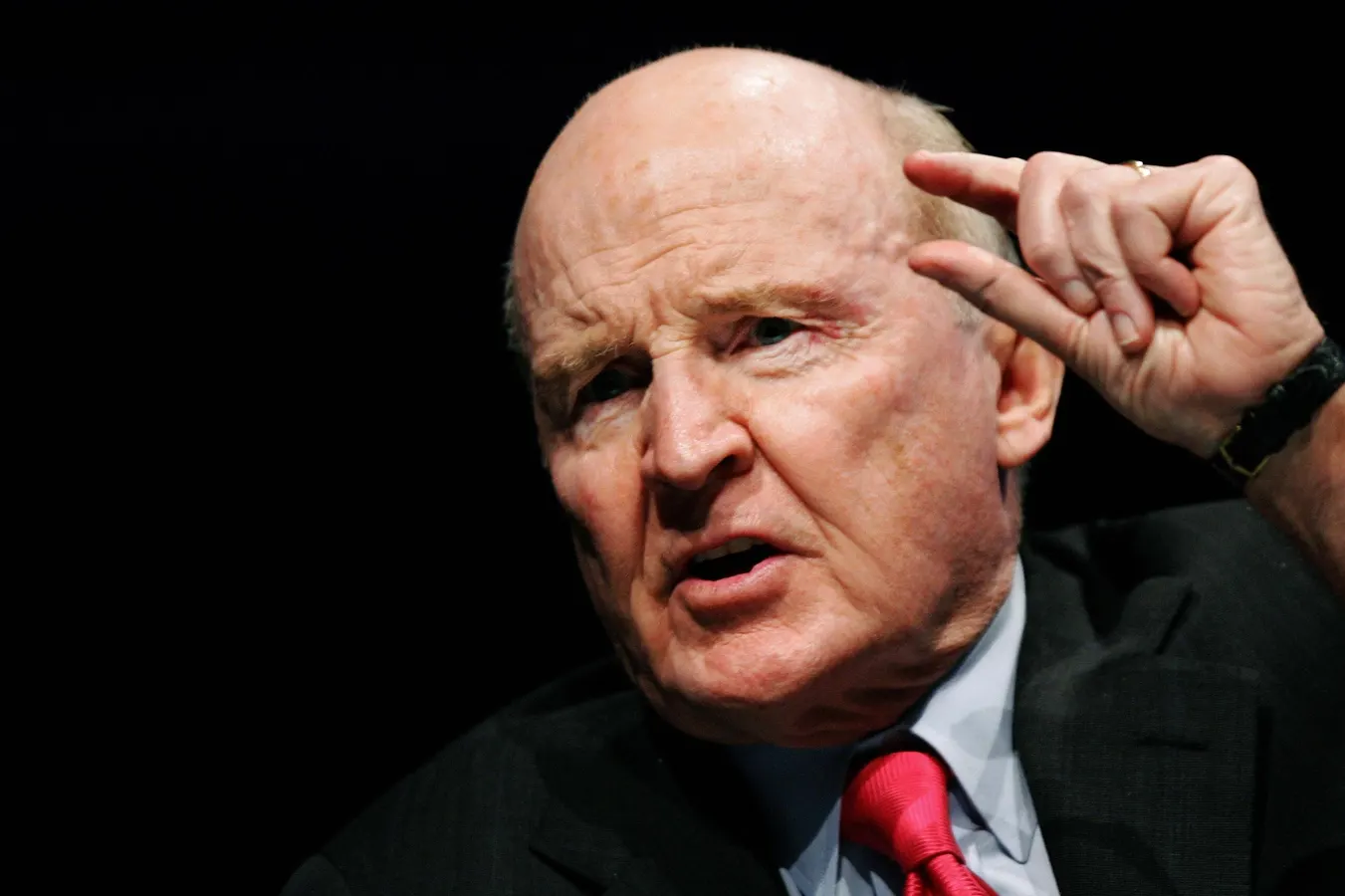
CANNES, FRANCE MAY 14 2010 Michael Douglas attends the "Wall Street: Money Never Sleeps" Press Conference . (Photo by Jean Baptiste Lacroix/WireImage)WireImageIn the July-August issue of Harvard Business Review, Bain consultants Michael Mankins and Matthew Crupi urge companies to “Bring Back Managing for Value.” Their message is clear: maximizing shareholder value (MSV) should again be the governing objective of business. Customers and other stakeholders are to be treated as constraints—monitored so they remain within acceptable bounds. It’s the same idea that Jack Welch in 2011 called “the dumbest idea in the world.” The real questions are why the ideology took hold after 1970 and whether current conditions will foster it--or exterminate it.The Forces That Gave Birth To MSVMSV thinking did not happen in a vacuum. It was 1970. The post-World War II prosperity in the US was ending. The 1970s was bringing stagflation, oil shocks, weak equity returns, and a sharp loss of U.S. competitiveness against Japan and Germany. Many large conglomerates were delivering mediocre results; managers were widely seen as empire-builders more interested in size and stability than returns. Into this vacuum burst Milton Friedman’s furious New York Times article. It framed any focus beyond profits as illegitimate spending of “someone else’s money.” The 1976 agency-theory paper by Michael Jensen and William Meckling framed managers as agents whose self-interest must be tightly aligned with shareholders through incentives for corporate control. The current stock price was to be the proxy for long-term value. Jensen’s subsequent push in 1990 for entrepreneurial-style CEO pay regardless of any evidence of entrepreneurial performance opened the floodgates of executive enthusiasm for the approach. Business schools also embraced it, in part because this one-dimensional picture of business was so easy to teach. The Role Of Institutional Investors And Business SchoolsInstitutional investors, especially pension funds hurt by inflation, also played a part. They were demanding higher returns. Hostile takeovers and leveraged buyouts in the 1980s enforced the new discipline. Political cover came from the Reagan–Thatcher free-market climate, while stock options completed the personal alignment: executives could grow rich when the share price rose. MORE FOR YOUIt was a free-for-all era whose spirit found its clearest cultural expression in the line “Greed is good.” The result was a powerful convergence of crisis, theory, capital-market power, and ideology. True--counter-examples existed: Apple’s challenge to IBM, Microsoft’s platform strategy, customer-obsessed firms, and many non-U.S. models. But the dominant narrative embraced financial metrics as the solvent for every problem. Peter Drucker’s Customer Insights SidelinedPeter Drucker’s 1954 formulation—that the only valid purpose of a business is to create a customer, with profit as a result rather than the purpose—lost ground. It resisted reduction to a single quantifiable maximand. It conflicted with the rising power of finance theory and institutional capital; It sounded soft in a climate that prized toughness and quick results. Business schools and consultants privileged economics and agency models over classical management thought. Drucker remained widely read, but the political center of gravity had shifted.The Diverging Performance of Value Creation and MSVIn the 21st century, the performance record has been revealing. Public firms that most fully internalized MSV—treating the current stock price as the master metric and stakeholders as constraints—often delivered mediocre long-term results and were disciplined by the market itself. General Electric, once the emblem of MSV, was broken apart after years of financial engineering and under-investment in core capabilities. Other firms faced forced break-ups, activist interventions, or sustained underperformance. By contrast, the clearest long-term winners treated the creation of customer value as primary and used digital technology, and later AI, as means to that end. Amazon, Apple, Google, ASML, and TSMC obsessively expanded what customers could do and how easily they could do it. The market responded with persistently rising valuations that reflected durable growth rather than short-term extraction. Those firms that subordinated customer value to residual claims frequently paid a price; those who reversed the order compounded advantage.Why the Revival Attempt NowToday’s push to revive MSV reflects a different set of pressures. Higher capital costs after years of near-zero rates have made resource allocation more salient. Stakeholder and ESG frameworks have faced political backlash, charges of green-washing, and criticism for lacking clear accountability. The 2019 Business Roundtable statement renouncing MSV changed rhetoric. But the processes, incentives and measurements in most firms stayed the same. Consulting frameworks that preserved a single financial maximand offered boards the comfort of a disciplined-sounding response. In uncertain environments, a single governing objective plus constraints felt simpler than genuine multi-objective balancing.Will the Revival Succeed?Several forces push against the revival. Sustained high performance by firms that treat customer value as primary remains the strongest empirical rebuttal. Visible failures of short-term extractive logic, whether in business or politics, erode intellectual cover. Massive AI investments create intense pressure for returns, yet systems that treat users and customers as secondary optimization variables risk costly underperformance or backlash. Meanwhile firms built on genuine value creation tend to compound. Even current geopolitical miscalculations can reinforce skepticism toward overconfident, short-horizon initiatives.These factors raise the odds that the current push will be slowed, diluted, or forced into hybrid language. An abrupt halt is unlikely. Life-long mindsets take time to change, if they change at all. Finance theory, institutional incentives, and short-term measurement systems remain deeply entrenched. Consulting and academic contexts still favor frameworks with a single quantifiable maximand. A return to the much longer and more successful historical pattern—customer value creation as the central task, with sustainable returns as the necessary outcome—will face headwinds. It will require persistent documentation of performance gaps, clearer intellectual framing, and a willingness to see customer value as the maximand rather than a constraint.The truth is that, despite the 2019 Business Roundtable denunciation of MSV, the pendulum never fully swung away from MSV. In many firms, MSV simply operates undercover. Boards keep acting the way they always have. Business schools keep teaching what they have always taught. The current attempt to bring MSV back into the open is real. Whether it succeeds will ultimately depend on what creates durable customer value and superior long-term results. The evidence favors value creation.
The Emergence And Unlikely Return Of The World’s Dumbest Management Idea
Over 25 years, MSV-focused firms often underperformed and faced market discipline, while customer-obsessed firms like Amazon, Apple Google ASML & TSMC compounded value.
TL;DRAI
Bain consultants propose maximizing shareholder value (MSV), an idea Jack Welch called "the dumbest in the world." Customer-value-first firms (Amazon, Apple, Google) outperformed MSV-focused competitors; this revival will likely fail amid AI ROI pressures.
1,013 words~5 min read