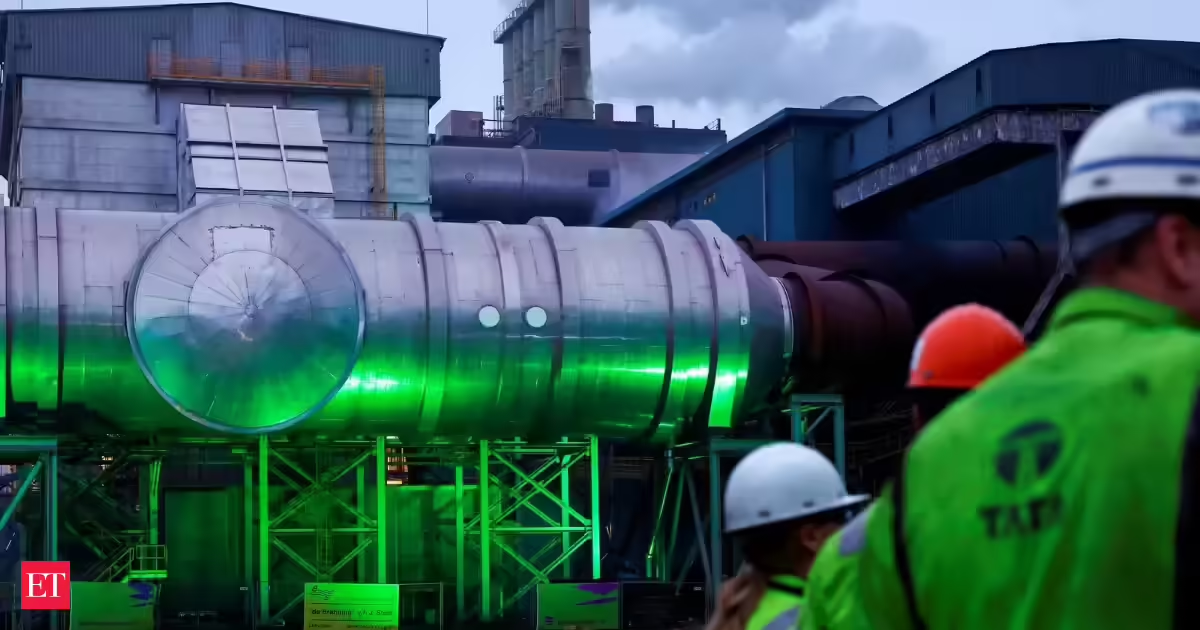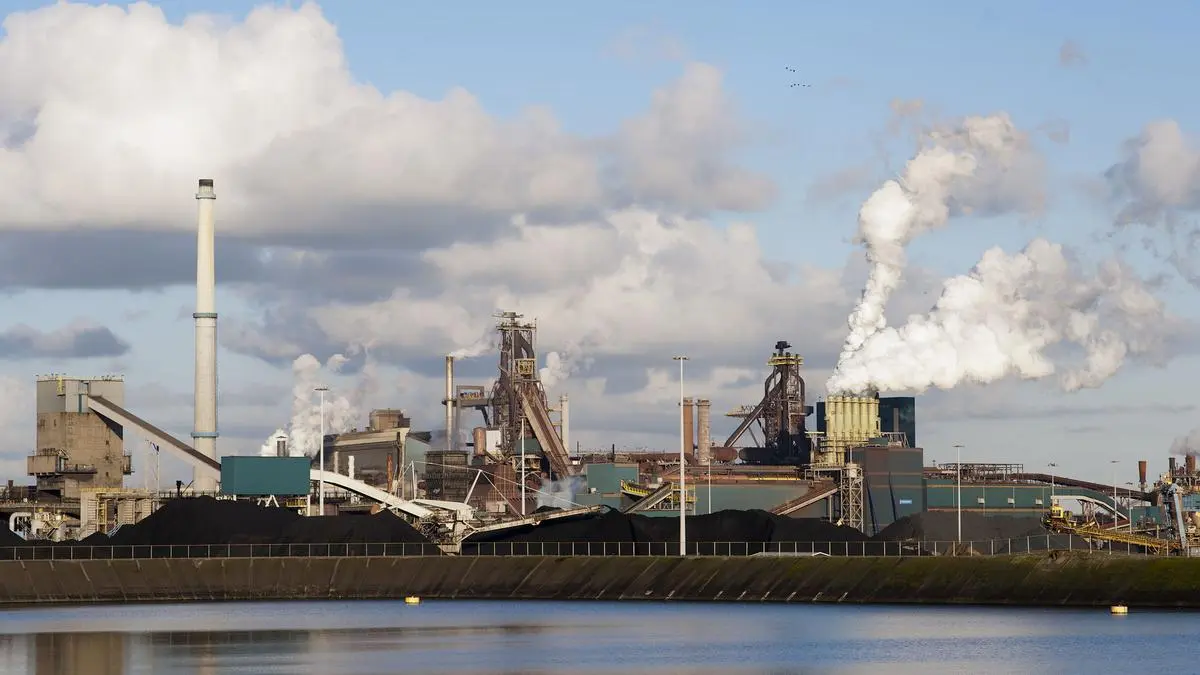
EMISSION WATCH. Tata Steel factory in in IJmuiden, The Netherlands
| Photo Credit:
Bastar
Tata Steel is pursuing a two-speed strategy to decarbonise its steel-making operations — investing heavily in breakthrough technologies that could transform iron making in the medium term, while simultaneously deploying more immediate measures such as the use of scrap, biochar and renewable energy to reduce emissions from its existing operations.The company plans to invest about ₹7,000 crore in two next-generation iron-making technologies — EASyMelt and HIsarna.EASyMelt, developed by Tata Steel, seeks to dramatically halve the use of coke in blast furnaces by employing the reducing gases from the company’s own coke oven gas. The technology requires only modifications to existing blast furnaces, rather than new facilities.HIsarna, on the other hand, was developed in Europe, with Tata Steel as a key partner. It combines cyclone smelting with a smelting reduction vessel, allowing iron ore to be directly converted into molten iron without first producing coke or sinter. The process can lead to significantly lower carbon emissions compared with conventional blast furnace iron-making.These technologies represent Tata Steel’s long-term decarbonisation pathway and will take several years to reach commercial scale. In the meantime, the company is focusing on measures that can be implemented immediately. One of these involves increasing the use of steel scrap.The company is close to commissioning a steel plant in Ludhiana with capacity to produce 0.8 million tonnes per annum using an electric arc furnace (EAF). Unlike blast furnaces, an EAF primarily melts scrap steel, substantially lowering carbon emissions, particularly when powered by renewable electricity. Tata Steel plans to establish two more EAF plants — one each in Maharashtra and Tamil Nadu.Although scrap-based steel making is more expensive than conventional production, it remains commercially viable, company officials said.The more intriguing initiative, however, involves replacing a portion of the pulverised coal injected into blast furnaces with biochar produced from agricultural residues and bamboo.Tata Steel aims to substitute 5 per cent of its pulverised coal injection with biochar over the next four to five years, eventually targeting the technical limit of around 10 per cent.New businessBiochar currently costs considerably more than the coal it replaces, making the transition expensive. Yet, Tata Steel intends to proceed.“We are still injecting because that’s the right thing to do,” Rajiv Mangal, Vice-President, Health, Safety and Sustainability, Tata Steel, told businessline. “If there is no demand, no supply will come.” The company believes its commitment could catalyse an entirely new domestic biochar industry. Tata Steel plans to work with suppliers to establish dedicated biochar manufacturing units near its steel plants, with long-term purchase commitments to give entrepreneurs the confidence to invest in production capacity.This, in turn, could create a new market for converting agricultural waste and bamboo into industrial fuel, providing farmers and rural enterprises an additional source of income while supporting the steel industry’s decarbonisation efforts.“When I talk to industry, when I talk to chambers of commerce, I tell them that you should look at this as an opportunity,” Mangal said.Renewable energy forms the third pillar of Tata Steel’s near-term strategy. The company plans to procure more green electricity, with a significant share expected from sister company Tata Power. At the same time, its integrated steel plants already generate a substantial portion of their electricity requirement from the by-product gases.For Tata Steel, the message is clear. While breakthrough technologies such as EASyMelt and HIsarna promise to reshape steel making over the next decade, the company is unwilling to wait for them to reduce emissions. Instead, it is pursuing every practical lever available today — even when they come with a higher price tag.Published on August 3, 2026