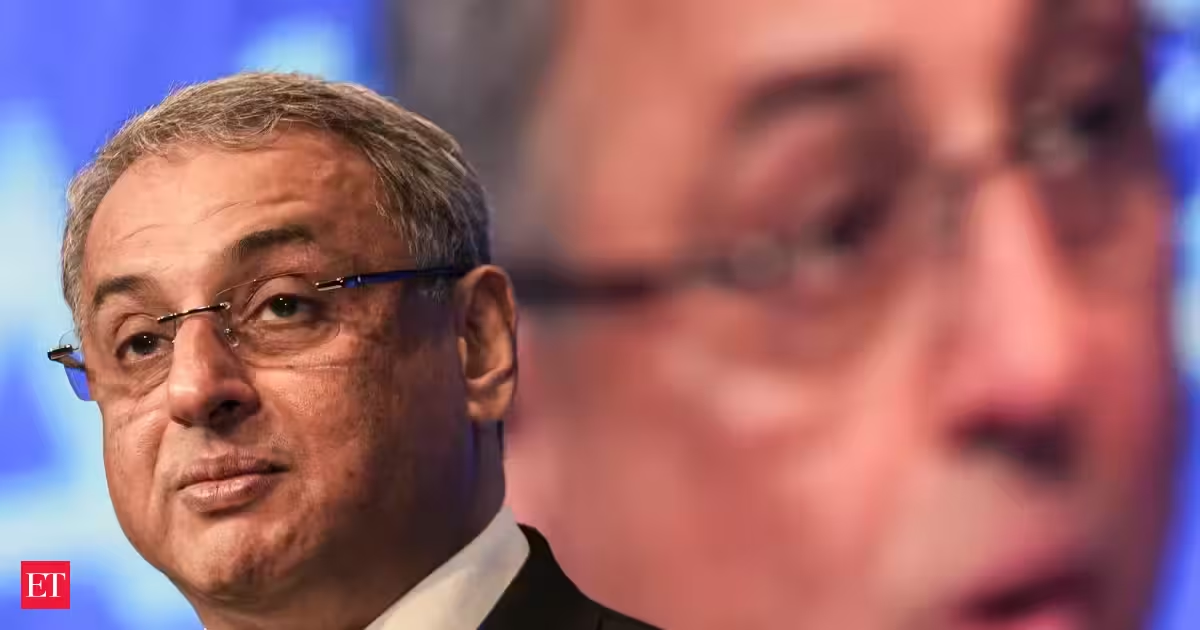
Subodh Pandey, VP Technology, R&D, NMB and Graphene, Tata Steel
In April this year, Tata Steel put out a brief announcement stating it had “entered into definitive agreements with Paul Wurth, SA (Luxembourg), part of SMS Group GmbH, for implementation of the world’s first EASyMelt (electrically assisted syngas smelter) technology”.Behind the jargon lies an ambitious attempt to tackle one of the hardest problems in industrial decarbonisation: How to reduce emissions from existing blast furnaces without replacing the furnaces altogether?The blast furnace remains the dominant means of producing iron globally. EASyMelt modifies the furnace to help use the gases emitted during the various segments of steel making to convert iron ore to iron. This significantly reduces dependence on coke, the indispensable ingredient in steel making that is also responsible for much of the carbon dioxide emissions from steel plants.However, the process of producing coke from coal — heating metallurgical coal in coke ovens — is also rich in hydrogen and methane.Tata Steel believes EASyMelt could offer a pathway to reducing coke consumption while retaining much of the existing steel-making infrastructure.Subodh Pandey, VP Technology, R&D, NMB and Graphene, told businessline that EASyMelt represents a combination of three process improvement technologies that have been demonstrated individually elsewhere but never integrated in this manner before.The first step is dry reforming, which creates the reducing gas needed by the blast furnace.An integrated steel plant produces several gases. One of them is coke oven gas, generated during the production of coke from coal. Rather than being simply burnt as fuel, coke oven gas can be used as a chemical feedstock because it contains large quantities of hydrogen and methane. “Coke oven gas is gold,” said Pandey.The methane in coke oven gas is reacted with carbon dioxide from blast furnace gas in a dry reformer. The reaction converts these gases into synthesis gas (syngas), a mixture primarily containing carbon monoxide and hydrogen — the very gases that help reduce iron ore (by driving out the oxygen in the ore).In effect, a gas that would otherwise contain a significant amount of carbon dioxide is converted into a fresh stream of reducing gases.The second process is shaft injection. In a conventional blast furnace, most reducing gases enter from the bottom and travel upwards. Shaft injection introduces the newly produced reducing gas higher up in the furnace.This allows the iron ore burden to begin losing oxygen earlier in its journey through the furnace, reducing the chemical work needed in the hottest region below.The third process is tuyere injection. Tuyeres are water-cooled nozzles located near the bottom of the blast furnace, through which hot gases are normally blown into the furnace. This is the zone where coke combustion generates high temperatures and the carbon monoxide required for iron making.By injecting reducing gases through the tuyeres, EASyMelt supplies carbon monoxide and hydrogen directly to the region where reduction is most intensive. This reduces the need for coke to generate those gases inside the furnace.Thermal shift“The idea is that, instead of making all the reducing gases inside the furnace using coke, we make them outside and inject them back in,” Pandey explained. The “electrically assisted” component of EASyMelt refers to the use of electrically generated heat to raise the temperature of the reducing gases before they are injected into the blast furnace. In a conventional furnace, the heat balance is maintained largely through carbon-based reactions involving coke. By shifting a part of the thermal requirement to electricity, EASyMelt seeks to cut the reliance on carbon for both chemical reduction and heat generation.The company’s board has approved an investment of ₹2,500 crore to modify a blast furnace at its Jamshedpur facility for the deployment of the EASyMelt technology.Pandey, however, cautioned that the coke reduction figure is an expectation, which will be tested through the project. “Our bet is that coke consumption should fall from 440 kg per tonne of hot metal to 220 kg,” he said. That would imply nearly 50 per cent reduction in coke consumption, if achieved.EASyMelt was developed by SMS Group, the global equipment supplier, which approached Tata Steel with the technology.“We had the appetite to try out this new approach,” Pandey said.The Jamshedpur project could also be the beginning of a wider rollout within Tata Steel’s operations. Pandey said he believed that around 20 per cent of the company’s blast furnaces — corresponding to 4-5 million tonnes of hot metal — could potentially be modified to adopt the EASyMelt approach. The attractiveness of the technology lies precisely in this possibility — reducing emissions from existing assets, rather than waiting for replacement with newer technologies.EASyMelt is Tata Steel’s second low-carbon pathway to steel production. The company earlier worked on HIsarna (read ‘The molten magic inside Tata Steel’s HIsarna bet’ in businessline dated April 20, 2026), an alternative iron-making route it developed in collaboration with European partners.Unlike EASyMelt, which modifies an existing blast furnace, HIsarna seeks to replace the conventional blast furnace-coke oven route altogether. It combines ore preparation and iron reduction in a cyclone converter furnace, eliminating the need for coke ovens and sinter plants and producing a concentrated carbon dioxide stream, which could potentially be captured and stored.(The writer visited the Tata Steel factory in Jamshedpur at the invitation of the company)Published on July 27, 2026