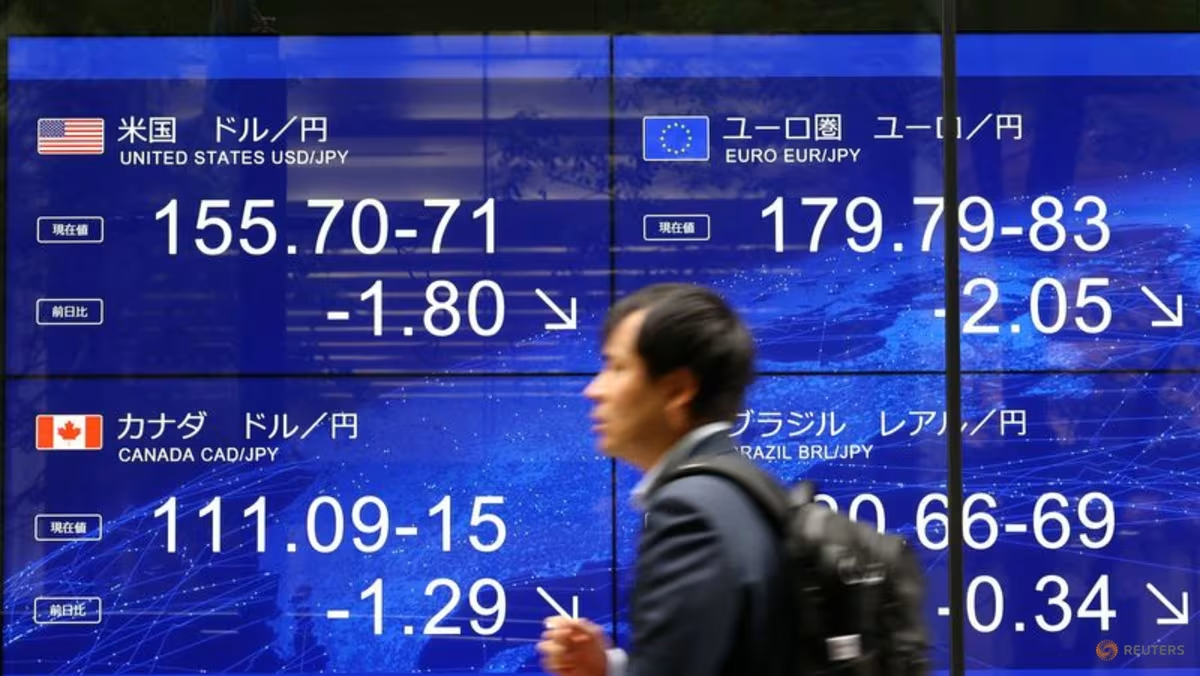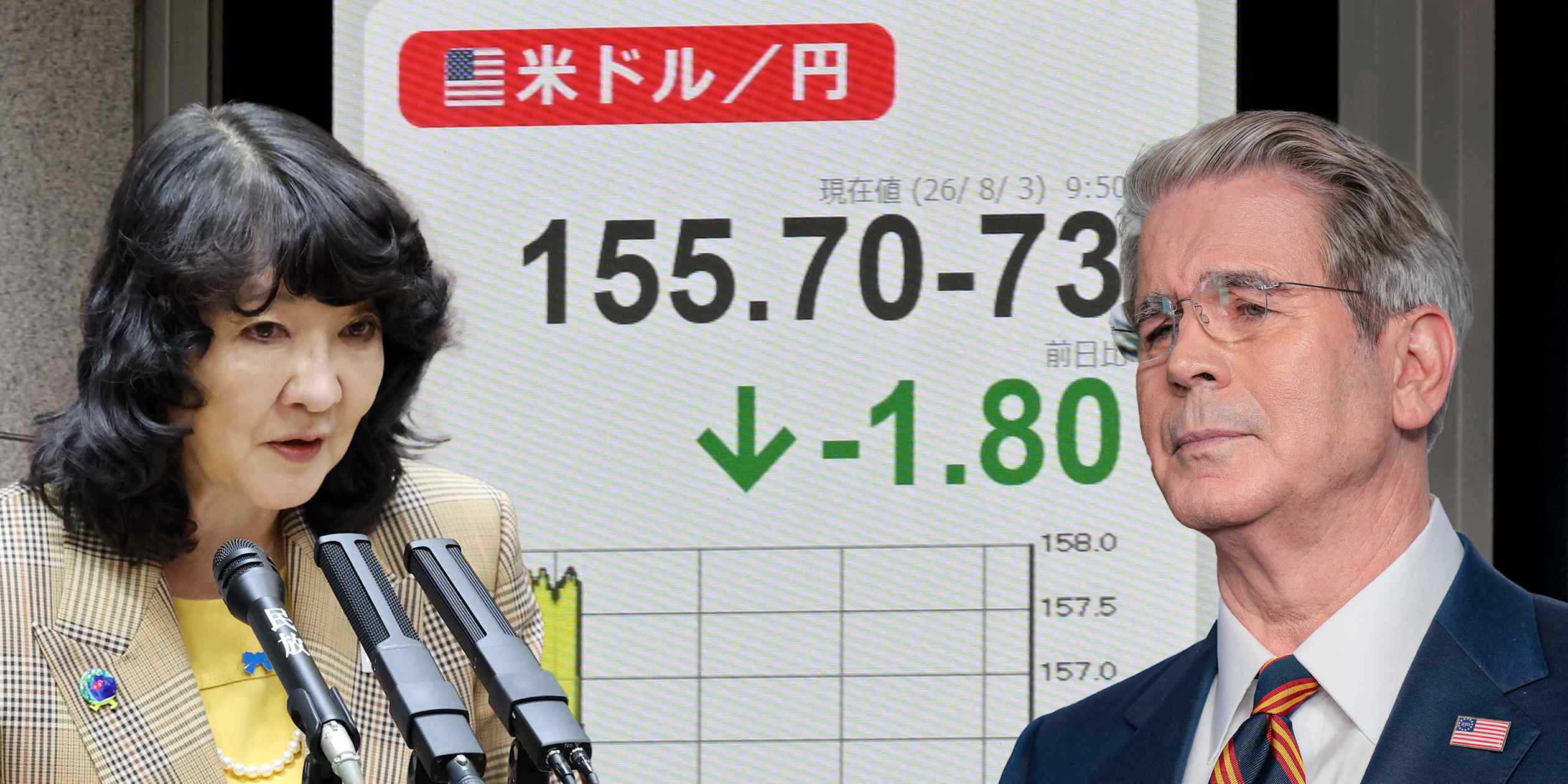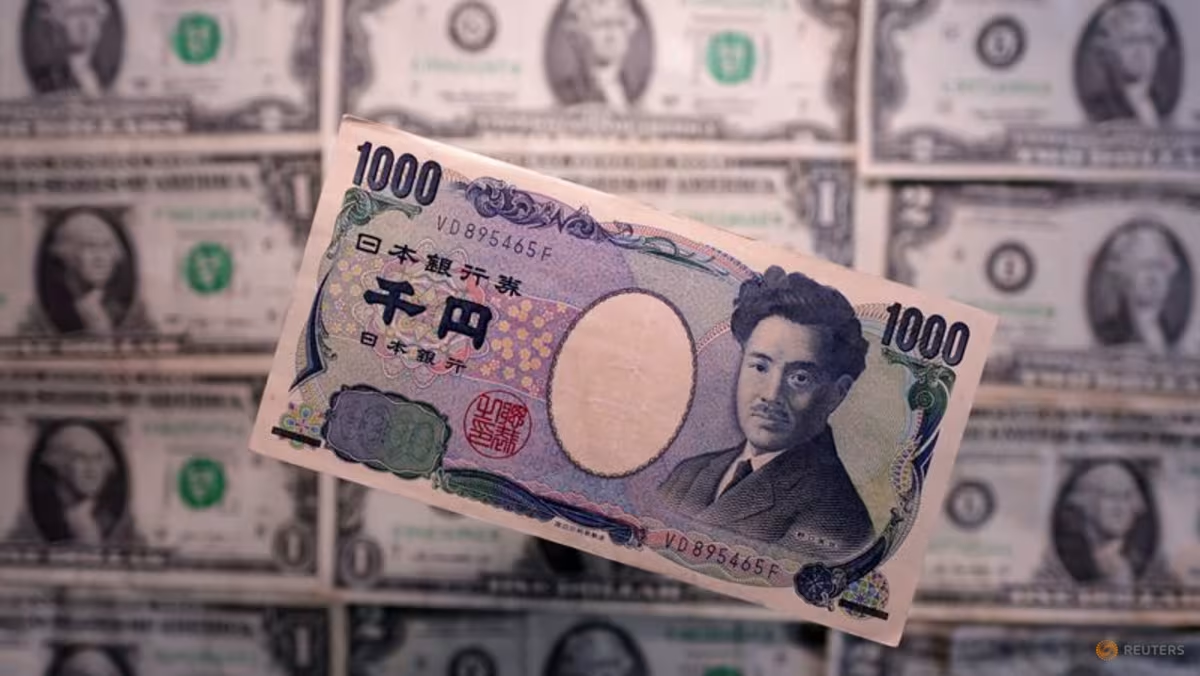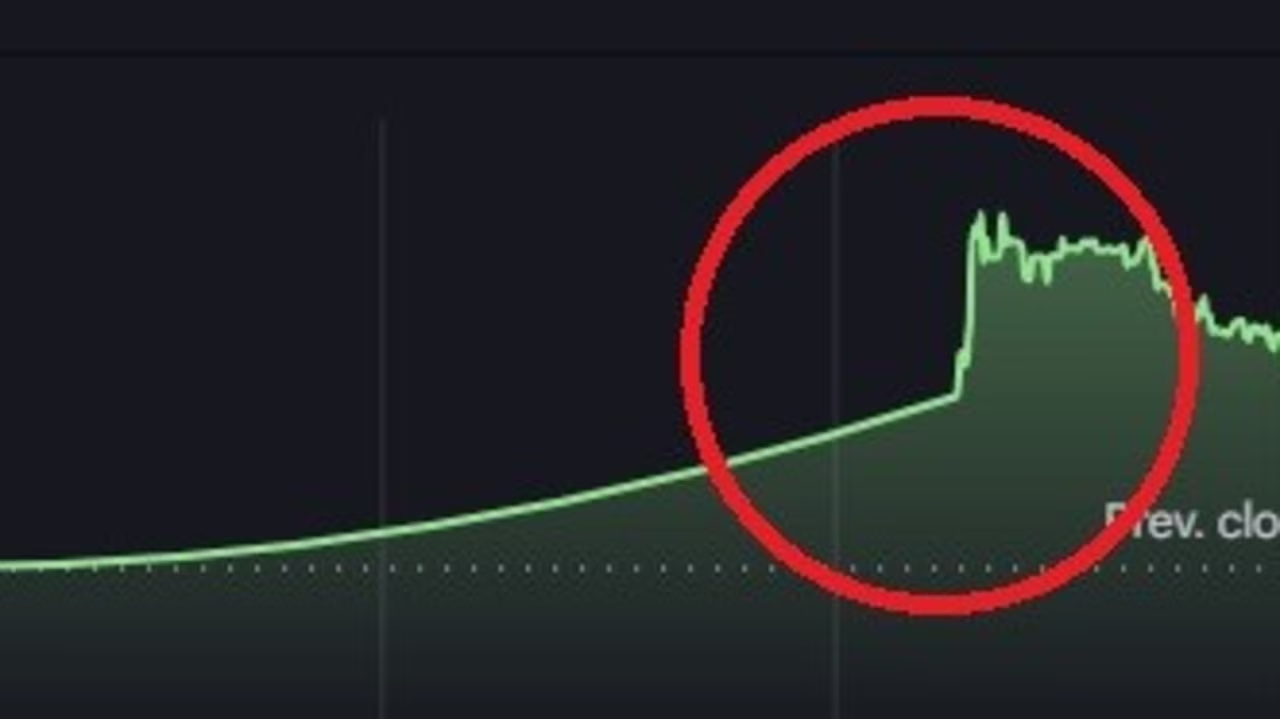
The Land of the Rising Sun may be 8000km away, but huge calls from the Japanese government in recent days are already starting to affect everyday Aussies.The Australian dollar shot up in value by 0.67 per cent towards the end of last week to its highest weekly close in seven weeks — driven by two major macroeconomic calls.While the war in Iran has weighed heavily on the global economy, a prominent economic commentator said Aussies — particularly those with a mortgage — can “no longer ignore” what’s happening in Japan.He said one of the biggest influences on where rates go next may not be in Australia at all, as the world digests what the nation of 122 million does as its currency sits at its weakest level since 1986. Why everyone is watching JapanThere have been a series of big calls made in Japan in recent days that have sent shockwaves around the world.US President Donald Trump on Sunday confirmed that the United States had intervened to support the Japanese yen, calling the move a “signal of friendship” that would financially benefit the US and world economy. The Financial Times reported on Friday that the US Treasury had jointly intervened with Japan to prop up the yen for the first time in nearly three decades. Asked aboard Air Force One why the US was moving to support Japan’s currency, Mr Trump said, “Because we have a good relationship with Japan.” The US will see “financial benefit” from the move and “it’s also good for the world economy,” Mr Trump insisted, but “it was really more than anything else, it was a signal of friendship”. “We’re very strong — very, very strong financially. They are, you know, they have a weakening yen, and they wanted a little bit of help. And we’re always there for Japan. Japan’s been very good to us, with the exception, of course, of Pearl Harbour,” the President said. The Financial Times reported, citing people familiar with the matter, that the Federal Reserve Bank of New York had taken the unusual step of selling euros to buy yen on behalf of the US Treasury on Friday. The intervention came after the yen slid to 163.24 per dollar last month, its weakest level since 1986, as higher US interest rates, rising oil prices and persistent capital outflows weighed on the currency. Washington’s move came as the yen rebounded sharply last week, fuelling speculation that Japanese authorities had also intervened in currency markets. Analysts cited by the Financial Times estimated Japan’s intervention may have totalled about 8.45 trillion yen ($75 billion). According to the Financial Times, the move would be the first co-ordinated US-Japan effort to support the yen since 1998.Aus dollar shoots up, mortgage-holders told to pay attention The news immediately sent the value of the Australian dollar on an upward climb on Friday.Tony Sycamore, a market analyst at IG, said the spike was driven by the deal between the US and Japan.“Historically, co-ordinated intervention has been reserved for crisis periods, so the willingness of US and Japanese authorities to act together under current conditions was largely unexpected and reflects a stronger-than-expected commitment to curbing excessive yen weakness,” he said. “The action pushed the yen to its strongest levels since early May and contributed to broad big dollar softness that supported the Australian dollar. A late-week rebound in global equities and risk sentiment provided an additional tailwind for the Aussie dollar.”Wealth Within’s chief analyst and founder, Dale Gillham, said the Bank of Japan’s recent decision to lift interest rates could affect Aussie investors and the RBA here at home.“Most Australians are focused on the Reserve Bank and what it will do next with interest rates,” he said. “Every inflation report and jobs number sparks a fresh round of predictions about whether rates are going up, down or staying put. However, one of the biggest influences on where rates go next may not be in Australia at all. It could be nearly 8000km away in Japan.“For decades, Japan’s ultra-low interest rates encouraged its biggest pension funds, insurers and banks to invest overseas in search of better returns and Australia was one of the biggest beneficiaries. Japanese investors became major buyers of Australian government and bank debt, helping fund our financial system. In fact, Japan has been the single largest foreign investor in Australian fixed income by country for many years.“That picture is now starting to change. The Bank of Japan has lifted interest rates to their highest level in decades. As returns improve at home, Japanese investors have more reason to keep their money in Japan rather than investing overseas.”He said this matters because Australia relies heavily on foreign investors to help finance its bond market. “If Japanese investors buy fewer Australian bonds, demand falls. When that happens, bond yields generally rise, making it more expensive for governments and banks to borrow,” he said. “Those higher funding costs can eventually flow through to businesses, home loans and the wider economy.“What happens next depends partly on Japan. If the Bank of Japan keeps raising interest rates, more Japanese capital could stay at home or flow back. That could keep upward pressure on Australian bond yields and make it harder for borrowing costs in Australia to fall, even if the Reserve Bank starts cutting the cash rate.“Ultimately, Japan won’t decide Australia’s interest-rate future on its own. Inflation, wages and the domestic economy will still be the biggest drivers, but Japan has quietly become another important piece of the puzzle, and it’s one Australians can no longer afford to ignore.”Fuel prices surge in double whammy for AusAnother global issue Australians are finding hard to ignore is the fuel crisis.Petrol prices have spiked on Monday morning after the federal government’s temporary fuel excise relief expired, while drivers were also hit with a new inflation adjustment at the pump.Fuel excise was temporarily reduced on April 1 from 52.6 cents a litre to 20.6 cents a litre, a 32 cents per litre discount to wholesale fuel prices.The Albanese Government then partially extended the relief to August 2, albeit reducing the discount at the pump to 16 cents a litre.But that relief ended at midnight on Sunday, and on Monday, petrol and diesel were also slapped with a tax hike from 36.6 cents per litre to 53.7 cents per litre as part of their twice-yearly inflation indexation. The NSW Government website FuelCheck showed average petrol prices in the state had jumped from $1.95 per litre on Sunday to $1.97 on Monday.It revealed prices had been steadily climbing in recent months after they bottomed at an average of $1.64 in June, while the excise relief was in effect. Treasurer puts petrol stations on noticeTreasurer Jim Chalmers has put petrol companies on notice not to profiteer after Australia’s the temporary fuel tax relief expired at midnight on Sunday.“It has played a really important role helping to take some of the sting out of the cost-of-living pressures,” Treasurer Jim Chalmers said.“It was never the government’s intention for that to be permanent.”The massive fuel tax cut cost the budget $2.9 billion in the first three months alone.It was designed to give economic relief to Australians in response to the oil crisis caused by the closure of the Strait of Hormuz.Now in a letter to Australia’s consumer watchdog, the Treasurer has asked for increased monitoring as petrol companies hike prices.“Since 1 April 2026, the Government has provided substantial temporary fuel tax relief to help reduce cost-of-living pressures on Australian households and businesses,’’ he said.“As this relief comes to an end, the Australian Competition and Consumer Commission (ACCC) has an important role in closely monitoring retail fuel prices and promoting transparency in the fuel market.“I consider it necessary that the ACCC increases scrutiny of fuel prices as fuel excise rates return to their normal settings to help ensure the change is appropriately reflected in prices paid by consumers.“I therefore ask that the ACCC step up its monitoring of fuel price movements to help ensure Australian motorists can be confident that fuel markets are operating competitively and as expected. “The restoration of excise rates to normal settings cannot be used as a pretext for false, misleading or otherwise unjustified price increases.”— with Samantha Maiden and Harrison Christian
AUD rockets, huge Japan act we can’t ignore
The Land of the Rising Sun may be 8000km away, but huge calls from the Japanese government in recent days are already starting to affect everyday Aussies.
1,374 words~6 min read