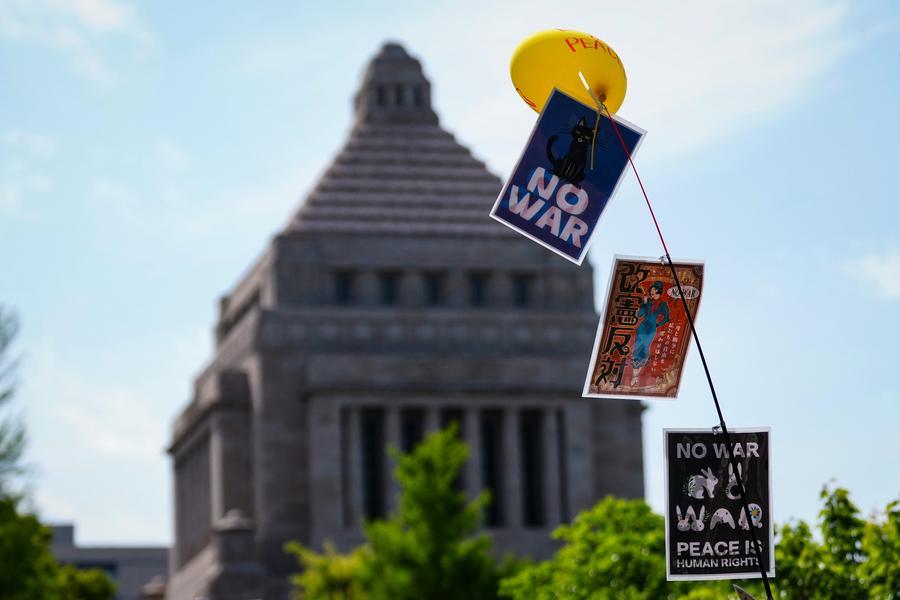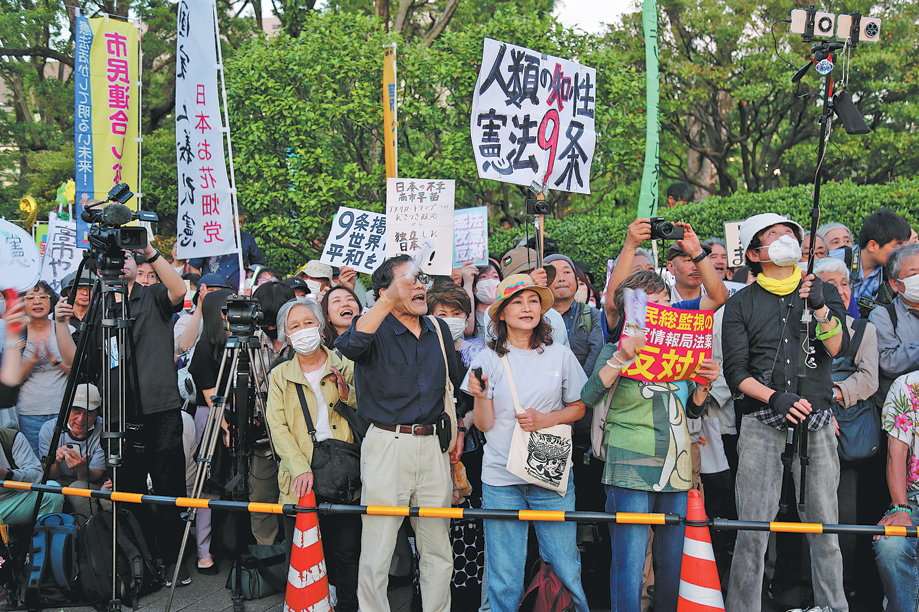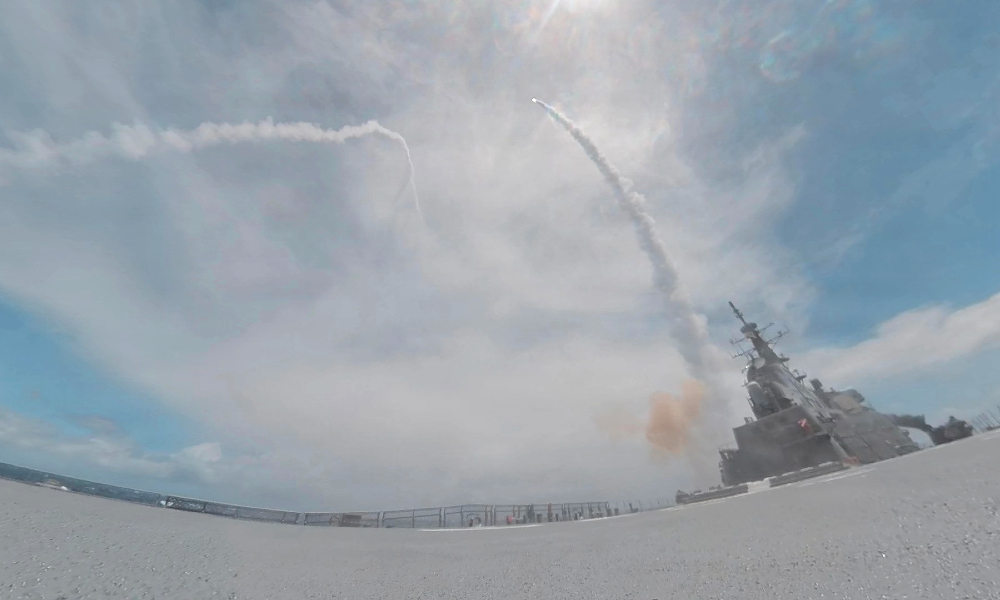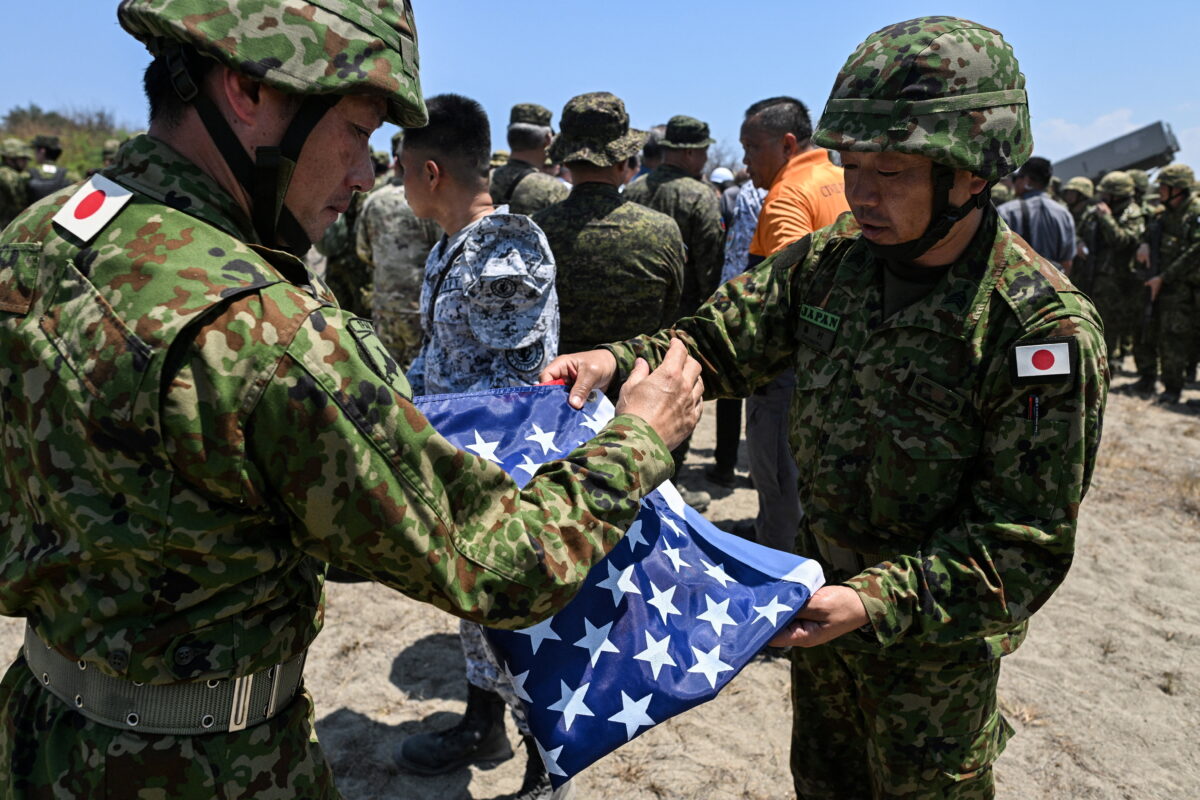
The Article 9 peace clause of Japan’s post-war constitution, which foreswears the use of force in settling international disputes, is the defining fault line in Japanese politics. Since its enactment in 1947, support for or opposition to Article 9 has become synonymous with being on the left or right side of the political spectrum.
For the left, Article 9 is a symbol of pride — a ticket that enabled Japan’s postwar readmission into international society and a necessary check that protects the Japanese people against military adventurism and geopolitical entanglement.
For the right, Article 9 is a bete noire — a foreign imposition designed to weaken the nation, leaving Japan needlessly vulnerable through irresponsible pacifism. Only Japan should be relied upon to defend itself in a time of real crisis, critics argue.
Article 9 was rarely challenged throughout the Cold War. Public opinion favoured its maintenance and the main opposition Japan Socialist Party consistently won enough seats to block a two-thirds majority needed in both houses of the National Diet to propose constitutional amendments.
Although Japan faced the Soviet threat to its north, the US security guarantee was considered unassailable because Japan calculated that protecting Tokyo was in Washington’s own interest. And while constitutional revision is a founding aim of the long-ruling Liberal Democratic Party (LDP), successive governments throughout this period largely focused their efforts on the economy, eschewing major security reforms.