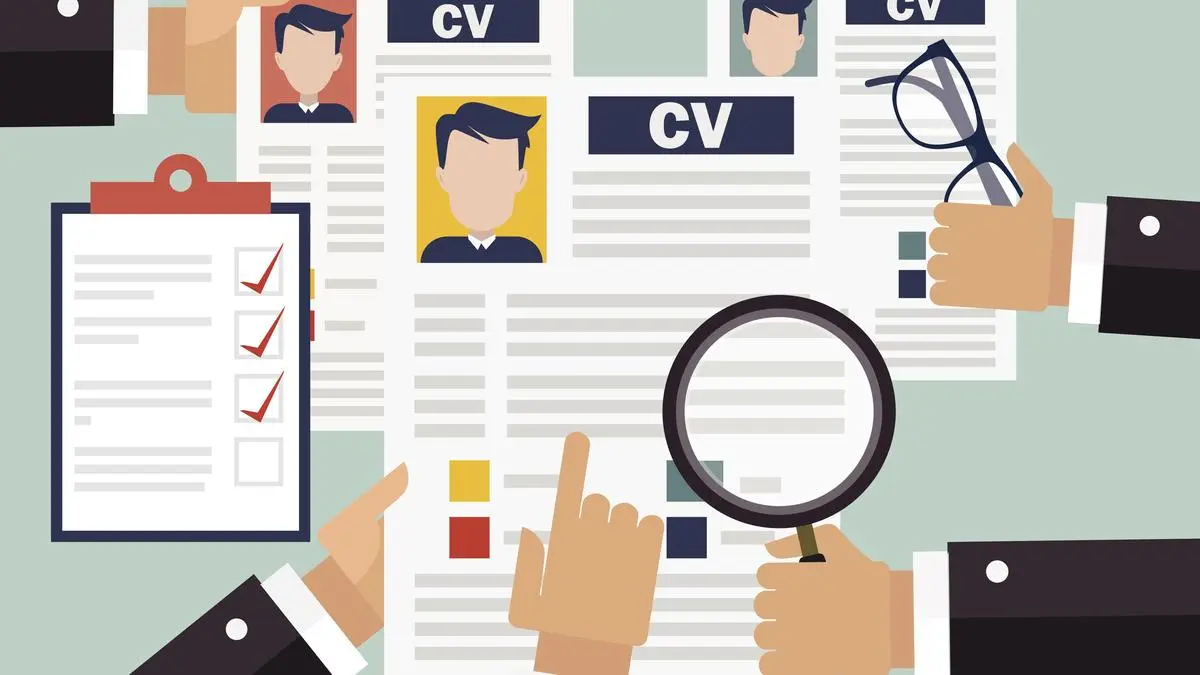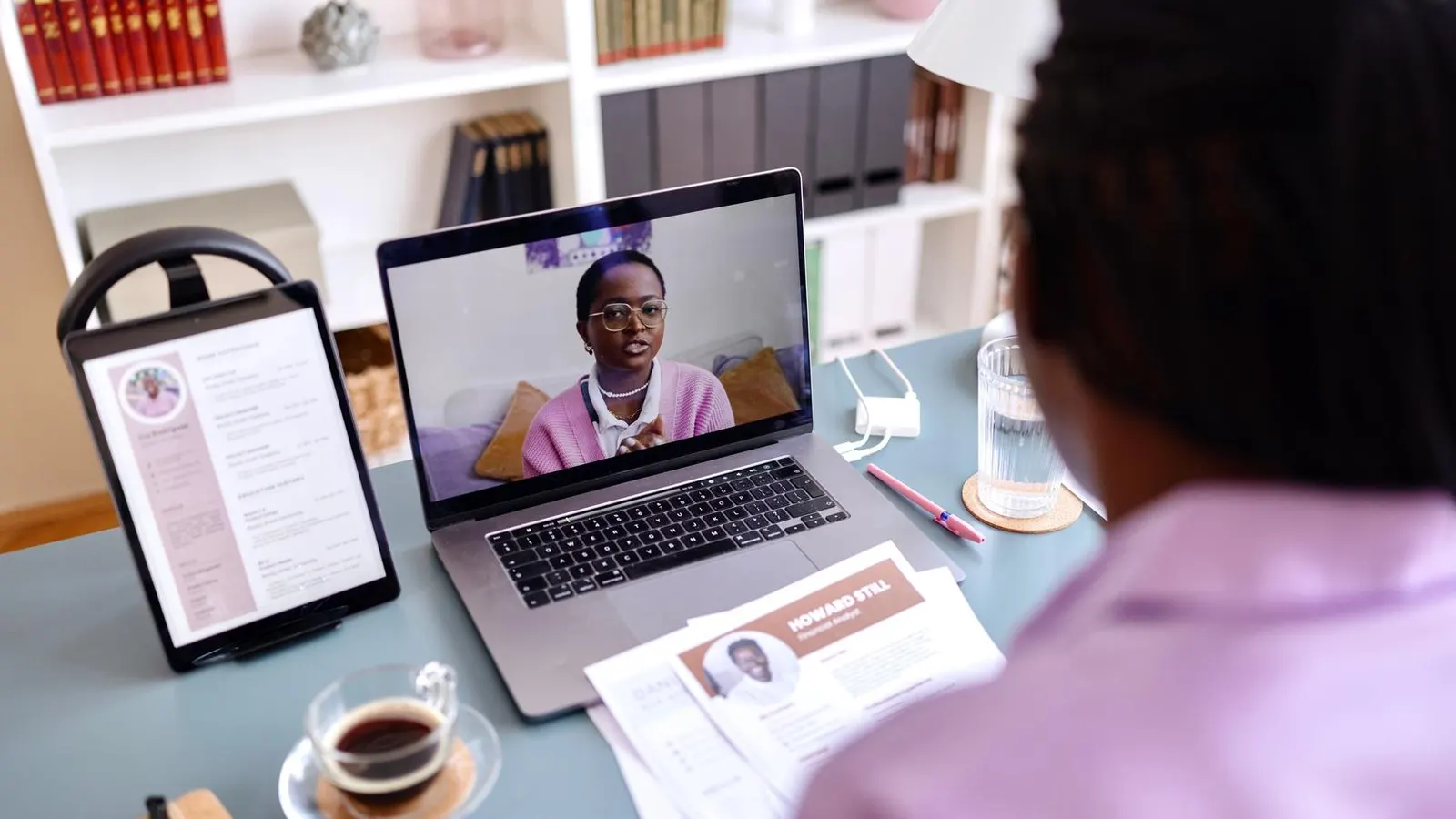
Resumes are swiftly becoming an outdated relic of the pre-2020 job eragettyRecruiting teams are inundated with 412% more applications per recruiter since 2022, and 111% more applications per job, with layoffs meaning that they’re operating at maximum capacity with just half their team size.There’s the never-ending cycle of AI fighting AI: candidates use AI to create applications and resumes, while employers use AI to filter out AI slop and detect and identify the best candidates. This cycle unfortunately eliminates and works against great candidates. People who may have been exceptional within their roles and are confident in articulating their experiences within a verbal setting may often struggle to express this within the two pages of a resume. Add to this AI detectors, and the fact that traditional ATS and hiring systems perpetuate biases in hiring, and you have a broken recruiting and hiring system.But the CEO of one popular ATS platform, Greenhouse, (which counts Workday and Ashby as competitors), believes he’s identified a solution to the hiring problem: AI interviews. How AI Interviews Could Solve The Bias And Discrimination Problem In HiringHis solution, although somewhat controversial, is what he proposes will completely reimagine the recruitment process and actually eliminate biases and discrimination from hiring instead of perpetuating them.I interviewed Daniel Chait, CEO of Greenhouse, recently for an upcoming podcast episode. And this was exactly what he told me (interview responses are edited for clarity):“Resumes by design are focused on credentialism. Your name is the biggest thing on top of a resume in bold,” he explained. And then he continued listing all the other parts of the resume that are listed in bold, such as your education, your job titles, when and where you worked, etc. “How do you ensure that people get the best shot at being hired?”, Chait reflected. Ultimately, he believes that the best way to approach hiring in the post-modern era is to move past credentialism and into skills-based hiring. “Not where they worked, how long they worked there for, their academic qualifications and degrees, but who is this person really, and what are they good at?” he shared. Now, to be fair, where someone worked and the type of job titles they’ve held before still heavily weigh in when it comes to considering who you are as a professional. But even still, while those may shape your professional identity, they do not need to be visible to employers--definitely not early on in the hiring process. And that is why Chait believe that interviews conducted by AI instead of by humans have a real advantage in the new skills-based hiring strategy.“The problem isn’t AI,” he said. “The problem is bad AI solutions to the problem that people are having.”“I’ll give you one stat which I think should illustrate this this point really dramatically, and this is from a study that was done in 2003,” Chait continued. “So this is not new news, but the study looked at racial discrimination in resume review. It asked the question, when I send in a resume, does the fact that you can sort of infer from what’s on that resume some information about my race, my racial background, affect my chances of getting interviewed?”The study, published by the NBER (National Bureau of Economic Research) proved that it did. “So what they did was they sent out thousands of resumes that were identical except the name at the top had a stereotypically African American sounding or a stereotypically white American sounding name. And what they found was a 50-percentage-point disparity. The person that had a stereotypically Black name--they were 50% less likely to get invited for an interview with the same exact resume. So resume reviews have been problematic forever,” Chait concluded. Now that we are in the era of AI, Chait believes that the advantage we currently have is that we can skip that resume screening process entirely. With human interviews being expensive and time-consuming to deliver for everyone, AI changes the game because now candidates have the opportunity to sell themselves via first interview screens that feel comfortable and natural, transparent, and use structured hiring principles. “And companies can now deliver those to anyone anytime, day or night, really inexpensively at scale. And so companies are now saying, well, we’re going to stop gatekeeping that and everybody gets a shot. We don’t really care what’s on your resume. If you pass the interview, we want to talk to you,” Chait explained.“And that's really opening up opportunities for people that otherwise weren't qualifying for them for a variety of reasons. It could be bias. It could just be, you know, there's a long line and, you know, it's hard to stand out. And so I think that example points the way towards how AI can be used to rethink hiring, overturn some of the old assumptions, and give people much better and fairer ways to find a job.”AI interviews, when conducted according to fair hiring practices, enable bias-free interviewing and open opportunities to candidates who would otherwise be discriminated againstgettySkills Over Credentials And Resumes?Indeed, we are still in the infancy days of AI interviews. AI still makes blunders and mistakes. The experience may not be perfect. But the technology is rapidly evolving, and where we could be in three or so years from now, will most likely be radically different from how AI interviews were when they started, or even how they are today, given the rate of AI development. Greenhouse is not the only organization thinking like this. The investor and Diary of a CEO podcaster Steven Bartlett’s company, Culture Test, specifically designed its test to hire the most exceptional talent, and to ensure candidates were captured who are aligned with an employer’s values and ways of working. Crossover, an AI-first remote job platform, hires through an AI-led process that conducts an interview with you that can be taken any time, wherever you are, in a comfortable setting. More companies and employers I’ve been observing are turning to psychometric testing, culture fit testing, and AI interviews as workarounds for the age-old resume.Resumes are fast becoming an outdated relic of the pre-2020 workplace. We are entering a new era, one that is defined by equity, transparency, and human-first connection. That means seeing candidates for who they really are, without a credentialing document dictating what you need to see, and without AI or human bias screening out the best professionals, merely because their zip code, academic credentials, or lack of them, or name didn't fit unconscious bias criteria. This is an era of real human connection and understanding the story that’s often eclipsed behind the narrow margins of a two-page document.
AI Interviews Could Make Resumes Obsolete, CEO Of Greenhouse ATS Says
The CEO of ATS software platform Greenhouse believes that we are entering an era where resumes could be obsolete, and where AI interviews make hiring fair and equitable.
TL;DRAI
Greenhouse CEO proposes AI interviews to replace resumes and shift hiring from credentialism to skills-based evaluation, addressing 412% surge in applications per recruiter since 2022. NBER study showed 50% callback disparity based on resume names; AI interviews eliminate this bias by standardizing skills evaluation, enabling fair hiring and opening opportunities to otherwise-excluded talent.
1,109 words~5 min read