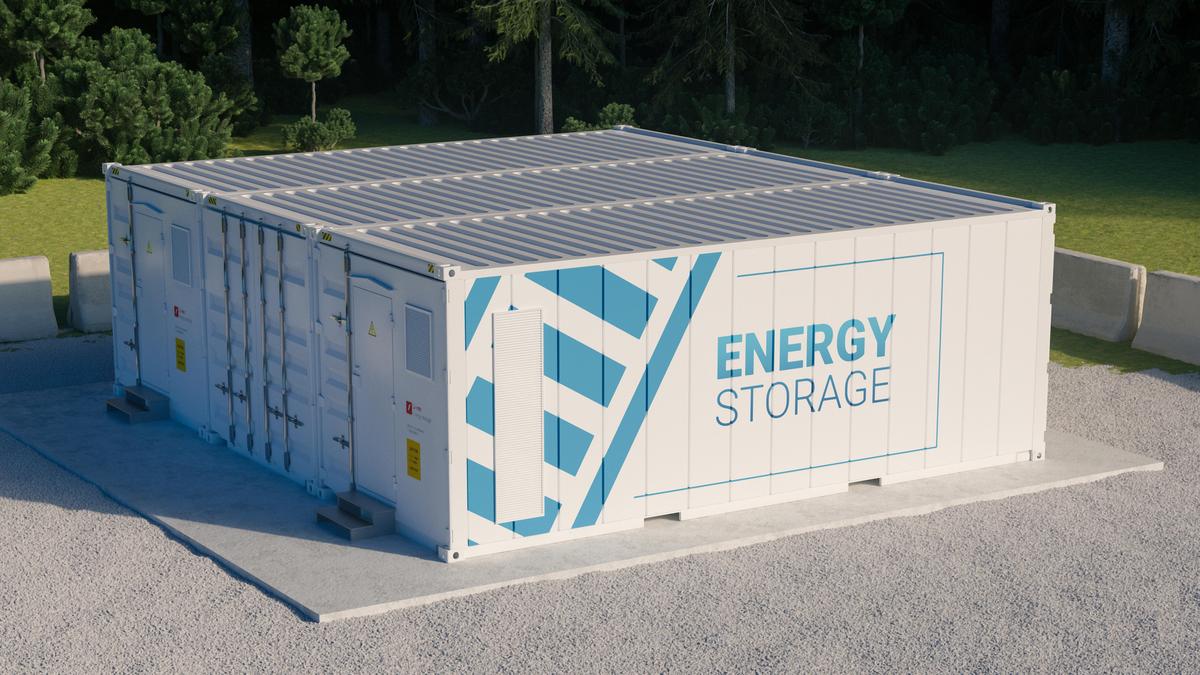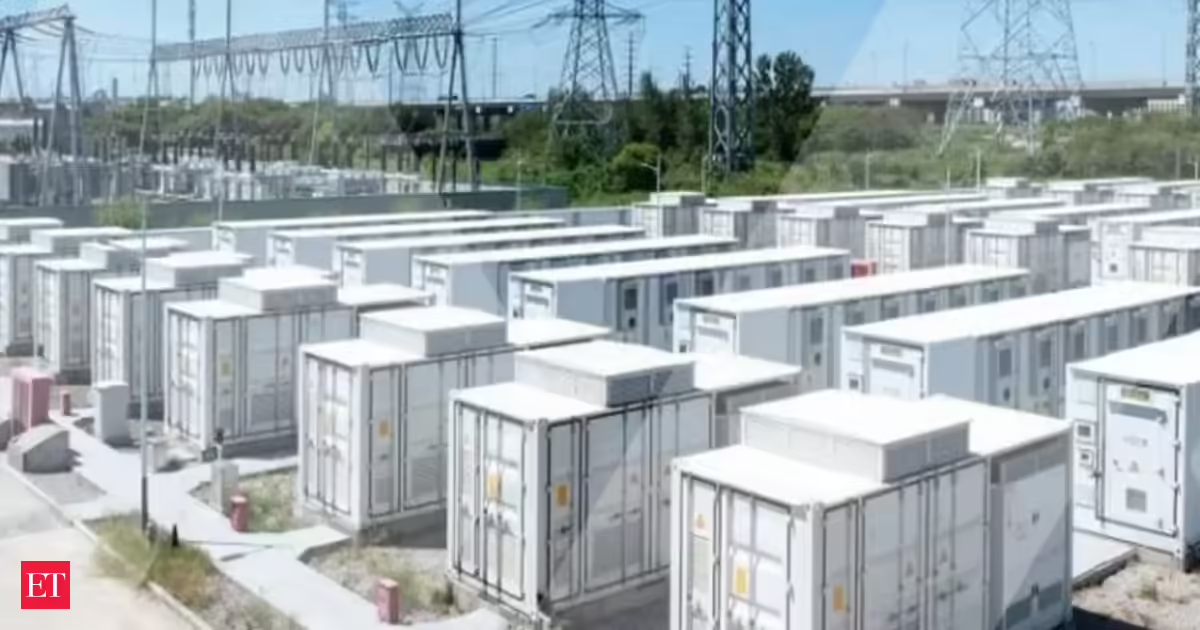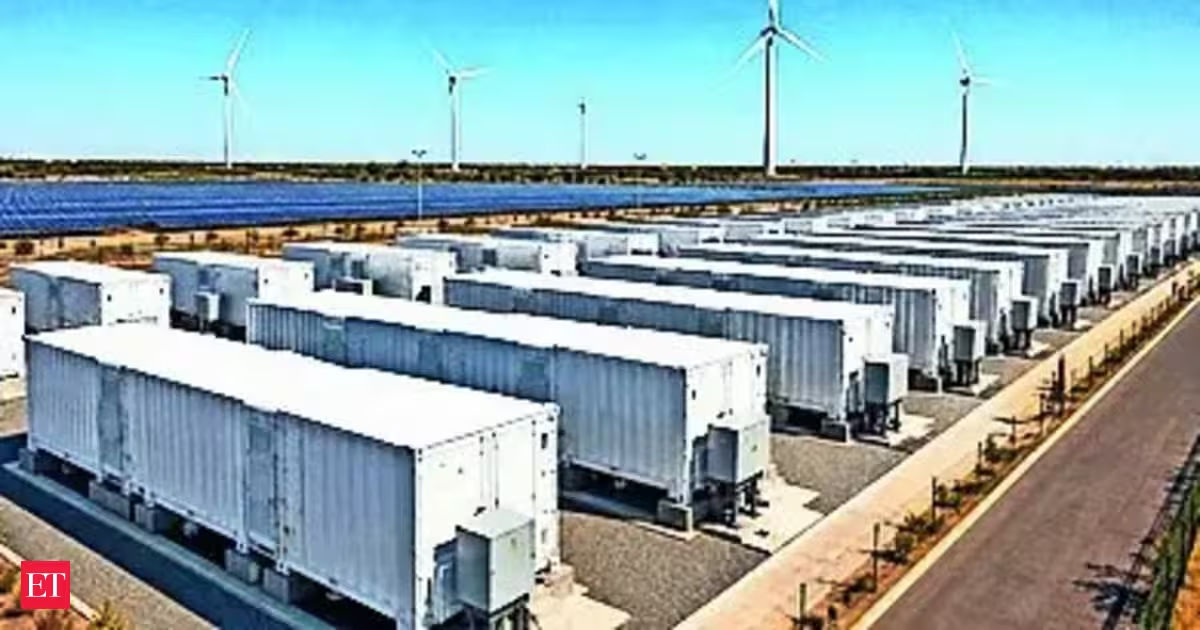
New Delhi: Renewable energy developers have urged the government to reduce the goods and services (GST) tax on standalone utility-scale or containerised battery energy storage systems (BESS) to 5%, in line with the equipment used in renewable energy projects such as solar modules, from 18% to support faster deployment, people aware of the development said.The National Solar Energy Federation of India, in a written representation to the renewable energy ministry, said that the higher GST rate is making such projects less competitive. It comes amid increasing concerns over green energy curtailment during solar hours, which could be averted with the addition of energy storage."A reduction in GST on BESS could translate into a saving of approximately ₹0.25-0.41/unit in the levelised cost of storage (LCOS)," the federation said in the letter, according to the people.It said that BESS should be treated as a generation asset, just like solar modules and wind turbines, and that the prevailing concessional GST rate of 5% be extended to BESS containers, including battery cells.Battery containers usually account for nearly 85-90% of the total BESS system cost. The move would also enable BESS projects to be treated as composite contracts, like solar and wind power projects, which would simplify project implementation and improve commercial viability.The Central Electricity Authority has estimated a requirement of 411.4 GWh of energy storage capacity by 2032, comprising 175.18 GWh from pumped storage projects and 236.22 GWh from BESS.Considering this significant deployment potential, the resulting levelised cost of storage reduction could generate an estimated net present value benefit of about ₹24,000 crore, which exceeds the estimated GST revenue foregone of nearly ₹20,000 crore, the letter said.
Renewable energy developers seek GST cut on battery storage systems to 5%
Developers want a five percent goods and services tax on battery storage systems. This change would support faster deployment of renewable energy projects. A lower tax rate could significantly reduce the cost of energy storage. India needs substantial energy storage capacity by the year 2032. This reduction offers considerable financial benefits for the nation's energy sector.
273 words~1 min read