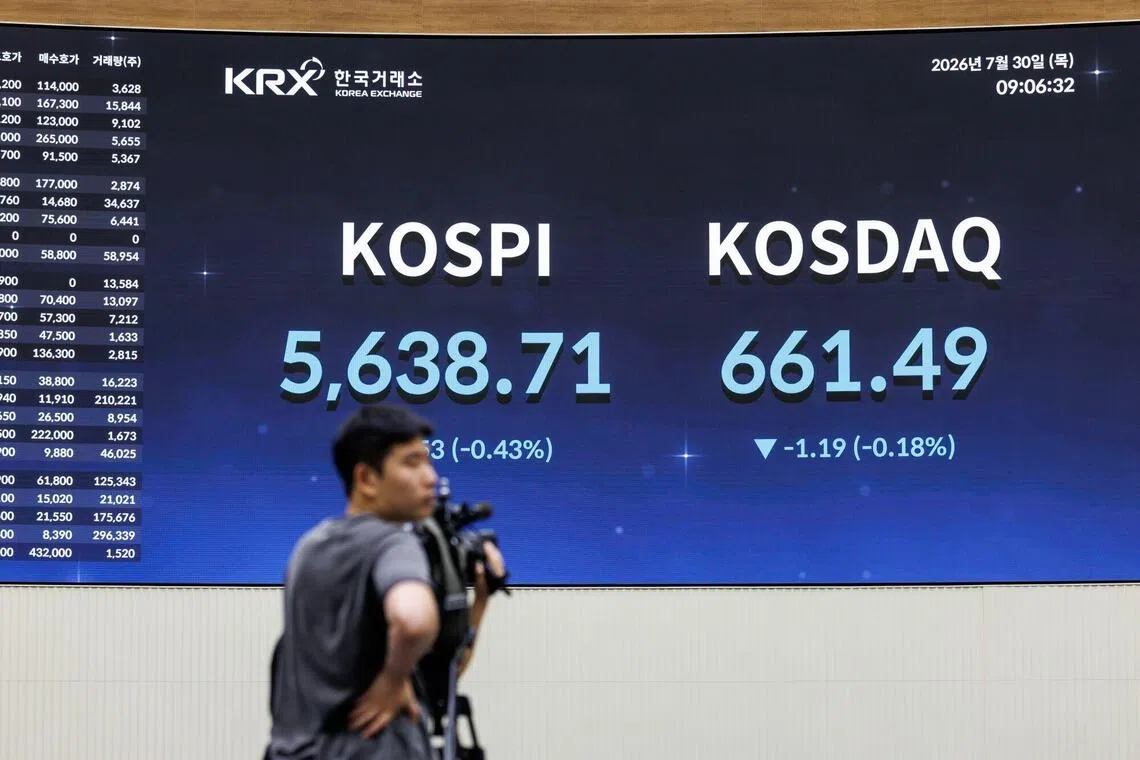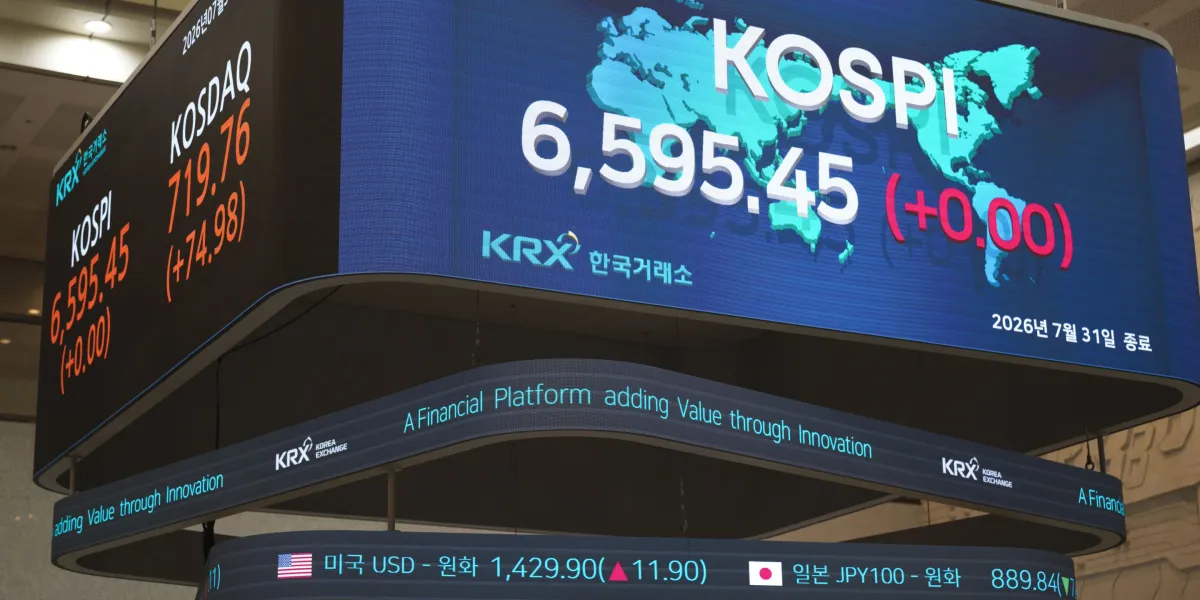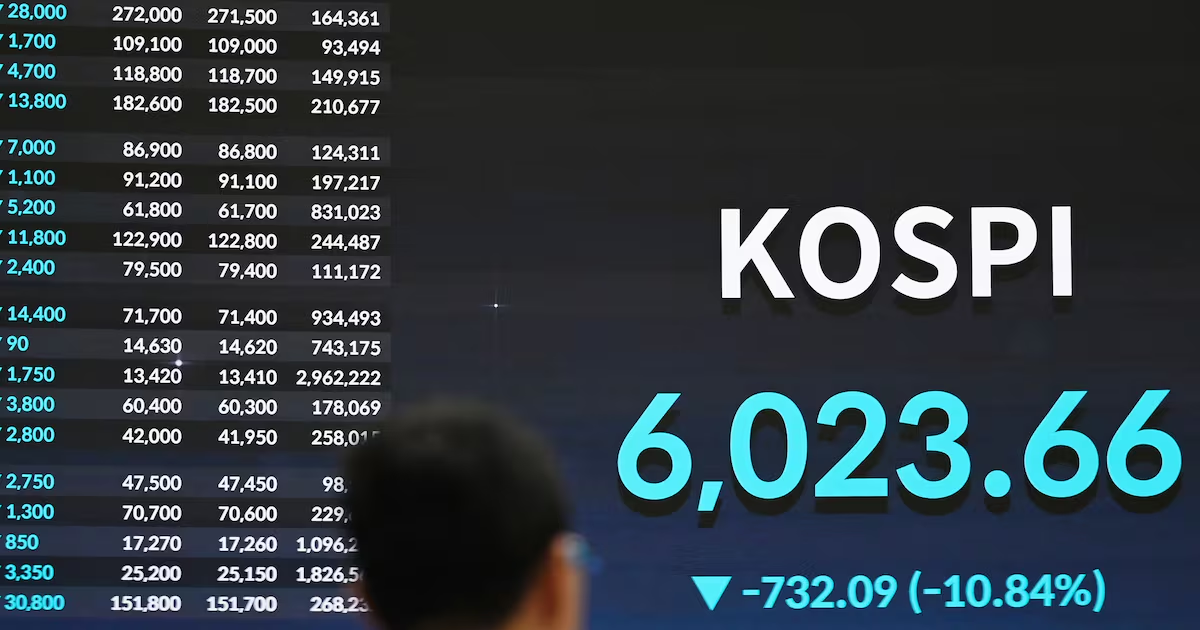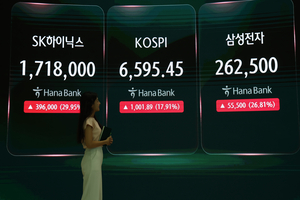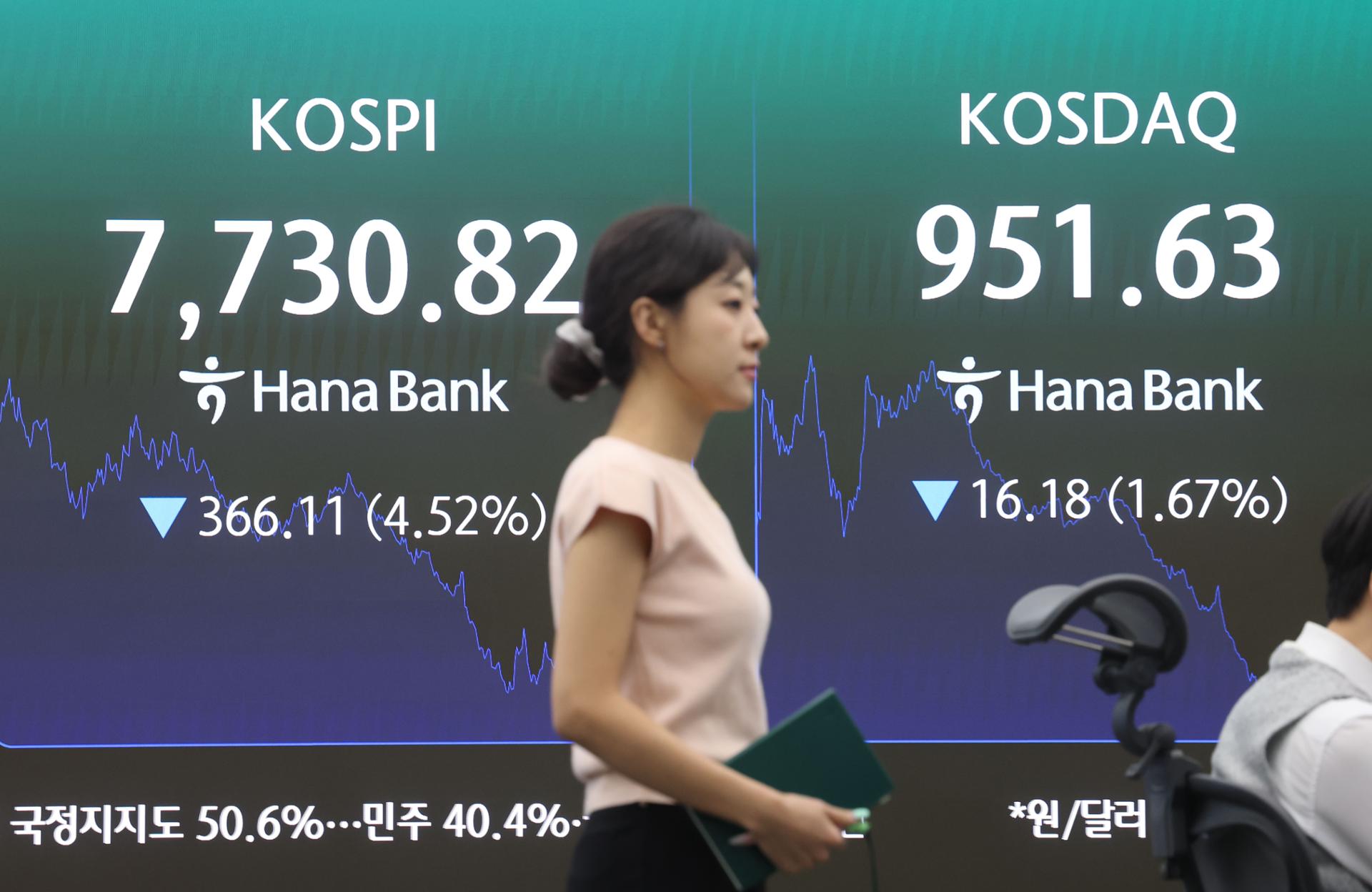
South Korea’s retail traders have long built a reputation for embracing risk. Yet last month’s punishing reversal in the KOSPI has rattled even this hardened group, reaching the limits of their tolerance for volatility.Some, such as Kim Han-kyung, a Seoul resident in her 30s, have resolved never to invest again, while others are comparing the US$3.9 trillion market to a casino. Retail investors sold a record amount of KOSPI shares on Friday despite a stunning 18 percent rebound. The gauge still capped a 22 percent loss for the month, the steepest since the global financial crisis.
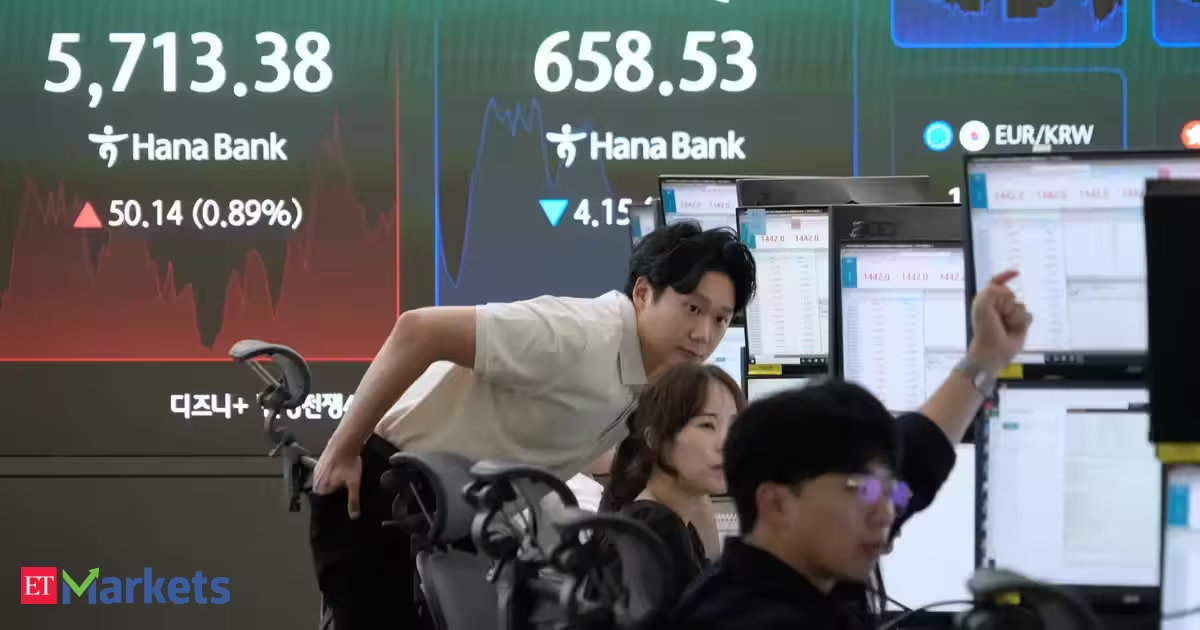
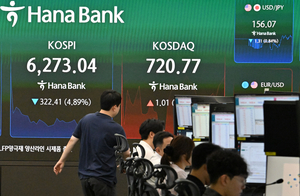
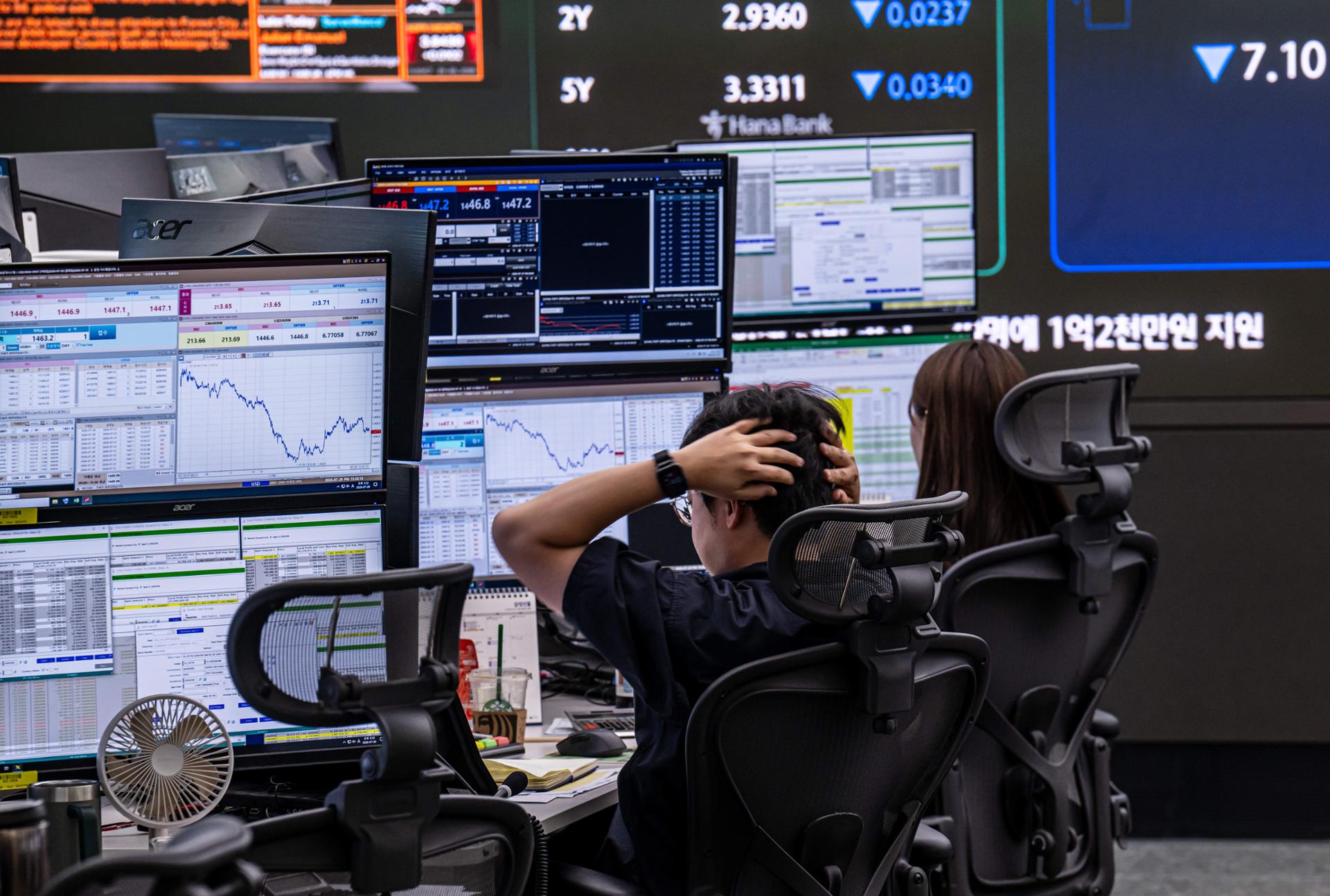
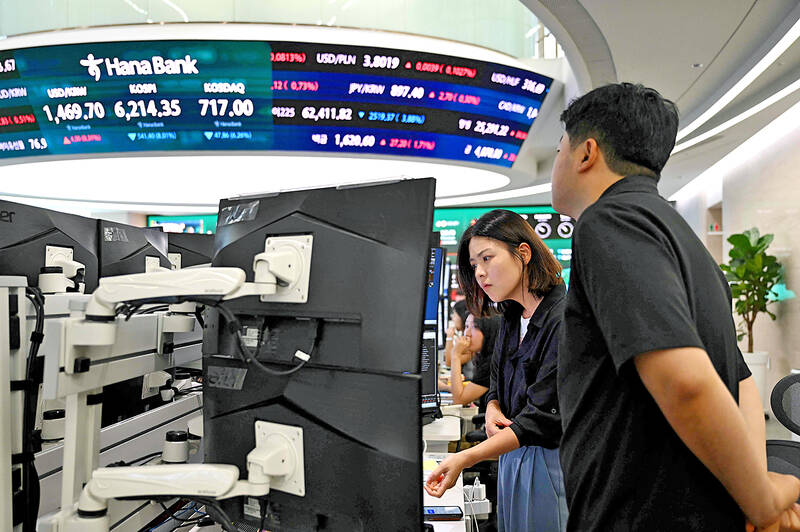
Currency dealers watch monitors as an electronic screen shows KOSPI in a foreign exchange dealing room at the Hana Bank headquarters in Seoul last Tuesday.
Signs of frustration are everywhere on social media, with much of the blame being directed at the government. Encouraged by South Korean President Lee Jae Myung’s stock-market reform drive as well as the debut of single-stock leveraged exchange-traded funds (ETFs) offering the prospect of amplified gains, mom-and-pop traders piled about 78 trillion won (US$54.1 billion) into KOSPI shares over May and June, only to get ambushed by the index’s wild swings last month.“That was the era of the KOSPI mania,” said Kim, who started investing in Korean stocks for the first time in May. “I got completely swept up in the frenzy. Now, I’m honestly scared. I’ve engraved two rules in my mind now. First: don’t invest in the Korean stock market. Second: follow the first rule.”