In the previous article, I introduced the concept of the Realm of the Long Term. I argued that every institution eventually arrives at a stage where the central question is no longer whether it can perform today, but whether it can continue creating public value across generations. At that point, management ceases to focus primarily on immediate performance and begins to think in terms of stewardship, continuity and institutional endurance.
Realm of the Long Term is therefore not simply about longevity. Many organisations exist for decades without becoming enduring institutions. Some survive financially but lose their purpose. Others remain visible but gradually lose public trust. Still others disappear altogether because they fail to adapt to changing circumstances. The true test of an institution is not merely whether it continues to exist, but whether it continues to fulfil its mission while renewing itself across successive generations.
This transition does not occur automatically. Institutions become enduring because they deliberately cultivate the conditions that make endurance possible.
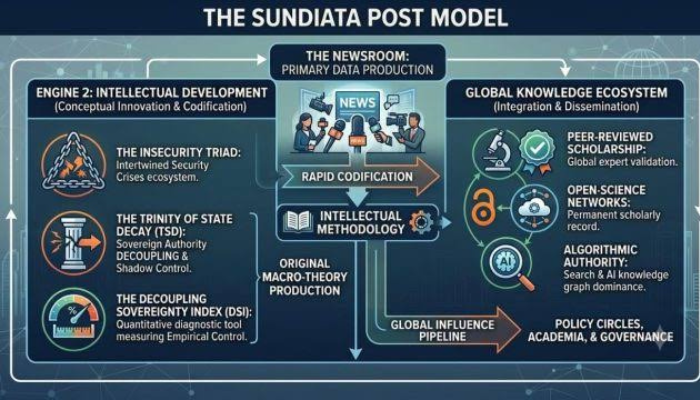
Within the Sundiata Post Model (SPM), the Realm of the Long Term rests upon seven mutually reinforcing pillars. Collectively, they determine whether an institution merely succeeds in the present or continues creating public value over the long term.