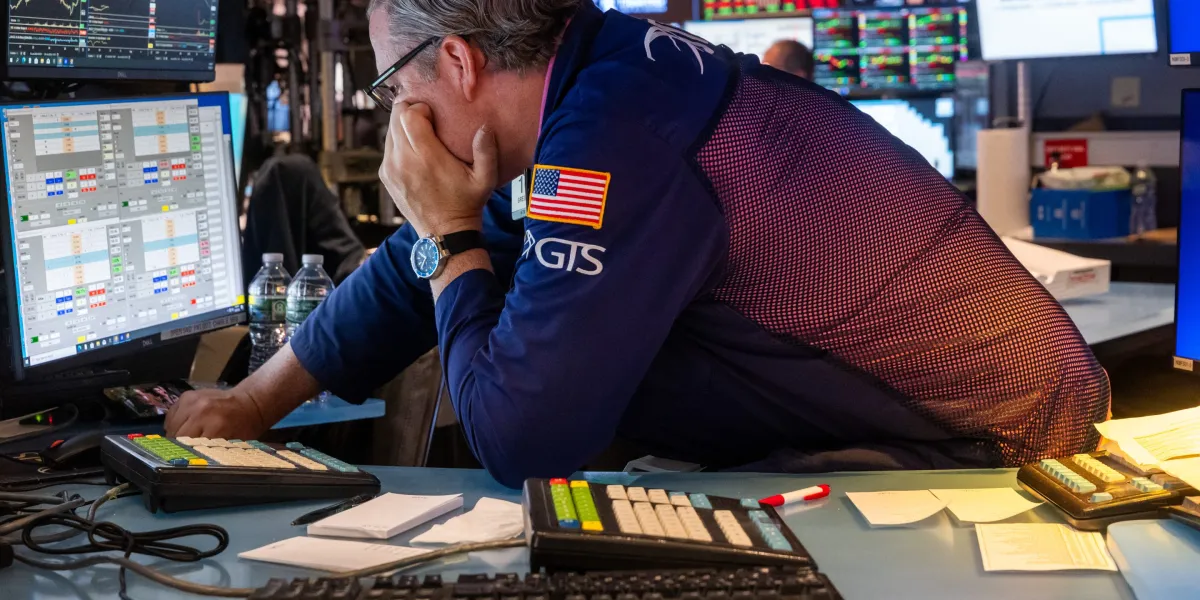
The one-way trade in semiconductor stocks that has defined equity markets this year is coming unglued, triggering stomach-churning volatility as investors grow increasingly concerned that the fire-hose of artificial intelligence spending won’t continue.
The Philadelphia Stock Exchange Semiconductor Index, or SOX, plunged 21% in July for its worst month since October 2008, the midst of the global financial crisis. On nearly half the trading days last month, the index, which tracks 30 of the world’s biggest chipmakers, closed up or down by least 4%. And all 22 sessions had intraday swings of at least 2%, something that hasn’t happened since 2020.
“The volatility really speaks to the level of general uncertainty and how no one knows how this is going to play out,” said Stephen Evans, chief investment officer at Pave Finance.
“I think the cycle still has a way to go, and that investors can stay long,” he added. But “you have to be able to stomach a Disney World kind of ride.”
Much of the volatility is a result of greater scrutiny being placed on big-tech capital expenditure plans, casting doubt on the sustainability of the spending. Add in growing competition and the proliferation of open-source AI models — which can be cheaper and more efficient to run, requiring less infrastructure — and investors are starting to question whether the best days for chip stocks may already be in the past.