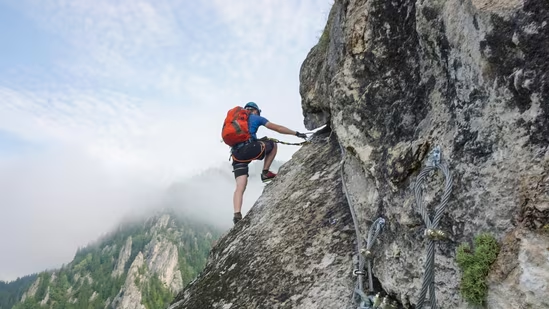
Helen Keller famously said, ‘Life is either a daring adventure or nothing at all.’Seasoned travellers can relate to this. But there’s something else they know. When you choose adventure, you also choose the risks coming along with it. Not every adventure might end in an adrenaline rush. Some adventures also end up turning into accidents. And when they do, there ought to be a backup plan or, at the very least, a protective shield. Most travellers assume they have covered their bases once they buy the standard travel cover. When it comes to risks specific to adventure sports, dedicated cover will protect against them.As per several international travel health reports, injury is the single biggest cause of emergency hospitalisation for healthy people crossing international borders. Our own data notes that out of the total number of travel cover claims, more than 60% is due to medical and related reasons. In fact, the breakdown of claim amounts shows medical emergencies account for almost 90% of the total payout, with the rest for non-medical reasons. Clearly, health emergencies tend to overshadow every other risk here.Imagine weeks of planning your great escape only to be blindsided by a medical crisis that standard travel insurance usually won’t cover. However, it doesn’t have to turn out this way. Here’s what you should know.Gamble before thrillsPeople meticulously plan itineraries and book activities but overlook the fine print of what insurance covers or doesn’t cover. Standard travel cover is built for conventional situations such as flight delays, lost baggage or an unexpected medical emergency. It draws a clear line between routine travel mishaps and higher-risk pursuits. This is especially true if the plan is bought bundled along with tickets.This leaves activities such as high-altitude mountain sports, deep-sea diving and aerial adventures outside the scope of standard cover unless additional protection has been purchased in advance. The surprise actually comes when a claim is declined. Depending on the plan, there might be further differentiation between recreational activities and extreme sports, or imposing altitude limits, age restrictions and norms for the activity to be undertaken under certified supervision. These need to be taken into account before you go diving, hiking or climbing.Only a few extra bucksIf you plan to go for an adventure sport, you should check if your base plan offers the cover or if you need to buy it as an add-on. Consider a week-long overseas trip costing about ₹2.5-3 lakh. Your total premium will cost anywhere from ₹1,000 to ₹1,600. That small addition is what could save you hundreds of thousands of rupees you might end up spending on a hospital in a foreign country.An emergency helicopter evacuation from a remote trekking route or ski resort can run into lakhs before the treatment even begins. Add surgery, intensive care or a specialist consultation in destinations such as the UK, Switzerland or New Zealand, and the final bill can climb several times higher. In the unfortunate case that your trip is disrupted by a mishap during a high-risk sport, this rider can provide coverage for emergency medical treatment, evacuation, accidental disability or death from covered activities, and more such expenses that can otherwise escalate into a full-scale financial setback.For about five extra minutes of time, you can understand how critical this addition is to the policy and protect against expenses that may otherwise eclipse the cost of the entire holiday.Better preparationFor many, collecting experiences has now become more valuable than collecting souvenirs. Insurance has had to keep pace with that change. It is evolving from a generic safeguard into a product that can accommodate increasingly diverse ways of exploring the world. That evolution matters because the purpose of insurance is to ensure that one unforeseen moment does not end up defining an entire journey.The purpose of this critical addition is to strengthen the traveller’s economic confidence.But even the most comprehensive policy has one non-negotiable requirement — transparency. An undisclosed adventure activity or an inaccurate declaration can render the whole exercise meaningless. So, make sure you declare everything that is needed. As travel becomes more experiential, insurance should be measured by how well it matches the risks that you as an individual choose to embrace.(The writer is Chief Business Officer, General Insurance, Policybazaar.)Published on August 2, 2026
Take dedicated insurance cover for your travel
Protect your adventures with dedicated travel insurance to cover risks specific to adventure sports and ensure peace of mind.
709 words~3 min read