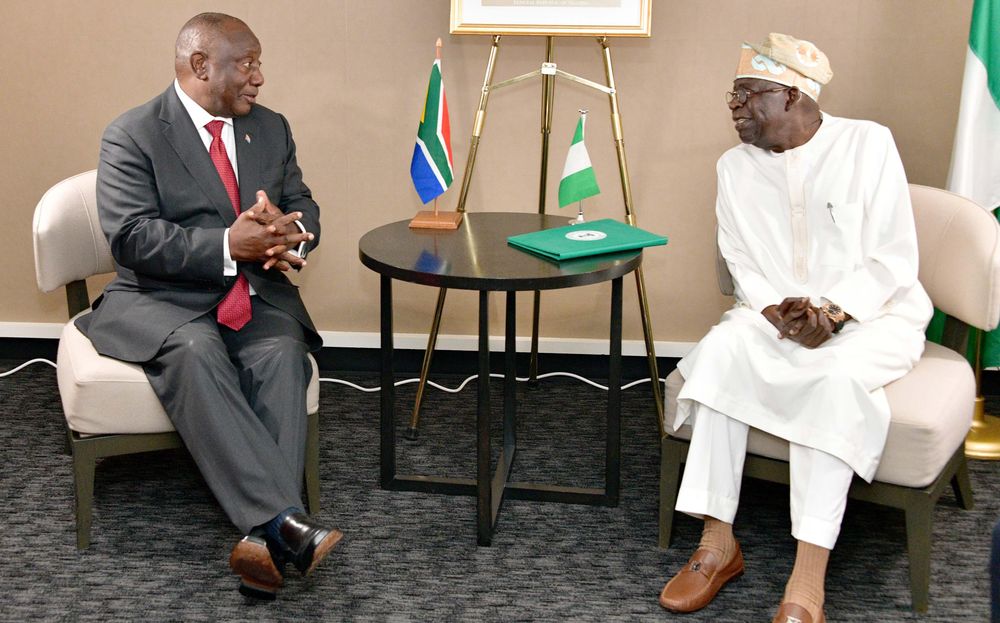
President Cyril Ramaphosa (left) and President Bola Tinubu of the Federal Republic of Nigeria hold a bilateral meeting on the margins of UNGA78 in New York on September 18, 2023.
Sada Malumfashi
Nigeria’s political system has become more concentrated around the presidency, with institutional and electoral competition weakening since 1999. The 2027 elections may become the first real test of this new order. If current trends continue, it could also become the most dangerous.
The primary issue in this case is actually Nigerians’ imagination of what politics could be or should be. For much of the electorate, politics has come to mean little more than voting for or against executive candidates every four years, whether federal or state, while legislatures and parties have become comparatively weak sites of democratic accountability, as such day-to-day governance remains distant and unaccountable.
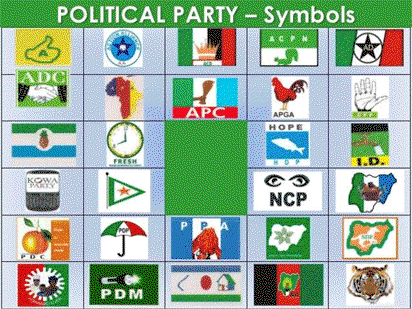
This has coincided with a gradual, continuous concentration of power within a single ruling party. As of May 2026, the All Progressives Congress (APC) controls the overwhelming majority of the state governors in Nigeria.