The problem in context
The pattern is familiar to anyone who has run an incident: a new dashboard looks great in staging, then in production under real load it hammers a downstream service and error rates spike. Everyone knows the fix — revert and redeploy. Except "redeploy" means reverting the merge, waiting for the full test suite, waiting for the build, waiting for the rollout: forty white-knuckle minutes while the incident channel fills up and the biggest customer watches their integration throw 500s.
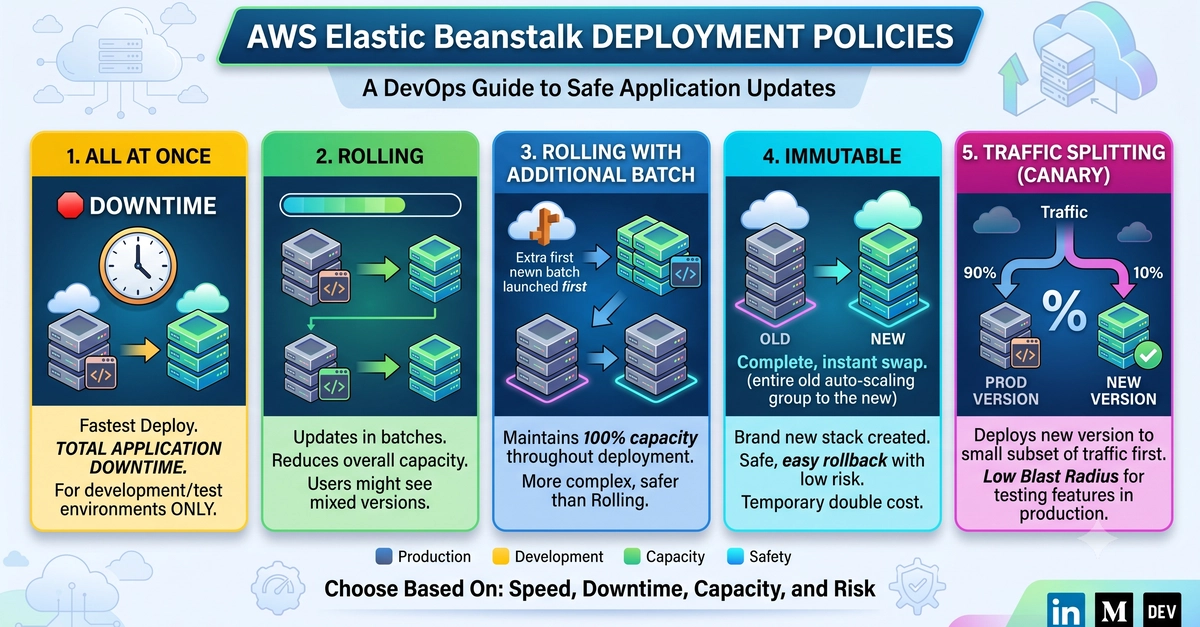
The reason that rollback is slow is not the CI pipeline being unusually sluggish. It is a structural coupling: the feature and the deploy are the same event, so undoing the feature means undoing the deploy. That coupling is the real problem, and it is why "make CI faster" never actually solves it. As long as releasing a behavior and deploying the code that contains it are one action, every bad feature is a full redeploy away from being gone.
The principle
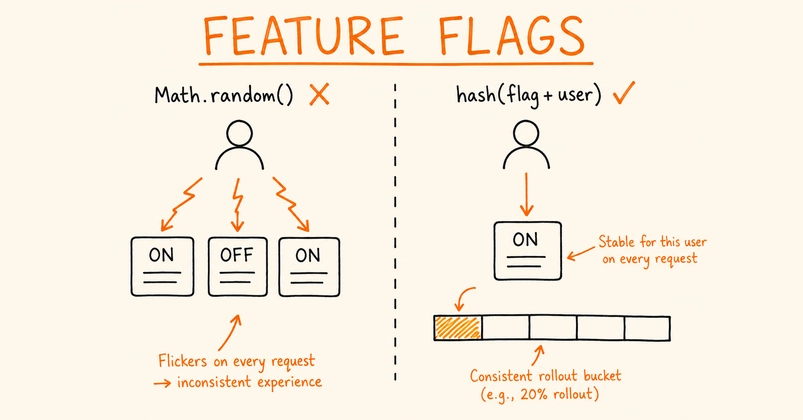
The principle here is that deploying code and releasing a feature are two separate decisions, and a feature flag is what lets you make them separately. The canonical framing is Pete Hodgson's Feature Toggles, which describes release toggles whose entire job is separating feature release from code deployment — a core principle of continuous delivery. A flag is just a conditional deciding whether a code path runs, but the operational leverage is enormous: