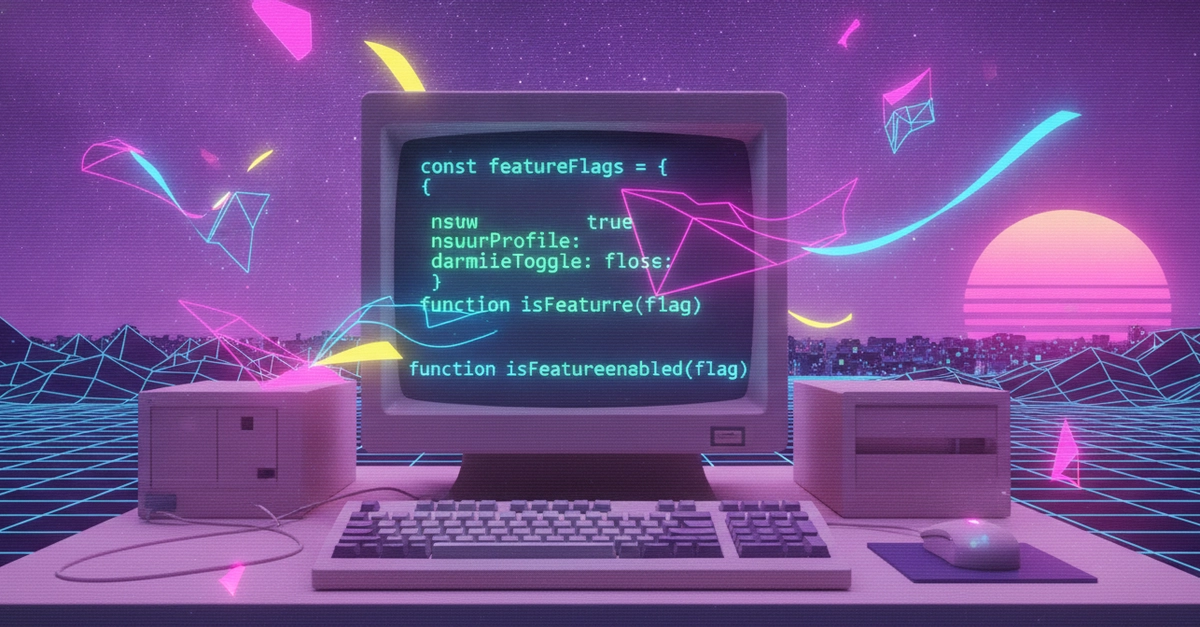
You want to merge a half-finished checkout redesign into main without breaking checkout for everyone. You want to ship a risky billing change but keep a kill switch in case it misbehaves at 2am. You want to turn a new dashboard on for one beta customer and nobody else. The first instinct, reading the docs, is to reach for LaunchDarkly or Flagsmith or Split. But for a small team or an early-stage SaaS, feature flags without LaunchDarkly is not a compromise — it's about a hundred lines of code you fully own.
This is the same kind of decision I keep helping founders make: which piece of infrastructure to actually buy, and which to build because the build is small and the buy is a recurring tax. Feature flags, for a team that has eight of them, land firmly on the build side. Let me show you why, and then show you the code.
What Feature Flags Actually Buy You
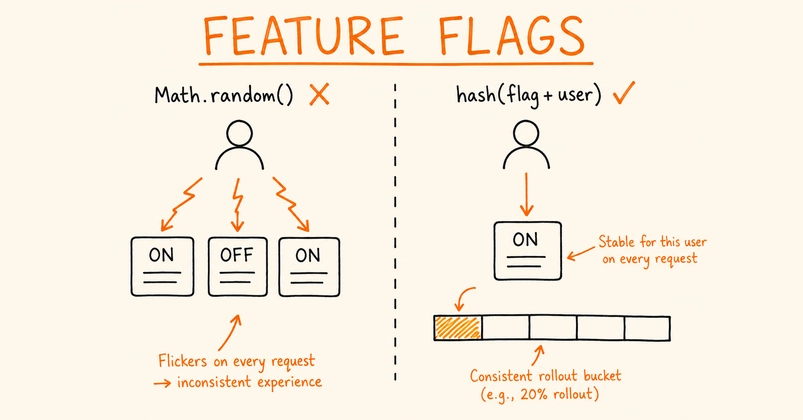
Strip away the marketing and a feature flag is one thing: a runtime switch that decides whether a piece of code runs, without redeploying. That single capability unlocks several distinct workflows, and it's worth being precise about them because they're often blurred together.
Decoupling deploy from release. Today, for most teams, deploying code and releasing a feature are the same event — the moment the new bundle goes live, users get the new behaviour. Flags split those apart. You deploy the code dark on Tuesday, verify it's healthy in production, and flip it on for users on Thursday. The deploy is a low-stress engineering event; the release is a separate, deliberate product decision.