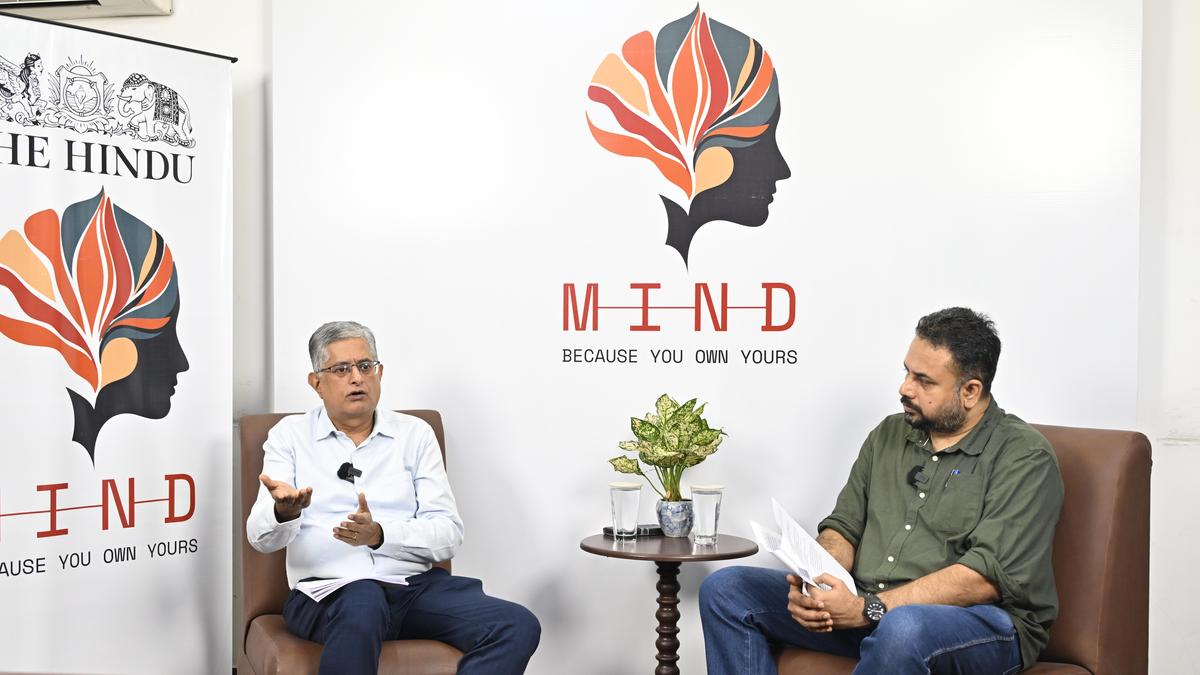
The Employees’ Provident Fund Organisation (EPFO) has notified new rules for the Employees’ Provident Fund (EPF) Scheme, the Employees’ Pension Scheme (EPS) and the Employees’ Deposit Linked Insurance (EDLI) Scheme under the Code on Social Security, 2020, while rolling out a series of measures to simplify claim settlement and improve service delivery. The changes come amid continuing debate over higher pension, social security coverage and the financial sustainability of the pension fund. At The Hindu MIND, EPFO Chief Executive Officer (CEO) Ramesh Krishnamurthi speaks to A. M. Jigeesh about the reforms and the thinking behind them.Provident Fund is the best way to save for your retirement: EPFO CEO Ramesh Krishnamurthi
There is an argument, often described as techno-solutionism, that technology is the answer to every problem. Whether it is question of paper leaks or issues in EPFO management, we are repeatedly told that technology will bring transparency. What are your views on this? How has your background in technology helped you steer the EPFO and undertake major reforms, including the revamp of the income tax system?
Technology is not a solution in itself; it is an enabler. Any technological intervention must be supported by changes in processes and the legal framework. EPFO settled nearly six crore claims in 2024-25 and 8.3 crore in 2025-26 — a 30-35% increase with almost the same manpower. We expect to settle nearly 10 crore claims this year. Is it sustainable? No. One major problem was our decentralised database. Each of the 123 Regional Offices maintained its own database. We have now centralised them into a single database. While members continue to have multiple member IDs, all are now linked under one Universal Account Number (UAN) in one database. It has become easy for us to identify your total balance and complete service history.