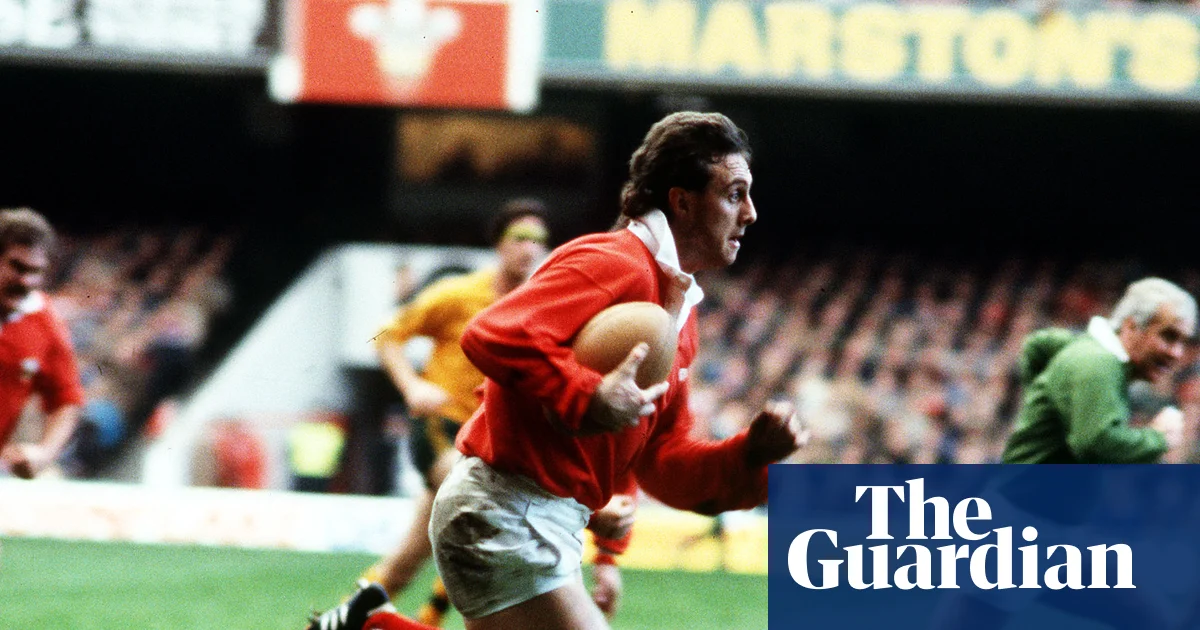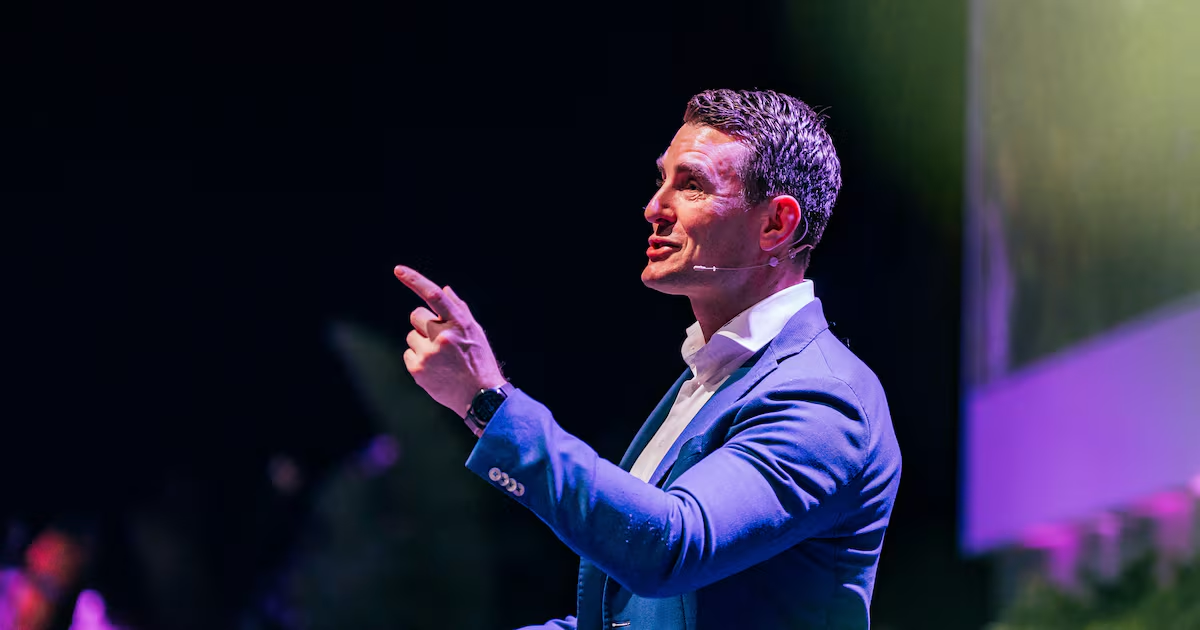
Once upon a time Aidan McCullen played rugby for Dax, Leinster, Toulouse, London Irish and Ireland. His cap against Samoa in the tropical delights of its capital, Apia, where the mercury reached three figures, redheads on the team courted sunstroke and the weight loss among Irish players after 80 minutes was in the 5-to-9kg range. Rugby’s Ozempic.Now, 49-year-old McCullen is the creator and host of The Innovation Show, a weekly podcast that focuses on the need for business, leadership and education to innovate and adapt and for which he won the prestigious Thinkers50 Innovation Award. His guests on the podcast - from billionaires to academics - represent some of the most inquisitive minds across a variety of disciplines and interests. The founder of the Reinvention Summit, an annual corporate “think-in” in Dublin, he has published one book, Undisruptable: A Mindset of Permanent Reinvention for Individuals, Organisations and Life, and is writing another, due out next year. He also conducts workshops for companies and their chief executives and developed and delivers a module on emerging trends in technology in the business school at Trinity College. He is married to Niamh and has two boys, Jake, a soccer player with Mount Merrion Youths, and Josh, who won the Irish Open U18 welterweight MMA title.McCullen is self-aware, engaging and has both a sense of fun and a filter that sifts out the effluence of the affluent; and of anyone else, for that matter. He’s comfortable in standing apart, a trait that dates to his rugby days. He is driven to learn. A blurb for his life story would highlight his capacity to change and rebuild an identity. He delivers a synopsis of a former life and how it shaped him: “I came from a small town in Meath with no rugby pedigree. My father played football for Meath, not rugby, and I was not a naturally gifted athlete. Aidan McCullen adapting to the challenge posed by Edinburgh while playing for Leinster in 2004. Photograph: Billy Stickland/Inpho “I was picked late, overlooked often and had to build myself through discipline. In many ways, I am equally proud of each reinvention because none of them came with a head start. I had no rugby conveyor belt behind me and no obvious runway in the working world either. Each chapter had to be built.“Rugby gave me my first proving ground, but it also gave me the habits that made later reinventions possible. Discipline, standards, resilience, preparation and the ability to keep going when results are uncertain. “One of the reasons I could eventually let go of rugby was that I knew I had done everything in my power. I controlled every one of the inputs I could. If the output did not always come, there was no point torturing myself. The career ended. The discipline did not.“What interested me most in rugby was excellence. I chased excellence, to play for the best teams and be the best I could. That carried through everything that came after. Rugby was my first arena. The through line was mastery, standards and the willingness to keep building.“When rugby ended, I did not just lose a career. I lost a structure, a tribe, a routine and a socially legible identity. The challenge was not simply what to do next. It was who to become next. In that sense, the real story is that I had to reinvent the person rugby made me.”He says Kintsugi thinking informed that development. Kintsugi is the Japanese art of repairing broken pottery with gold. The crack is celebrated, not hidden. It struck a chord. McCullen accepted that the defining moments in his life were rarely the polished ones. He says: “It is not about pretending pain is pleasant or suggesting failure is glamorous. It is not about romanticising the crack [in the pottery]. It is about refusing to waste it. Paul Shields (left) and Aidan McCullen wave to the crowd after Ireland's clash with hosts Samoa in 2003. Photograph: Billy Stickland/Inpho “It is the belief that breakdowns can become breakthroughs, provided we work with them rather than deny them: very often, the thing that appears to have damaged us becomes, with reflection and effort, the source of growth, wisdom, capability and renewal. That idea came to me through experience long before it became a philosophy.”That is borne out in the stories. He tells one about his time at university, studying French and German, when a mature student, Barry O’Rafferty, who knew Cullen played rugby, advised him to read L’Équipe to improve his written comprehension. One of the deepest lessons sport taught me was that fear of speaking up can look like respect from the outside, but it kills honestyAs most 20-year-olds would do, he threw the newspaper in his kit bag and forgot about it. “Then one day in 1998, on the bus home from Trinity after training, it broke down. “It was pouring rain, I had no mobile phone, no book and nothing to do. I reached into my dirty gym bag and pulled out a dog-eared, mud-stained copy of L’Équipe. It fell open to an article about French club Dax being in crisis. A large group of players had left. “I rang Donal Spring, my old coach, one of the few Irish players at that time with real experience of rugby in France. A few months later I was in Cologne sitting my German finals and preparing to go to Dax. “I trained obsessively, transformed my body and went from being an outsider with no rugby pedigree from a small town in Meath to playing in France. I was the youngest forward in division one playing against legends Phillipe Benetton and the Oliviers: Merle, Roumat and Magne. “That year I saw Toulouse play and wrote in my notebook that if I was not a regular in the Irish team by 28, I would return to France and ideally play for Toulouse.” What ensued tempered him.He didn’t get the provincial contract he craved. That pushed him briefly to Sevens; World Cup, Hong Kong and Paris tournaments. Injuries gave him openings with Leinster, Ireland A and eventually Ireland. “My Ireland cap arrived through the same kind of disruption that had shaped so much of my path,” he says. “I was called into the [Ireland] squad late after the late, great Axel Foley was injured. Then, on tour, Alan Quinlan got sick and instead of taking a place on the bench, I found myself starting against Samoa. It was one of the great moments of my rugby life. Aidan McCullen on tour with Ireland in Samoa in 2003. Photograph: Billy Stickland/Inpho “Yet not long afterwards, the injuries began. There was something almost cruelly symmetrical in it. The same breaks that had brought me in began, in time, to take me out. “Later, when I was going well again, I spoke up respectfully and in private to a Leinster coach about a selection decision I felt had sent a bad message to the squad. He froze me out. At the time it felt brutal. Looking back, it was another Kintsugi moment.“One of the deepest lessons sport taught me was that fear of speaking up can look like respect from the outside, but it kills honesty. When truth becomes dangerous, teams start lying to themselves. That has stayed with me and is part of why psychological safety matters so much in my organisational work now.“After being frozen out, I went back to my old notebooks, found that line about Toulouse and decided to act. Through a chain of events that began with rejection, I ended up signing for Toulouse on a napkin. In many ways, that was the summit I had chased for years.“Then came another break. I badly injured my knee after only six months of starting almost every game. A year later, my career was effectively over, I joined London Irish, but rugby was over.” He lost the jersey but kept the habits. McCullen says: “A saying I use in my work today is that it is hard to read the label when you’re inside the jar, so sometimes it takes the jar to smash to see clearly. When I talk about Kintsugi thinking, I am not speaking in abstract terms. I lived it. A broken-down bus led me to France. A rejection led me to Toulouse. An injury ended one life and started another.“It took years to process getting injured at the peak. But it was also the beginning of the next chapter. Injury forced me to slow down. It forced me to read. My then fiancee, now my wife, encouraged me to explore books on mindset and psychology. That eventually led me into innovation, media, teaching, workshops, writing and the body of work that later became recognised by Thinkers50.”In 2009, despite his qualifications, McCullen, with a mortgage and a child on the way, struggled to find employment in a collapsing job market. Delivering wine led to an internship at a company for whom he built an internal digital agency, then to RTÉ, where he started his podcast, which is approaching 660 episodes over 10 years without missing a week. And the writing. He left RTÉ after eight months for consultancy work. “Assets in the ashes” is how he describes that reinvention process, building capabilities without knowing exactly when they would be needed. McCullen said luck mattered too, alongside preparation, discipline and effort. “People and organisations often misunderstand transformation. They want it neat, planned, choreographed. They want the manual before the mess. We improvise before we theorise. We often stumble into capability before we can explain it. “That is true in innovation too. We often assume understanding comes first and application follows, but history suggests otherwise. Sometimes doing precedes knowing. It begins in those cracks, in the moments where something breaks and a new path reveals itself. “Each breakdown forced me to rebuild more than a career. It forced me to rebuild the person that career had made. Reinvention is not a theory for me. I did not build my life in a straight line. I built it through a series of breakdowns.” In life as in rugby.
Aidan McCullen: The former Ireland international who turns breakdowns into breakthroughs
Former Ireland and Leinster rugby player developed habits that helped him become many other things, including wine deliverer, lecturer and award-winning podcaster
1,692 words~8 min read