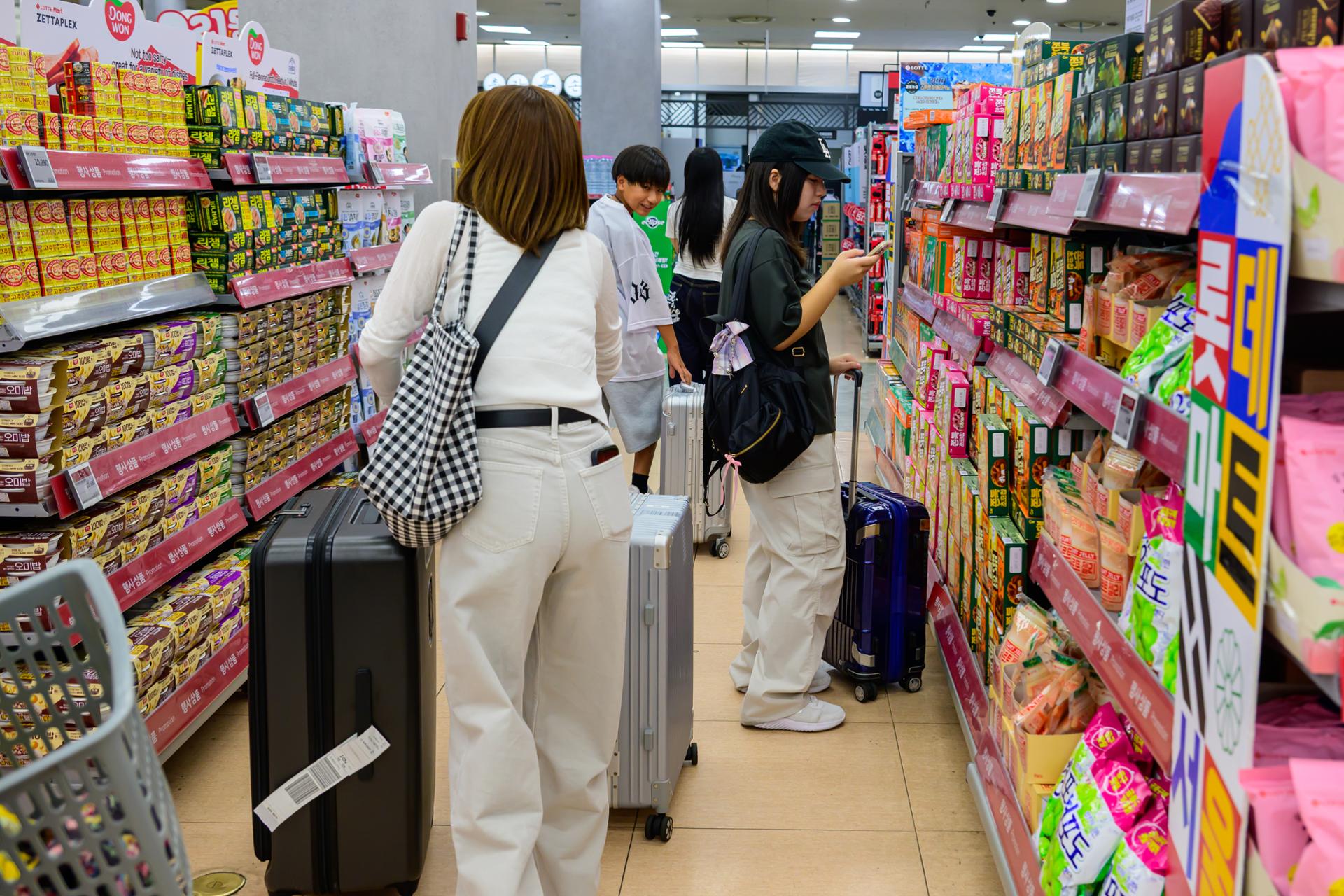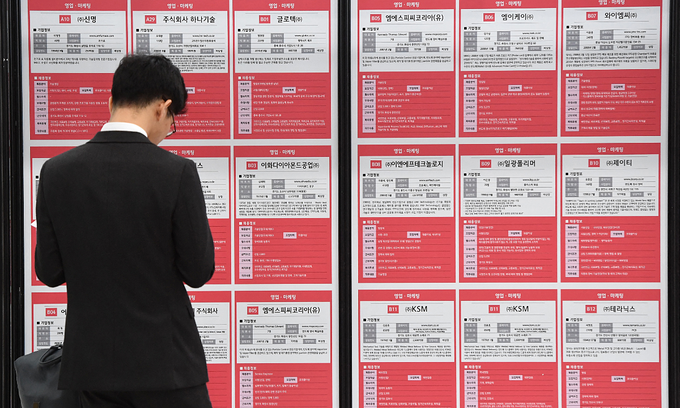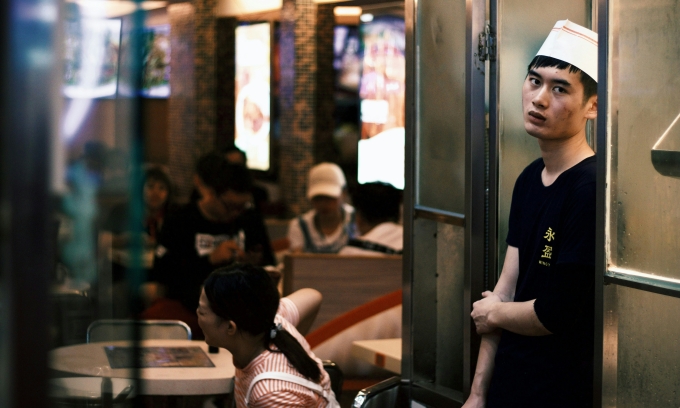
More than 80 percent work in retail, restaurants and lodging, averaging 23.3 hours a week (123rf) Foreign students working while studying in South Korea are overwhelmingly concentrated in retail, restaurants and lodging, with most earning less than 2 million won ($1,390) a month.About 83 percent of employed international students worked in wholesale and retail, accommodation or food services as of May 2025, according to the Ministry of Data and Statistics’ latest survey on immigrants’ living conditions and employment.The figures offer a snapshot of how international students are participating in Korea’s labor market, where their employment remains largely confined to part-time, low-paid service and manual jobs rather than professional or office-based work.Korea had about 56,000 employed foreign students holding D-2 student visas or D-4 visas for language and other training programs, the survey said.Just over half, or 51.2 percent, earned between 1 million won and 2 million won a month. Another 36.2 percent made less than 1 million won, meaning nearly 9 in 10 earned below 2 million won. Only 12.6 percent reported monthly pay above that level.The relatively low monthly wages partly reflect restrictions on how much international students can work while maintaining their studies.Their average working week was 23.3 hours. About 35 percent worked fewer than 20 hours a week, while 34.4 percent worked between 20 and 30 hours. A further 18.2 percent worked between 30 and 40 hours.The jobs were concentrated in a narrow range of industries. Beyond the 83.4 percent employed in retail, restaurants and lodging, 9.7 percent worked in business, personal or public services. Only 2.5 percent were employed in electricity, transportation, communications or finance, while 2.2 percent worked in mining or manufacturing.The occupational breakdown showed a similar pattern. Elementary workers, a category that includes jobs requiring mostly routine or physical tasks, accounted for 42.7 percent of employed students. Service workers made up another 40.7 percent.Sales workers accounted for 6.5 percent, while managers, professionals and related workers represented 5.6 percent. Just 4 percent held office jobs.International students in Korea may take part-time jobs if they meet requirements including academic performance and Korean-language proficiency. The permitted working hours and types of employment vary depending on their degree program, language ability and immigration status.Because their visas require them to remain enrolled and prioritize their studies, many are employed on temporary or daily contracts rather than in regular full-time positions.
Where do foreign students in Korea work?
Foreign students working while studying in South Korea are overwhelmingly concentrated in retail, restaurants and lodging, with most earning less than 2 million
392 words~2 min read