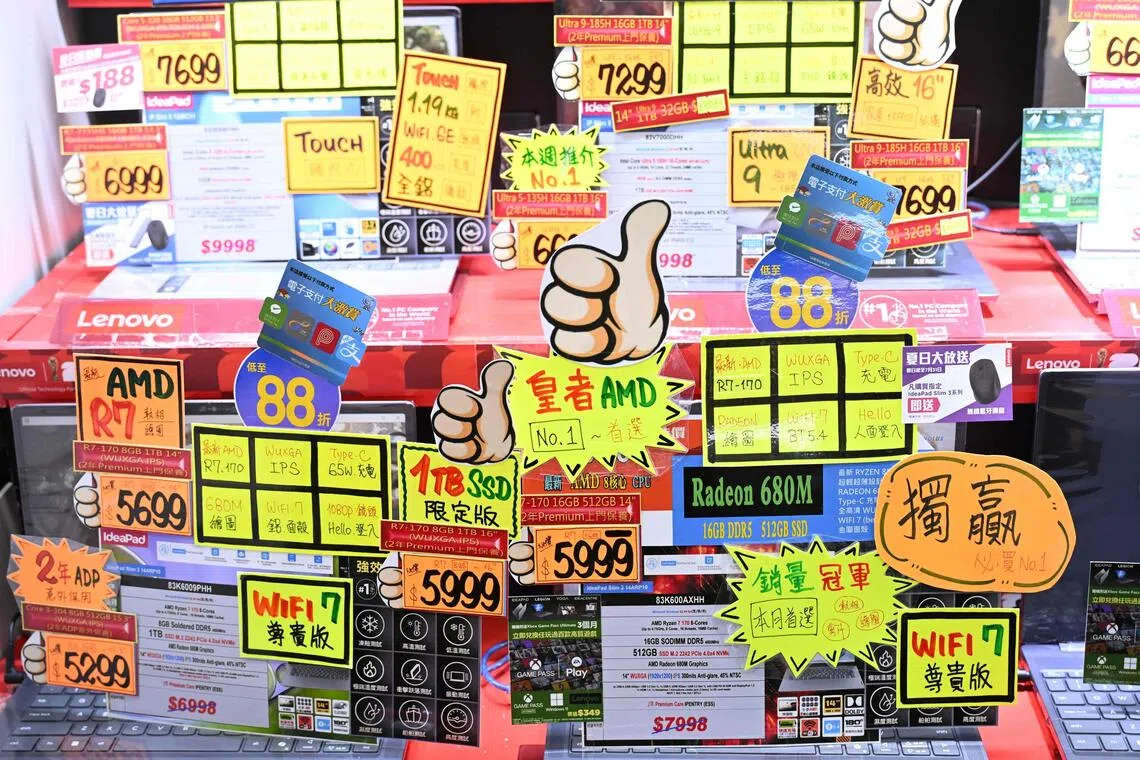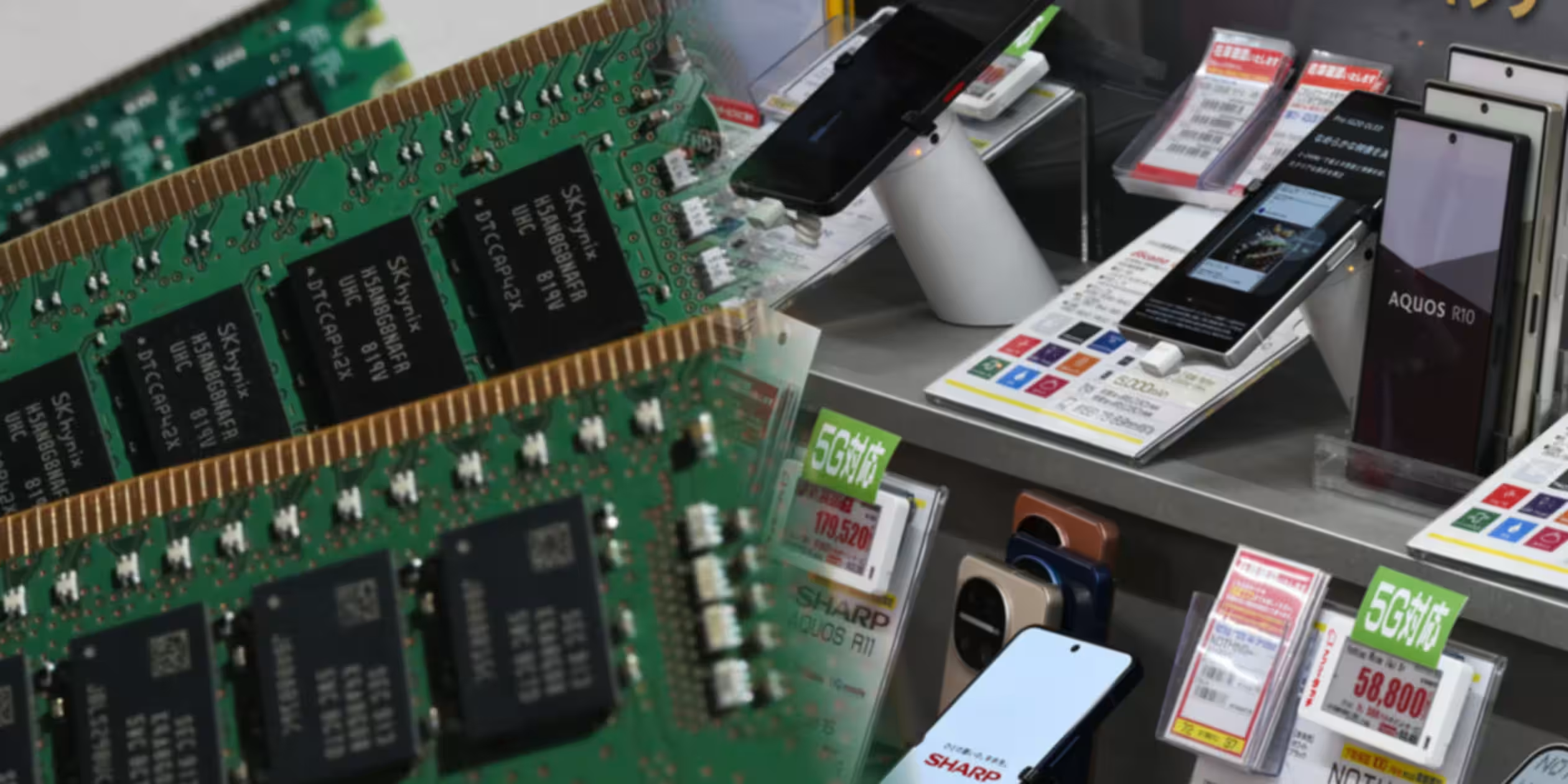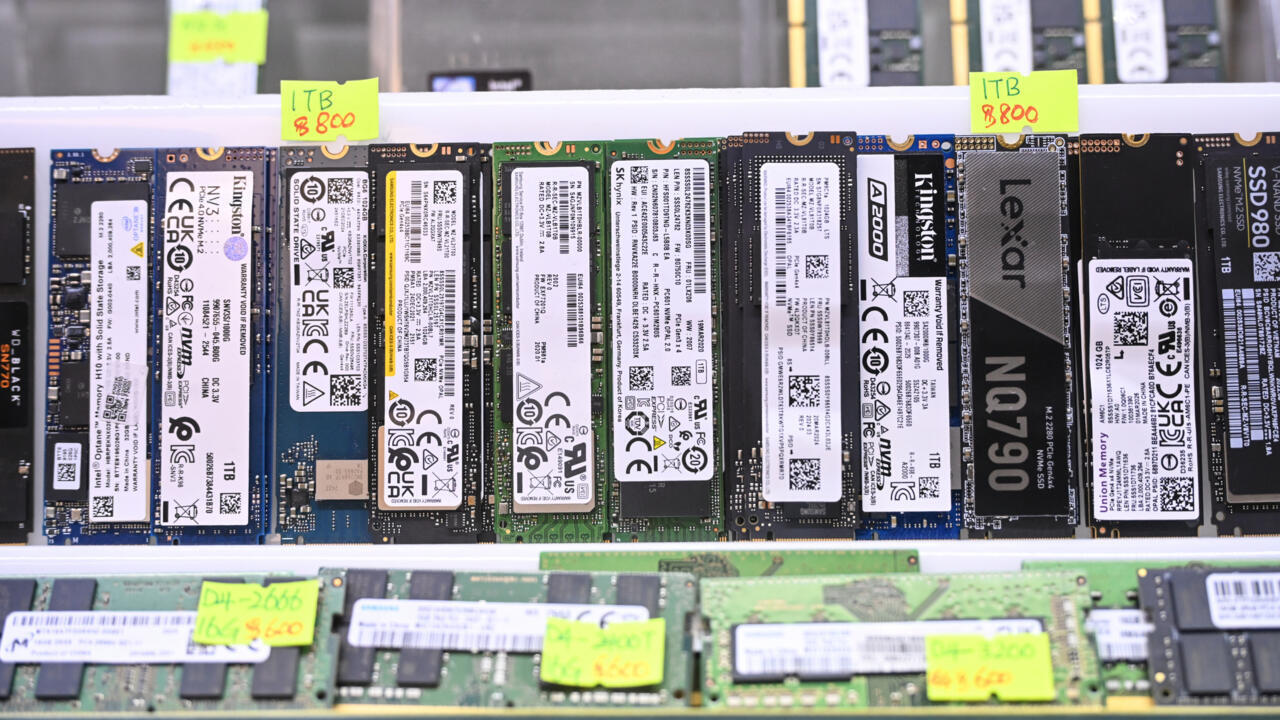
Price rises for goods such as laptops and smartphones, with cars potentially next, have been an unwelcome side-effect of the artificial intelligence gold rush -- and the squeeze is far from over.Samsung Electronics' chief financial officer said this week shortages of microchips that store digital data will likely deepen in 2027 and stay tight through 2028.The crunch has been nicknamed "RAMaggedon" after the components called RAM, or "random-access memory".It is caused as profit-hungry chipmakers pivot to producing high-bandwidth memory (HBM) -- a more advanced type of computer memory in huge demand to help train and run AI tools.The articles on display at In-Technology Services -- one of many compact vendors crammed into Hong Kong's Wan Chai Computer Centre -- are to inform customers who "don't know what happened," manager Wade Lam told AFP.The centre's shops sell tech equipment of all sorts, from computer parts to gadgets and games consoles.Ken Tam, manager of Videocom Computer, which specialises in custom-built PCs, said business has halved since price rises began in September.Sixteen gigabytes of RAM used to cost HK$300-400 ($40-50) but the price has now hit HK$1,500, he said."When it suddenly gets so expensive, customers have a psychological barrier," Tam told AFP."If they need it, they will buy it," but otherwise they will wait, or "lower their standards" and buy a less high-performing memory chip, he said.Chinese competitionAnalyst Ellie Wang at the Taiwan-based market research firm TrendForce said memory prices for PCs and smartphones were up around five to six times compared to a year ago.The AI boom has brought humungous profits and share price jumps to the world's top three memory chip makers: South Korea's Samsung Electronics and SK hynix, along with US giant Micron.
AI keeps consumer prices high in 'RAMaggedon' chip crunch
Print-outs of articles about the global memory chip shortage are pinned beside a price list at a Hong Kong computer shop, offering an explanation to confused customers feeling the pinch.
TL;DRAI
Samsung CFO: RAM supply tightens through 2028 as chipmakers shift to AI-grade high-bandwidth memory, forcing hardware price spikes of 5-6x. IT budgets face multi-year capex inflation; procurement strategies must account for Chinese newcomer CXMT disrupting supply forecasts.
662 words~3 min read