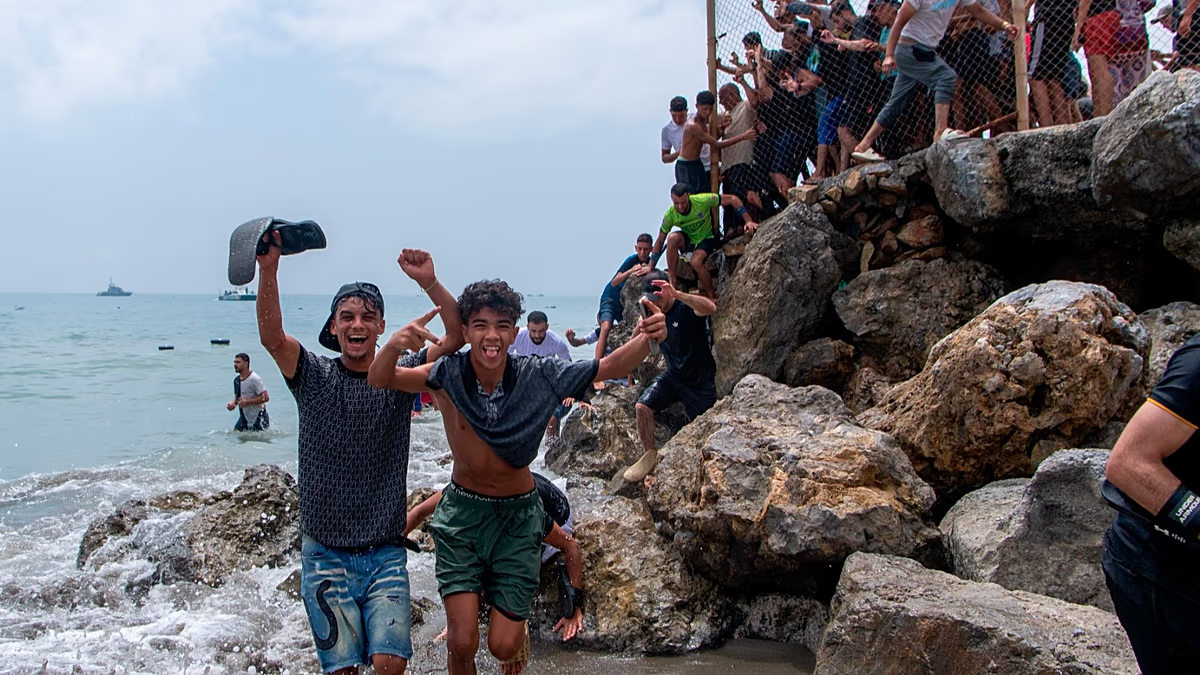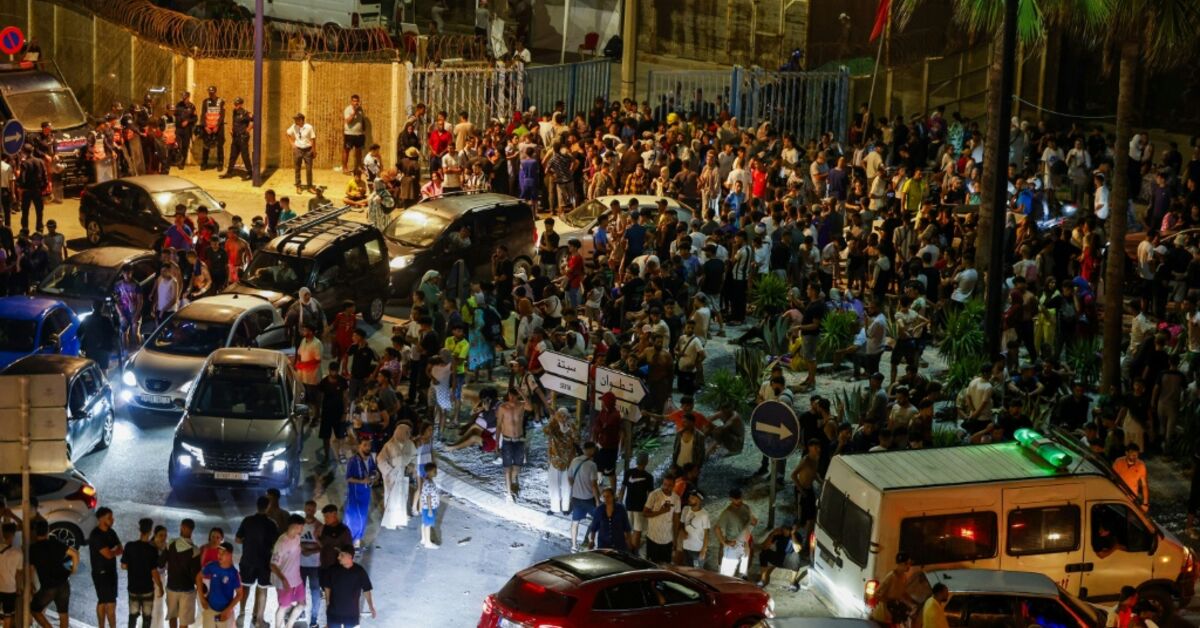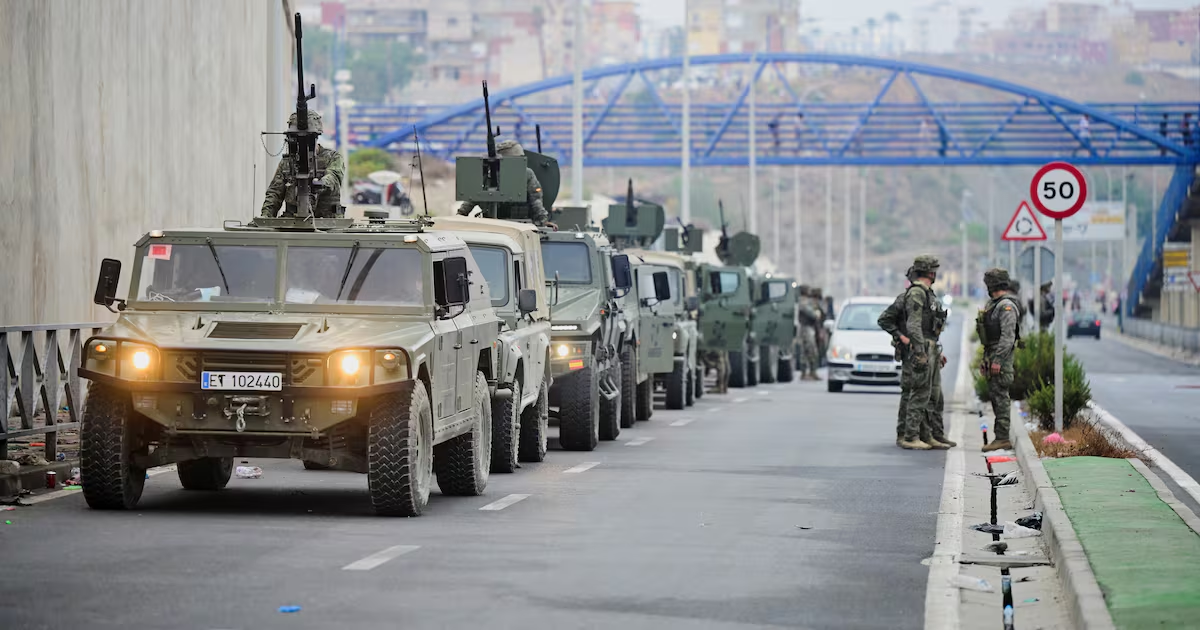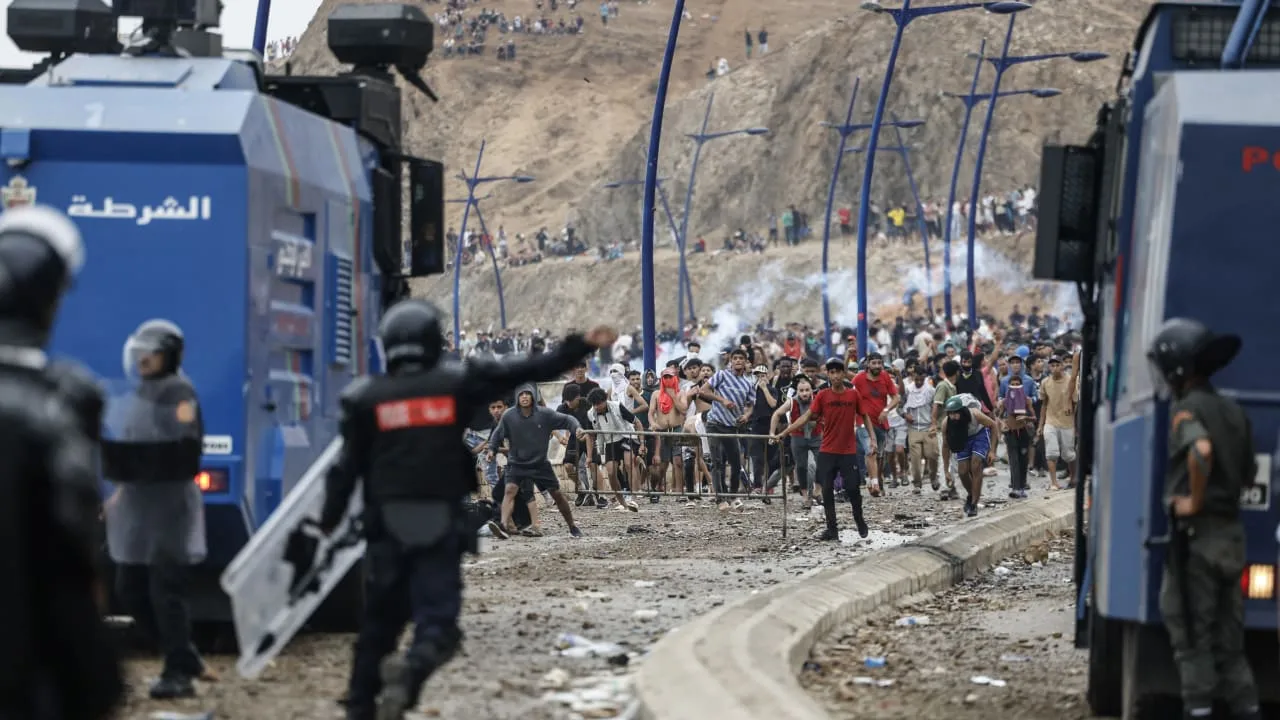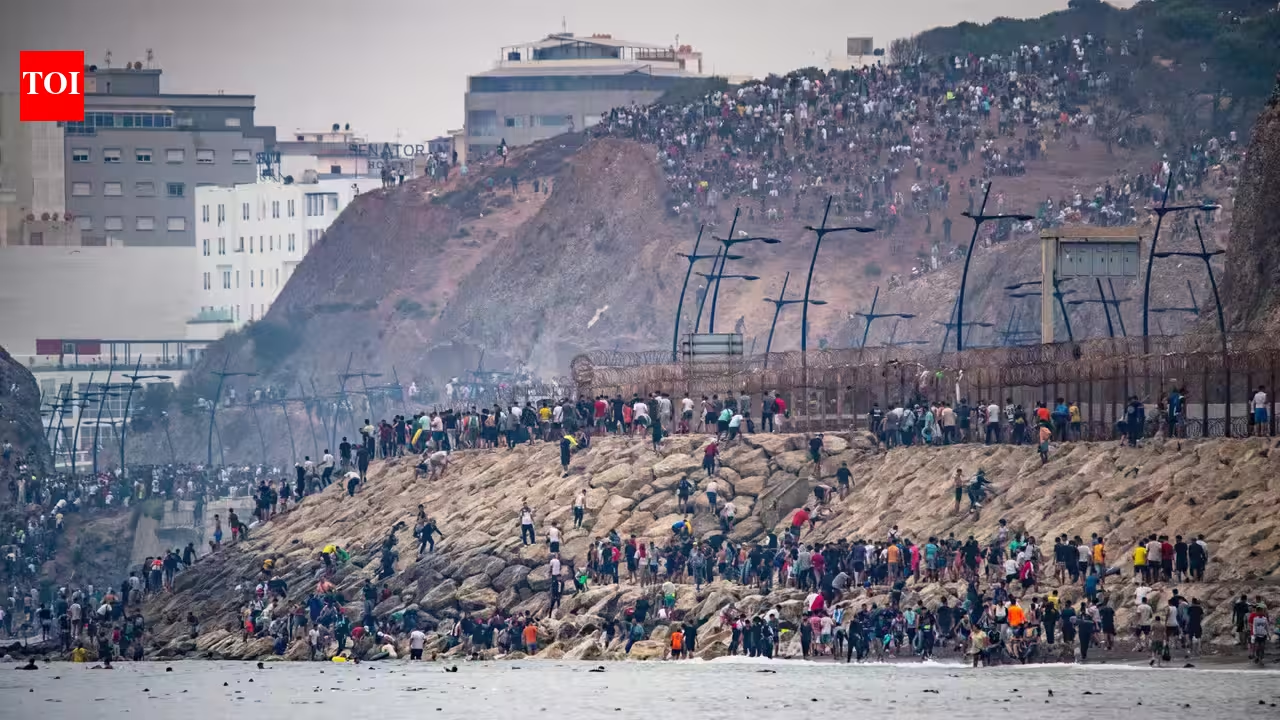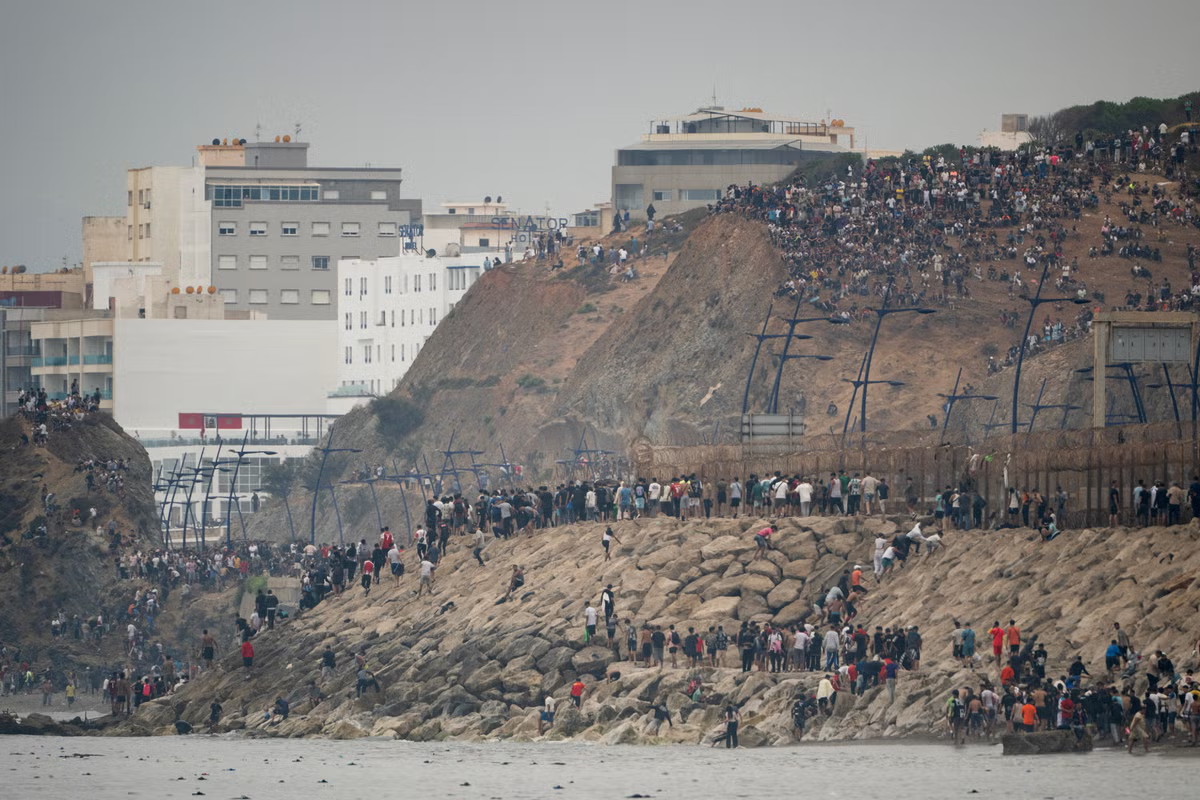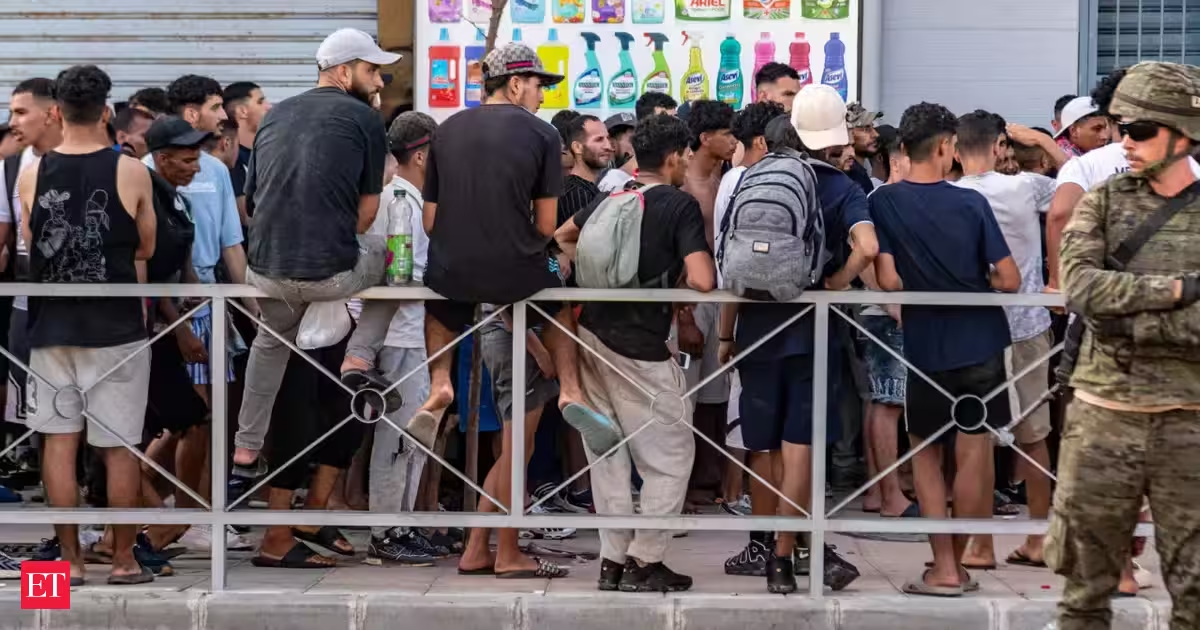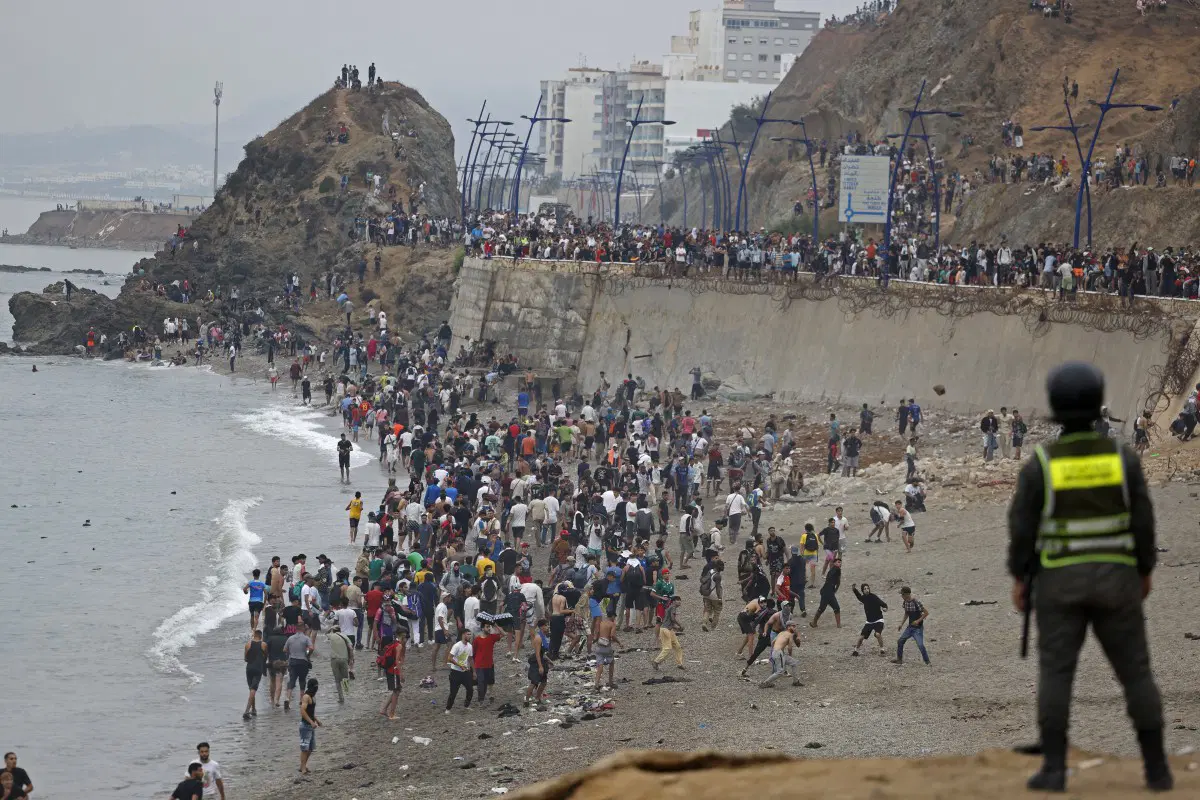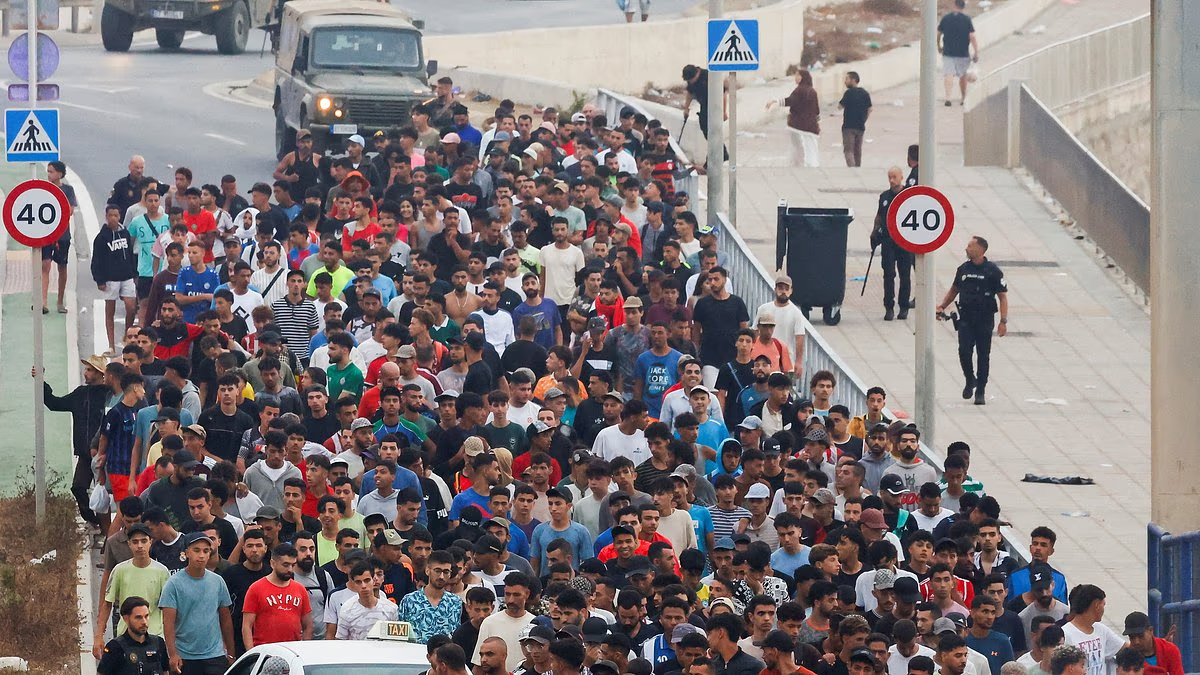
Spain's Prime Minister Pedro Sanchez has hit out at the 'selfish, polarising, unlawful' reaction of EU countries after 60,000 Moroccan migrants illegally crossed into a Spanish enclave in North Africa. Officials said today that around 48,000 of those who entered Ceuta on Thursday had made their way back to Morocco, although reports say small groups of young migrants had made attempts to cross the border again on Saturday. Images of hordes of North African migrants landing on Ceuta's beaches have sparked reactions across the world, with several politicians condemning the shocking scenes. In a letter to European Commission President Ursula von der Leyen, Sanchez said he had 'serious concerns' about the response of some European governments.He said the Spanish authorities had fully restored control over the border with Morocco and prevented any 'unauthorised onward movement towards continental Europe' in less than 48 hours.While most had shown 'support and solidarity', Sanchez said other European governments had chosen to attack Spain, 'driven by prejudice, fake news, ignorance, or political interest.''The European Union cannot afford this kind of selfish, polarising and unlawful reaction,' he said.Sanchez called for an urgent meeting with EU interior ministers to 'reaffirm that the security of our external borders is a shared responsibility of all Member States'. Spanish security personnel escort a big group of migrants to the border to take them out of Spain, after mass crossings of migrants on foot and by sea from Morocco into Spanish territory, in Ceuta, Spain, August 1, 2026 A 500-meter-long (1,640 feet) pneumatic barrier is deployed in the water by a Spanish Guardia Civil boat near the border post to reinforce security following illegal crossings from Morocco into the Spanish enclave of Ceuta, on August 1, 2026 Spanish soldiers find a migrant hiding in a tunnel at the Tarajal beachMeanwhile, 22 of the EU's 27 countries also called for emergency talks with Spain, citing 'serious concerns' over the sudden influx of migrants. It came as thousands of migrants who flooded into Ceuta were frogmarched back to Morocco by the Spanish military on Saturday. Images and videos showed masses of North African migrants being ushered by soldiers towards the border. However, other scenes showed migrants refusing to leave, with several found hiding in tunnels, while others aimlessly roamed around the city's streets and beaches. Spanish authorities have begun installing massive containment barriers in a bid to halt the arrival of more migrants from Morocco. The 500-meter-long inflatable is a 'temporary' solution, Sanchez said on Friday after visiting Ceuta.Meanwhile, some migrants have urged Moroccans to stay at home, after 67 migrants perished in their journey to Spain. Speaking to Spanish newspaper El País, one Moroccan man admitted he had made a mistake crossing into Ceuta. 'I honestly don't know why I came. I am going back, it's that simple,' he said as he waited to cross the border. 'What we did here is nothing good nor anything fun. People are dying here. I beg you, please, for those who haven't come yet, don't. Don't do it.'Some migrants swam several miles through the sea and faced down authorities who tried to turn them back with water cannons, tear gas and warning shots. Some drowned or were killed in a stampede to cross a breakwater barrier near a border checkpoint. Officials confirmed that 67 people had died trying to reach Ceuta. Spain deployed its armed forces and additional police to restore order in the enclave, which sits on the Strait of Gibraltar at the entrance to the Mediterranean Sea and has been a Spanish possession since 1580. On the Moroccan side of the border, security forces clashed with migrants. The chaos also had ripple effects abroad, with Italy and France pledging to tighten controls on arrivals from Spain.'The situation that Ceuta is going through is absolutely unsustainable,' Ceuta President Juan Jesús Vivas told journalists.He condemned the massive influx of migrants as a 'violation of Spain's territorial integrity' and blamed human smugglers for the crisis, saying they 'deceive so many young people and ultimately lead many of them to their deaths,' whether in the ocean or in the city.Andy Burnham has said he has spoken to Spain's prime minister and offered 'what help we can'. A migrant hides in a tunnel as the Spanish military starts to escort people out of the enclave Members of the Spanish Guardia Civil rescue a migrant at sea, after mass crossings of migrants on foot and by sea from Morocco into Spanish territory, in Ceuta, Spain, August 1, 2026 Moroccan security forces stand guard next to breached barbwire as people who attempted crossing to the Spanish enclave of Ceuta return to the Moroccan northern town of Fnideq Spanish soldiers question a migrant Migrants walk, as Spanish soldiers question people who took part in mass crossings of migrants on foot and by sea from Morocco into Spanish territory According to Spain's Interior Ministry, 48,000 migrants have already returned to MoroccoSpanish authorities are installing massive containment barriers in a bid to halt the arrival of more migrants from Morocco Spanish soldiers watch migrants sitting on the pavement prior to escorting them back to Morocco, in Ceuta on August 1 Supermarket employees (L) try to turn away a group of migrants attempting to enter the store in Spain's north Africa's Ceuta enclave on August 1, 2026 Spain deployed its armed forces and additional police to restore order in Ceuta A migrant hides in a tunnel at the Tarajal beach, after mass crossings of migrants on foot and by sea from Morocco into Spanish territory, in Ceuta A migrant lies on the ground next to Spanish security personnel in Ceuta, Spain, August 1, 2026 Almost all of the thousands of migrants who entered Spain's enclave of Ceuta in North Africa had left today, officials said Migrants run from Spanish police officers after crossing from Morocco into the Spanish enclave of Ceuta, Friday, July 31, 2026 European Commission President Ursula von der Leyen said the images from Ceuta were 'unacceptable' Spanish army soldiers and Guardia Civil officers stand guard on a littered beach as migrants return to Morocco Migrants wait to enter a short-stay migrants centre CETI, following mass crossings of migrants on foot and by sea from Morocco into Spanish territory, in Ceuta An injured migrant from Tunisia walks at Playa del Trampolin Migrants run on the beach, as they attemp to make their way past a Spanish soldier A migrant from Morocco is escorted by Spanish security forces after attempting to cross into Ceuta by sea on August 1 Migrants gather at a Ceuta beachThe UK Prime Minister was asked for his response to the crisis in the Spanish territory as he attended a rally on Saturday.Burnham told reporters: 'I have been in touch with the Spanish prime minister and (we are) providing what help we can.'Meanwhile, Reform UK's home affairs spokesman, Zia Yusuf, visited the territory on Saturday and said he spoke to migrants there.'I have spoken to a number of them who made it quite clear they intend to make it Britain', he said. Rachid Sbihi, who leads a local workers association representing Civil Guard officers, described the situation as a 'serious humanitarian crisis,' saying thousands of migrants, including unaccompanied children, were left sleeping in parks and on sidewalks, while others roamed the streets aimlessly. Von der Leyen said the images from Ceuta were 'unacceptable.' 'We cannot allow anyone to come to our Union without abiding by our rules,' she said Friday in an online statement. 'Dangerous crossings must stop immediately. Smuggling networks must be dismantled. And returns must be swift, as our rules allow.'US President Donald Trump also condemned the situation. 'You know I saw Spain yesterday, and I watched the catastrophe that took place. It looks like an invasion of a country by hundreds of thousands of people,' he said.Morocco's ambassador to Spain said the situation in Ceuta had unfolded against Morocco's wishes.'We have always prioritised legal, orderly and safe migration for all,' Karima Benyaich said. She did not comment on what prompted the migrants to cross into Ceuta. Spanish soldiers approach a migrant from Morocco trying to cross into Ceuta by sea on August 1 Undocumented migrants who returned from the Spanish enclave of Ceuta gather at the Bab Sebta border crossing near Fnideq, Morocco, 01 August 2026 To reach Ceuta, on the northern African coast, migrants often swim from the Moroccan town of FnideqTo reach Ceuta, on the northern African coast, migrants often swim from the Moroccan town of Fnideq, covering about three miles to reach Spanish territory.Others attempt the crossing from the nearby town of Belyounech, where the distance is shorter.Authorities in Ceuta and Madrid have linked the border surge to a recent decision by the Spanish Supreme Court, which ruled that migrants arriving by sea could not be summarily deported, unlike those who cross by land or climb the border fence.Sánchez said migrant smugglers misinterpreted the ruling.The interpretation of the Supreme Court's ruling 'spread like wildfire over the past few hours through the networks of human trafficking organisations,' triggering the surge, Sánchez said.Earlier this year, his government moved to give residency and work permits to hundreds of thousands of migrants already living in the country without permission.Sánchez, a Socialist, argued that it would be good for the economy and the demographics of an ageing Spain. Migrants who entered irregularly after January 1 this year were not included.His critics jumped at the opportunity to attack his policy, saying it encouraged more migrants to come. Morocco's ambassador to Spain said the situation in Ceuta had unfolded against Morocco's wishes Spanish soldiers rescue an injured migrant at the beach Cleaning workers clean a beach in the Spanish enclave of Ceuta Authorities in Ceuta and Madrid have linked the border surge to a recent decision by the Spanish Supreme Court In the tumult, Italy temporarily suspended its open-border Schengen agreement with Spain A Spanish soldier gestures to migrants on their way to the border to Morocco Cleaning workers collect belongings left behind by migrants who crossed from Morocco into the Spanish enclave of Ceuta Migrants from Morocco also attempted to cross into Melilla, the other Spanish territory at the tip of North Africa A Spanish soldier controls a group of migrants on their way back towards the Moroccan border, following their illegal crossing into the Spanish enclave of Ceuta'Sánchez allows Spain to be invaded through Ceuta,' Spanish conservative politician Isabel Díaz Ayuso wrote on X.The US expressed its support for 'the people of Spain, and all Europeans, against this egregious violation of their sovereignty and human rights.'In a post on X, the State Department added that 'this unacceptable incident is the direct result of the Spanish Government's deliberate efforts to enable and facilitate mass illegal migration into Europe.'Sánchez on Friday defended his migration policy and distanced it from the events in Ceuta.In the tumult, Italy temporarily suspended its open-border Schengen agreement with Spain, reimposing border controls for air and sea. The Interior Ministry said the decision amounted to a 'closure' of the borders, but experts said it was merely a resumption of border controls. The agreement allows travellers to fly between the two countries without presenting passports.French Interior Minister Laurent Nunez said France would also strengthen border checks with Spain.The crisis in Ceuta 'has nothing to do with the regularisation of migrants adopted by the Government of Spain, as is being falsely claimed by some,' the Spanish government said in a statement late Thursday after Meloni's announcement. Spanish soldiers sit in a military vehicle as police officers and soldiers escort a big group of migrants to the border to take them out of Spain Migrants rest on a path near the sea after mass crossings of migrants on foot and by sea from Morocco into Spanish territory Migrants wait to board coaches as the Moroccan authorities transfer some back to their hometowns after they left Spain's North African enclave of Ceuta Migrants pass through a broken fence as they leave Spain's North African enclave of Ceuta towards the Moroccan town of Fnideq Migrants look for their belongings after crossing into Ceuta by sea Migrants wade through the water near the border with Morocco as they attempt to enter Spain's North African enclave of Ceuta A migrant uses plastic bottles to keep afloat as he tries to enter Ceuta by sea A migrant uses a float to cross into Ceuta Young men who returned from Spain gather at the Bab Sebta border crossing near Fnideq, Morocco, 31 July 2026 Migrants rest after crossing into Ceuta Migrants arrive on Tarajal beach in Ceuta Migrants from Morocco also attempted to cross into Melilla, the other Spanish territory at the tip of North Africa.There was widespread chaos in Bni Nsar, the Moroccan town bordering the Spanish territory, where migrants clashed with police, throwing rocks and setting police vehicles ablaze, according to local media and rights groups. They reported injuries among security forces and the arrest of dozens of people attempting to cross.Like Ceuta, Melilla is a self-governing Spanish city. Many Moroccans consider both cities to be occupied territory.
Spain hits out at 'selfish' EU over 'invasion' of 60,000 Moroccans
Thousands of migrants who flooded into Spain's North African territory are being frogmarched back to Morocco, after the sudden arrival of so many people sparked a humanitarian crisis.
2,175 words~10 min read