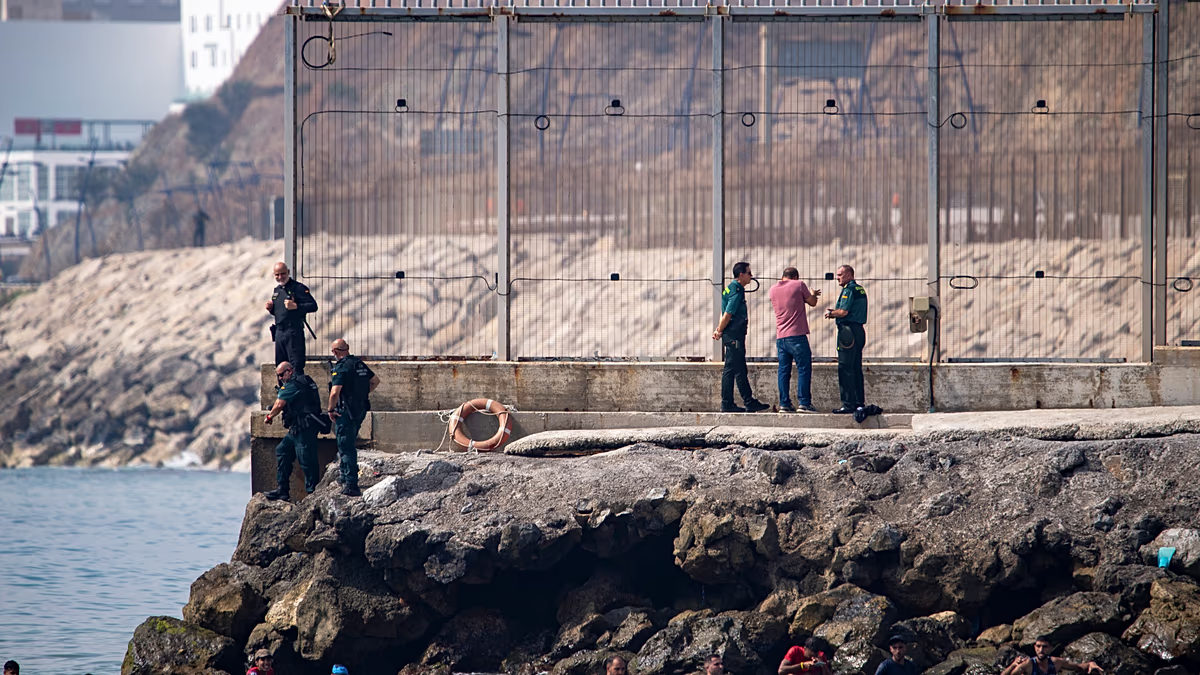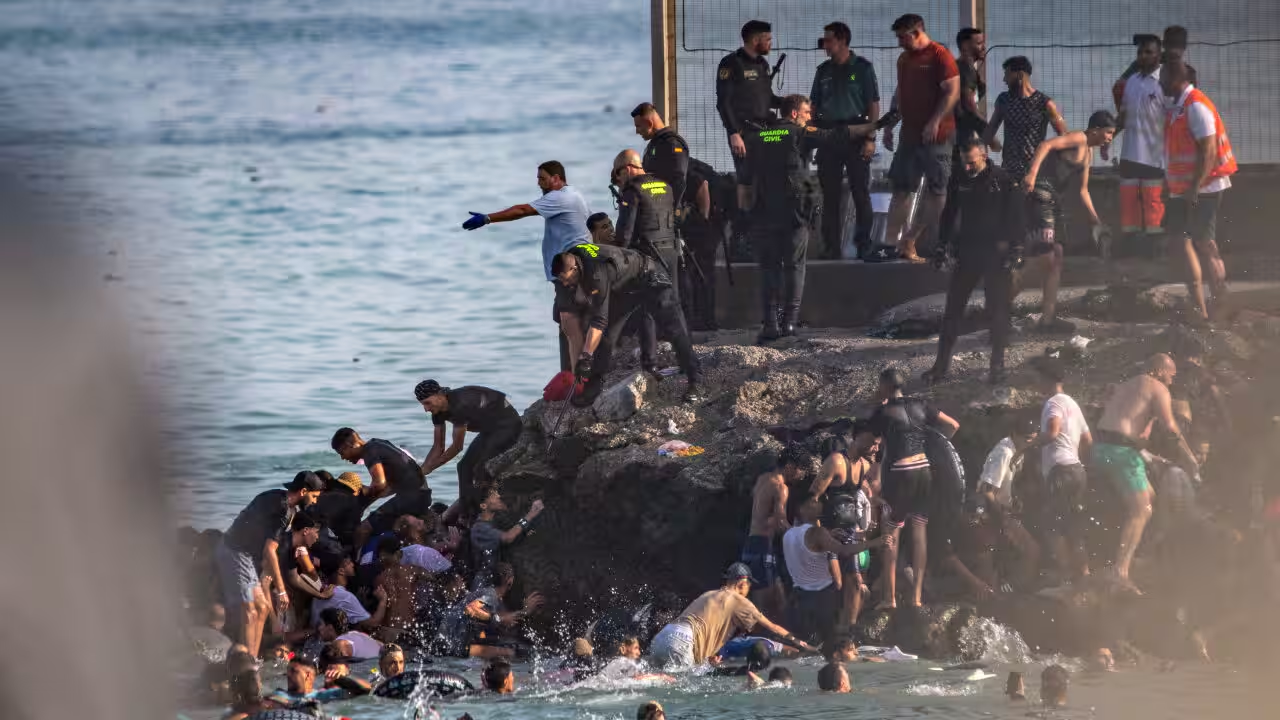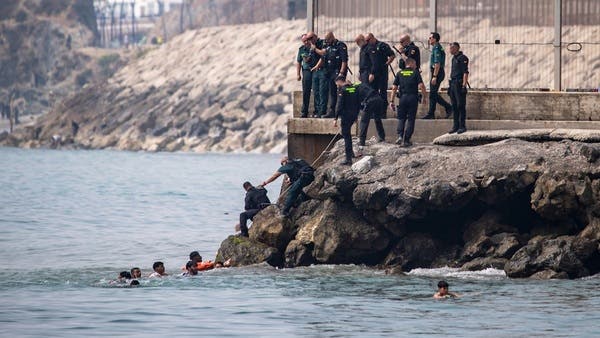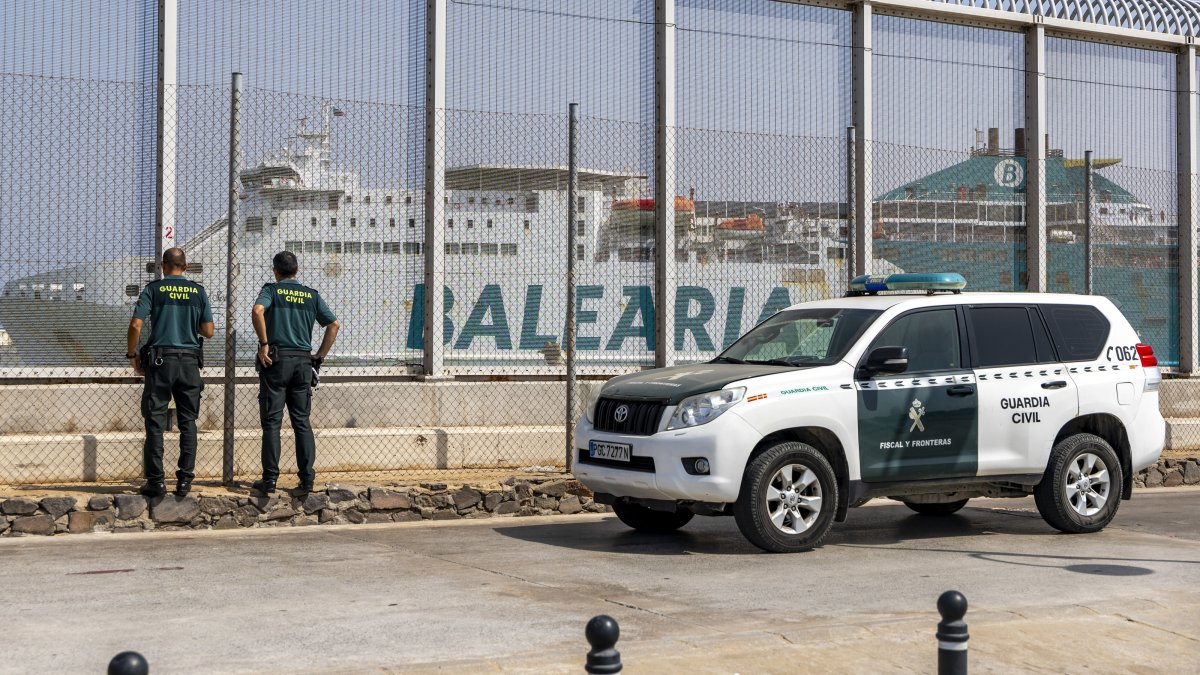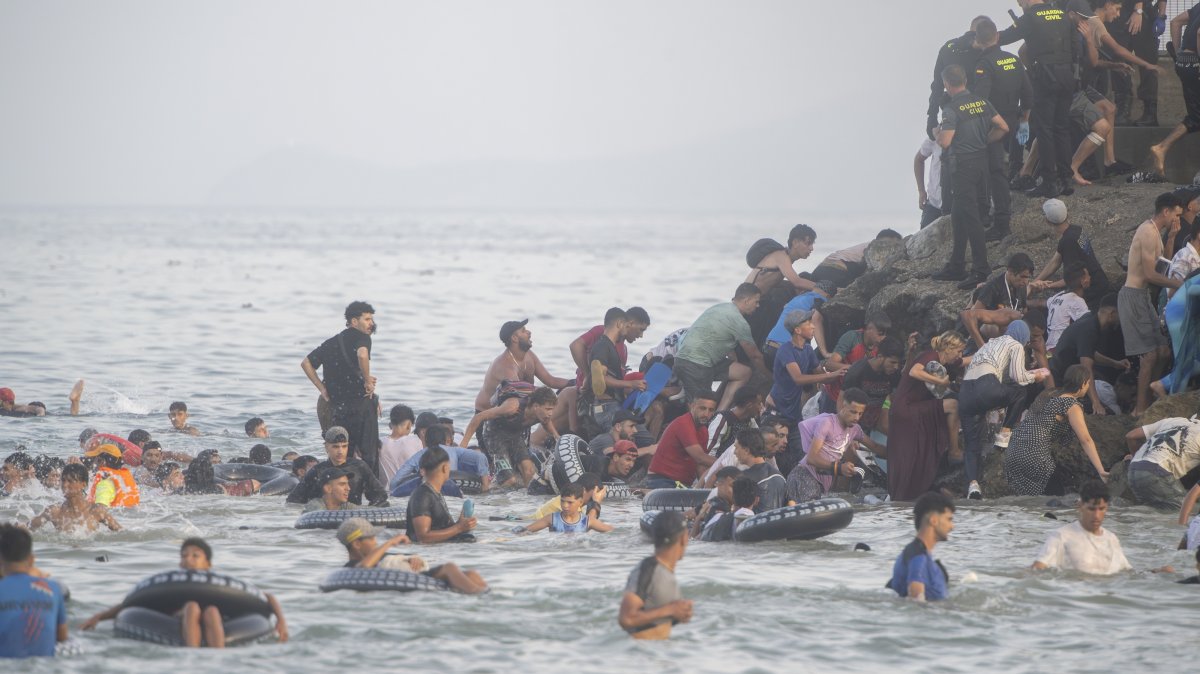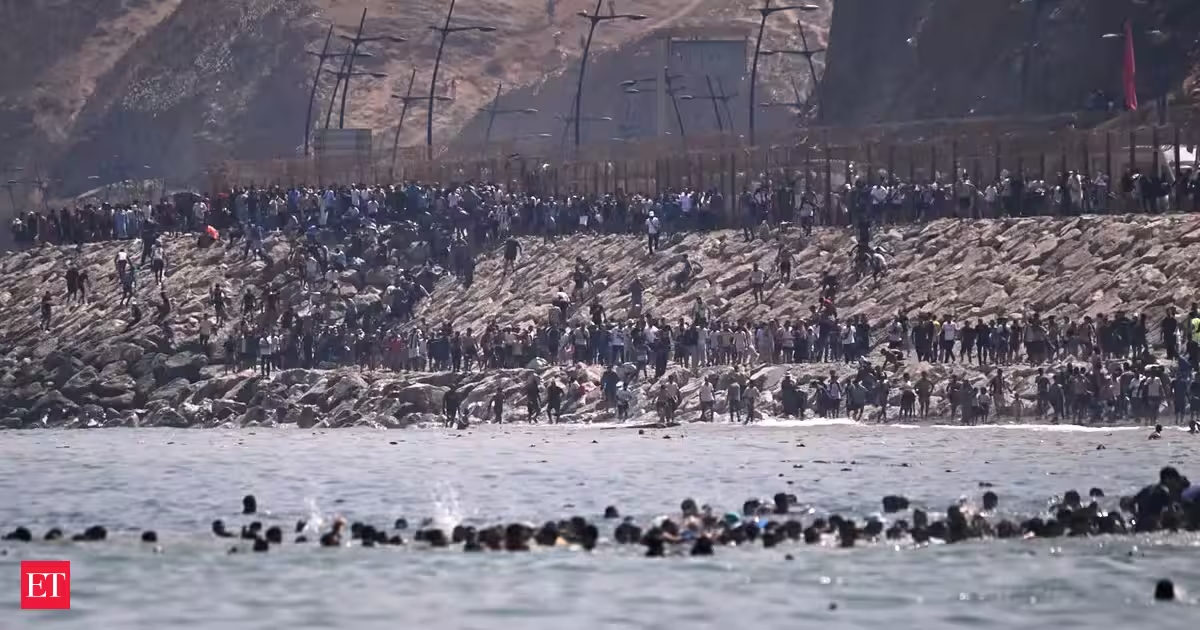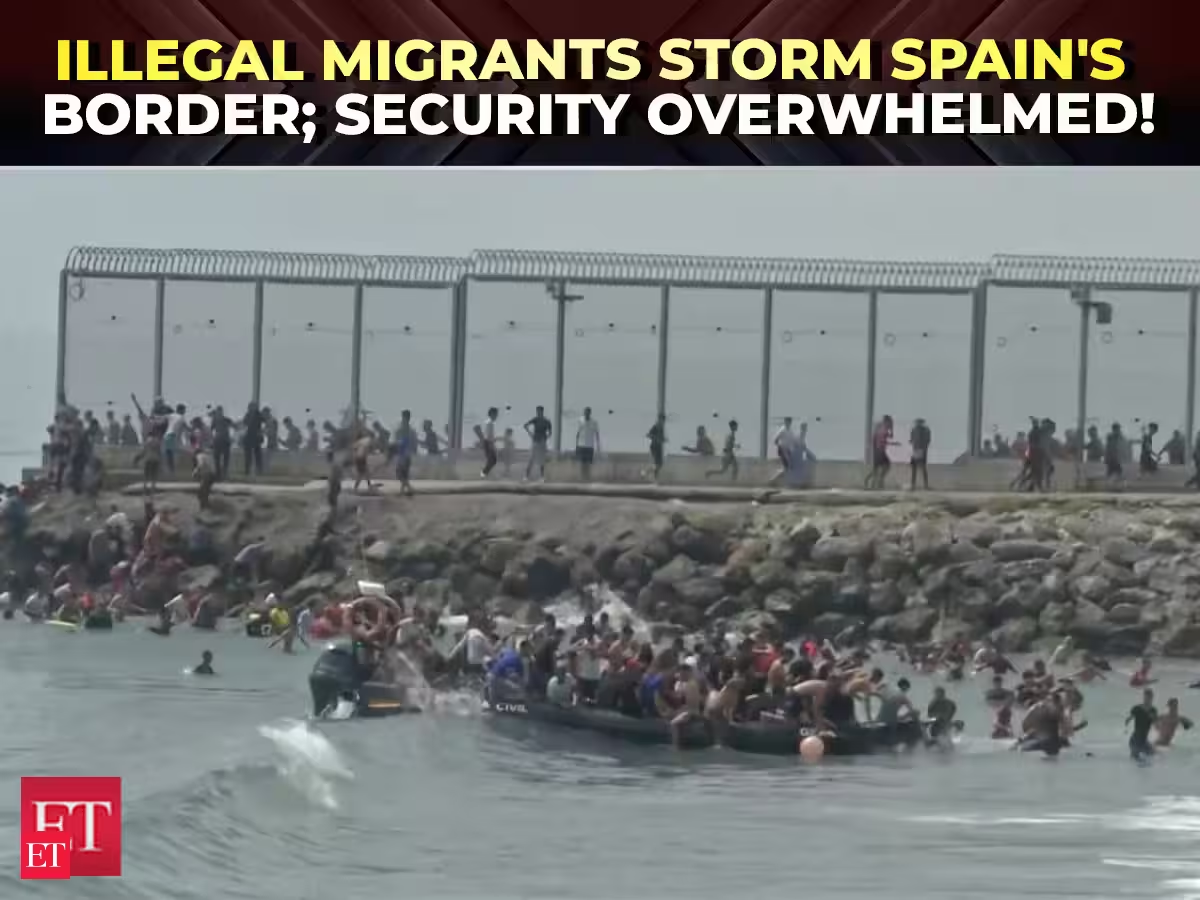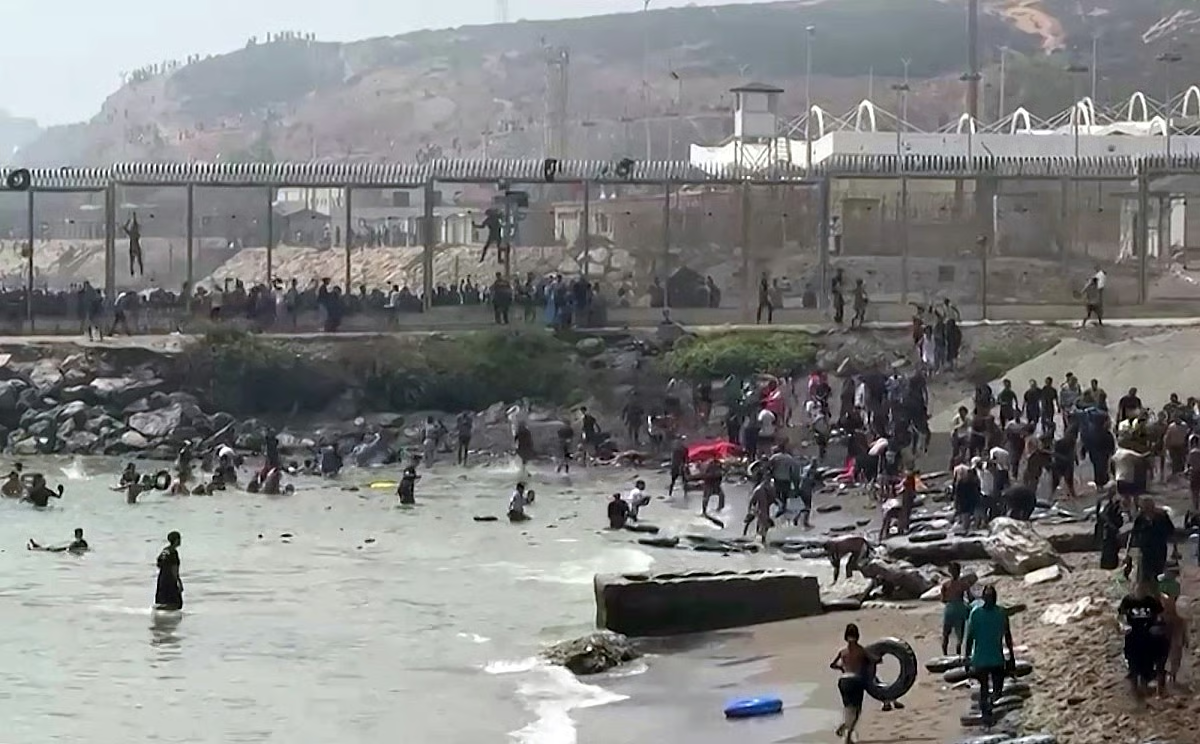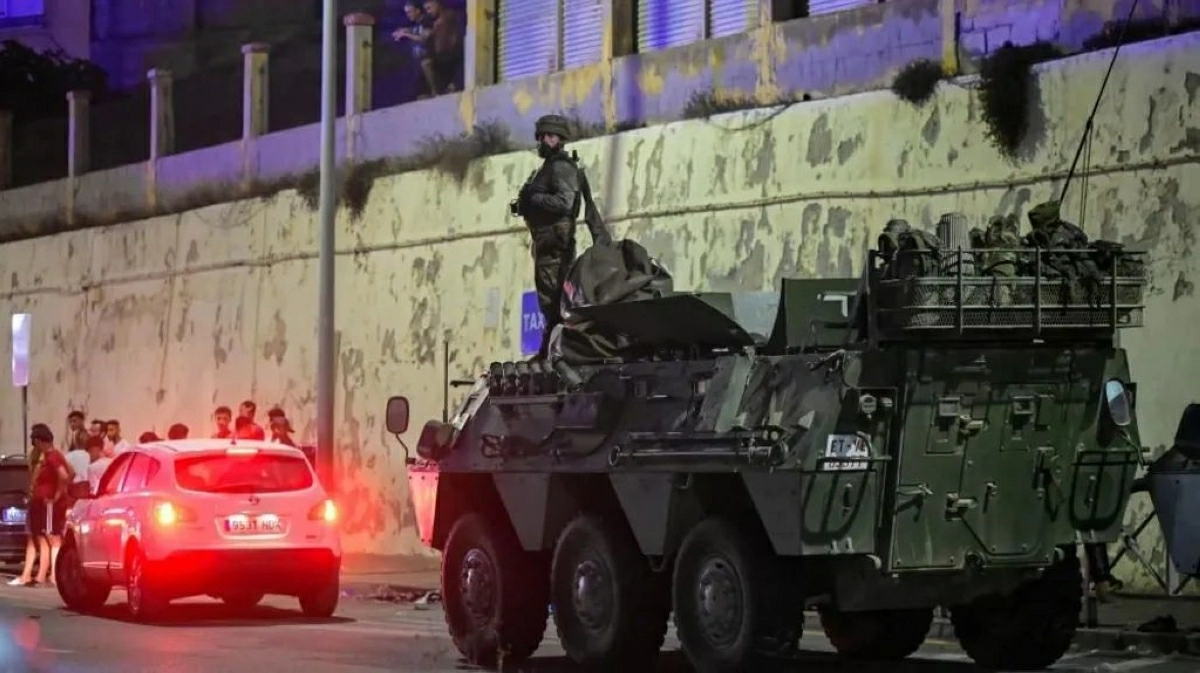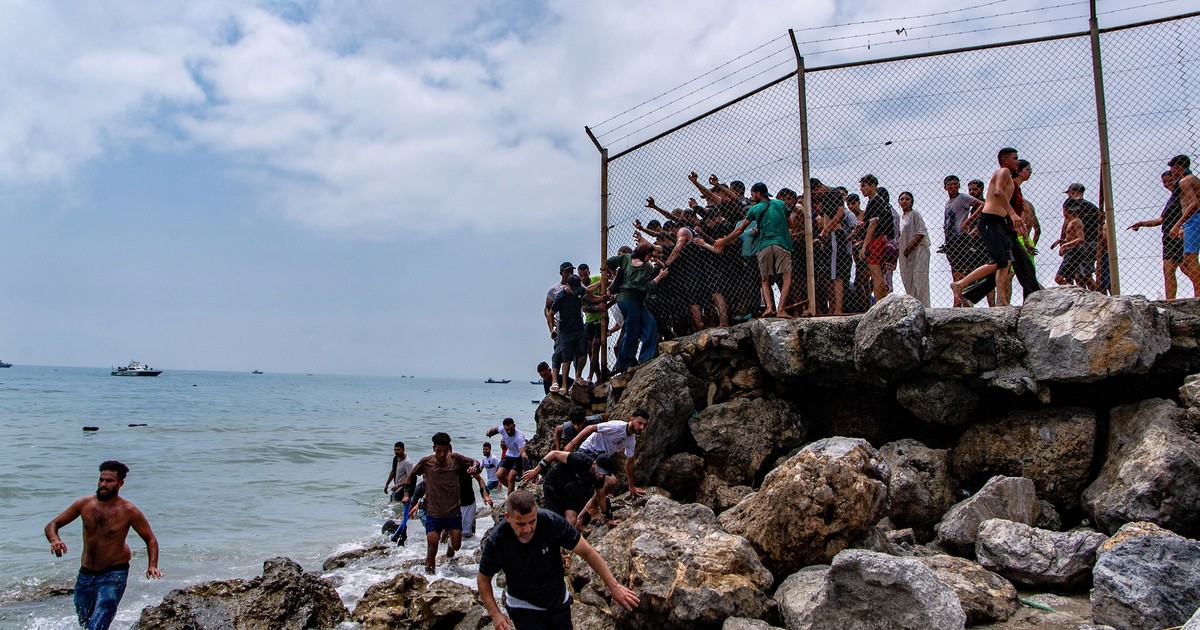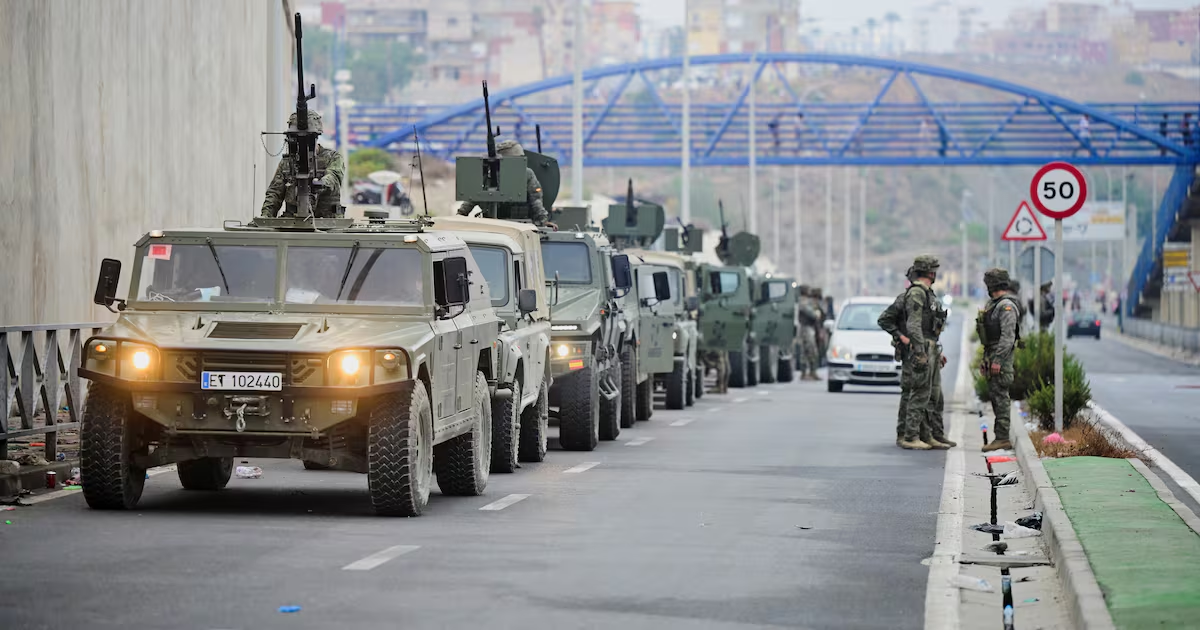
Spain on Friday sent troops to help maintain security in its North African enclave of Ceuta after about 49,000 migrants crossed the border from Morocco.Images of the incident show people swimming to Ceuta as others break through a border gate on land. It has sparked criticism across Europe, where migration is a sensitive political subject.Spanish authorities said they would try to expel those who had entered illegally as quickly as possible. Both Spain and Morocco have reinforced the border fence of the enclave.Breaking through the Morocco-Spain border on July 31. Abdel Majid BZIOUAT / AFPInfoMadrid said 200 specialised police officers and 60 troops had arrived from the Spanish mainland to reinforce security personnel in Ceuta. The European Commission has offered assistance through the European Border and Coast Guard Agency, known as Frontex.Spain's Prime Minister Pedro Sanchez and Interior Minister Fernando Grande-Marlaska are to travel to Ceuta on Friday for meetings with security forces and local authorities, Mr Sanchez's office said. The government blamed a court ruling earlier this month that said those arriving to Ceuta by sea could not be immediately expelled.The Spanish territories of Ceuta and Melilla, also in northern Morocco, represent the EU's only land borders with Africa. Both cities have experienced surges in crossings as migrants attempt to reach Europe.Italian disputeSpain faced a chorus of alarm from its European neighbours, with Italy's Prime Minister Giorgia Meloni saying her government was prepared to "intervene with extraordinary measures to defend the borders and the safety of citizens, including the suspension of the Schengen Area with Spain." The Spanish left-wing government's pro-migration policy is at odds with most of Europe, where anti-migration parties dominate domestic politics. Spain has maintained identity checks on flights and ferries to Ceuta. About 49,000 people crossed into Ceuta from Morocco. ReutersInfoRome's criticism prompted Spanish Foreign Minister Jose Manuel Albares to summon the Italian ambassador in Spain. "This message is unbecoming of the foreign minister of a partner and friendly country from which we expect European solidarity and not partisan demagoguery," Mr Albares said. France also expressed alarm, with Interior Minister Laurent Nunez saying he had asked for reinforced border controls at the Spanish border.A youth from Morocco with a Spanish Guardia Civil vessel in the background. REUTERS / Jon NazcaInfoIsrael joined the criticism of Spain. Relations between the countries have soured in the past years over Mr Sanchez's criticism of Israel's war on Gaza and Madrid's recognition of Palestinian statehood."Maybe before [Spain] continues lecturing us, it’s time it explained to the world why it still maintains colonial enclaves in Africa," said Israel's ambassador to the UN, Danny Danon. Moroccan roleSpain and Morocco are co-operating to resolve Thursday's incident, Mr Albares said. The comments appeared to be aimed at dismissing rumours that the mass arrival was orchestrated by Morocco in retaliation to Mr Sanchez's recent visit to Algeria, which has rejected Moroccan sovereignty over the Sahara region.Rabat presented a plan to the UN Security Council in 2007 to allow the region to enjoy autonomy under its sovereign rule, a move supported by countries including France.Late on Thursday, Moroccan authorities aimed water cannon at migrants in Fnideq, a Moroccan town near the Ceuta border, to deter them from crossing. "It was very tough. The police tried to stop us. But our will and determination allowed us to come here," migrant Jadid Zacaria said after reaching Ceuta.Some migrants shouted "long live Spain" as they entered the enclave.Footage from local media and rights organisations appeared to show unrest at the Beni Ansar border point between Morocco and Melilla late on Thursday. The site has been the only open crossing between Morocco and Melilla for the past six years.At least three vehicles were set on fire and injuries were reported among migrants and security personnel during the violence, said Omar Naji, vice president of the Moroccan Association for Human Rights.
Spain sends troops to Ceuta enclave after nearly 50,000 migrants arrive from Morocco | The National
Madrid angry at court ruling blocking immediate return of people arriving by sea
640 words~3 min read