Commentary
Beijing is stealing a march on its competitors by targeting strategic sectors, says Gillian Tett for the Financial Times.
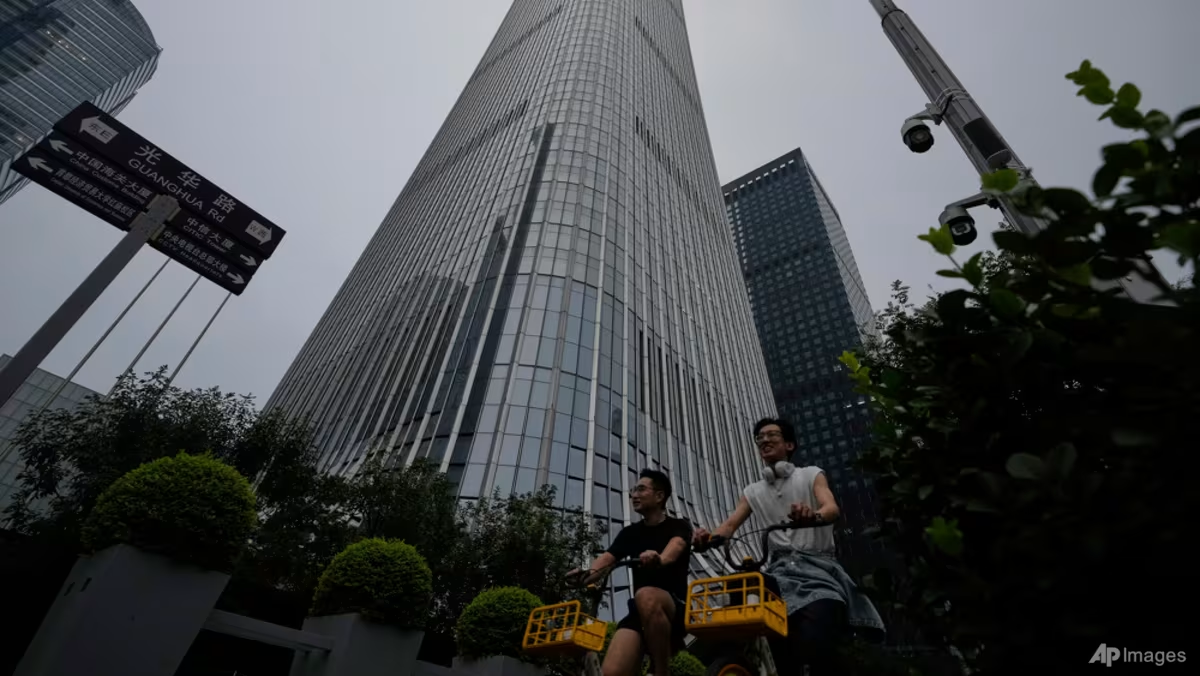
Cyclists ride past high rise office buildings in the central business district, in Beijing, China, Saturday, Aug. 2, 2025. (AP Photo/Mahesh Kumar A.)
02 Aug 2026 06:00AM
LONDON: What is driving the explosion of Chinese exports, which hit almost US$4 trillion last year? That question is creating deep angst among non-Chinese policymakers amid fears of a second “China shock”.It is an issue I have been considering myself recently, having just crossed China in an electric vehicle Silk Road convoy, where I saw up close the startling quality of its EVs, green tech and artificial intelligence. Witnessing all that, it is hard not to worry about how others will compete.And now a row about this has erupted between some Chinese economists and the OECD. Last month the Paris-based organisation reported that China’s subsidies were three to eight times higher than its rich-world rivals in 2024, accounting for up to 60 per cent of its global market share gains between 2005 and 2023. This echoes repeated American and European complaints that China is using “unfair” tactics to undercut rivals.But Chinese economists such as Kai Guo argue that “subsidies are no longer the most convincing explanation for Chinese firms’ growing competitiveness”. They accuse the OECD of miscalculating how cheap loans work - a point echoed by a paper from the World Economic Forum that finds little evidence of “broad, systematic below-market finance”.