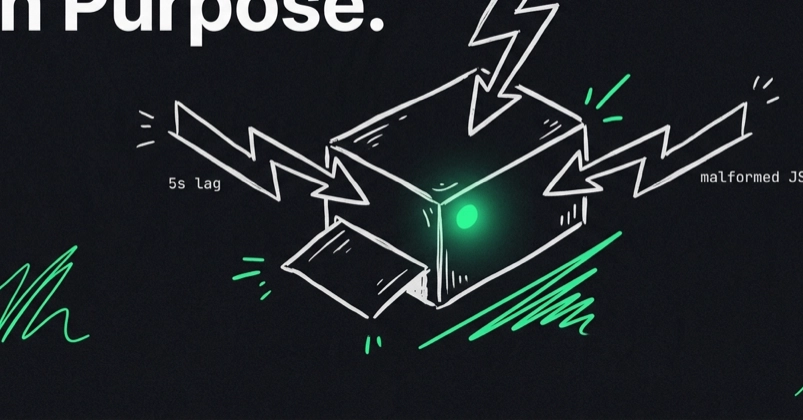
If you have ever maintained a production web scraping pipeline or an automated form-filling assistant, you know the sinking feeling of checking your logs on a Monday morning and seeing a wall of red. A front-end engineer changed a class attribute from btn-primary to btn-action-primary, an A/B testing framework altered the DOM tree hierarchy, or a minor React component update randomized your CSS selectors.
In a heartbeat, your automation script shatters. The selector fails to resolve, a runtime exception is thrown, and your entire data pipeline grinds to a halt.
Traditional automation architectures—built on strict CSS selectors, XPath expressions, or rigid coordinate-based clicks—treat the web as a deterministic state machine. But the modern web is anything but deterministic. It is fluid, dynamic, and constantly mutating.
To overcome this structural fragility, modern agentic systems require a paradigm shift. By fusing Large Language Model (LLM) visual grounding, Model Context Protocol (MCP) tool standardization, and localized hardware acceleration via WebGPU Compute Shaders, we can build TypeScript agents that possess semantic resilience. When a DOM mutation breaks a selector, the agent doesn't crash. It captures a visual snapshot, processes the spatial layout via multimodal analysis, and dynamically self-heals its execution path.