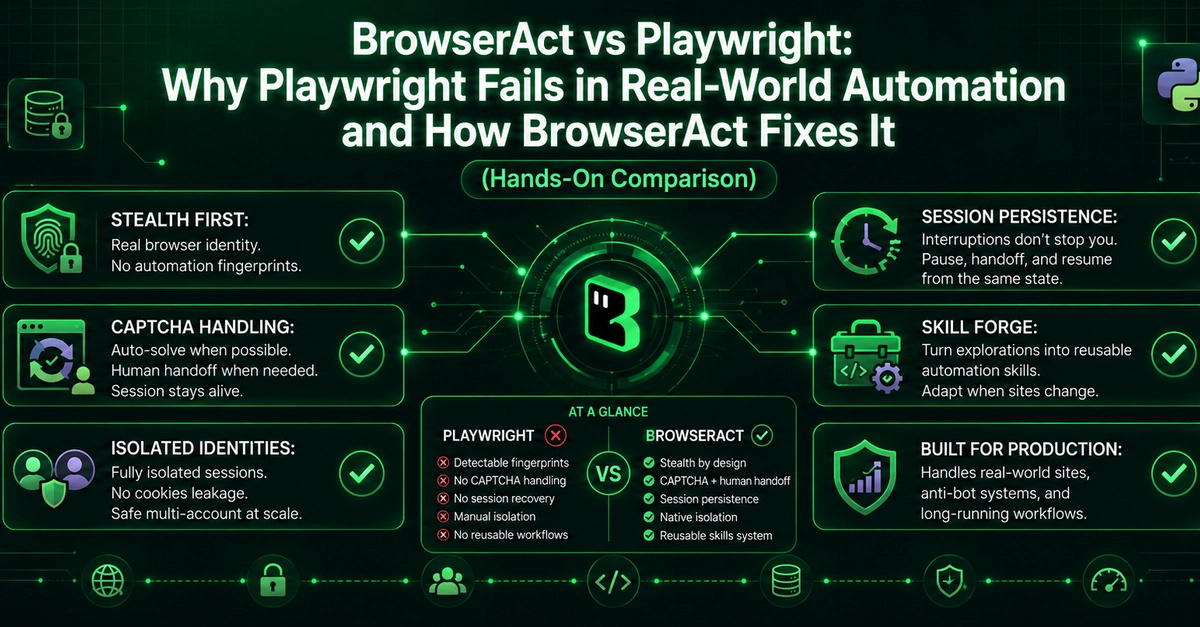
If you have spent any significant amount of time maintaining end-to-end (E2E) test suites or web scraping pipelines, you are intimately familiar with the fragility of modern web automation. For over a decade, our industry has relied on static, hardcoded locators: XPath expressions, complex CSS selectors, and DOM attribute queries like data-testid="submit-button".
This architecture was built on a comforting, deterministic assumption: that a developer's intent has a rigid, unyielding relationship with the Document Object Model (DOM).
That assumption is entirely dead.
Modern single-page applications (SPAs), heavily abstracted component libraries, shadow DOMs, randomized class names generated by CSS modules, and complex canvas-based renderings have rendered traditional locators obsolete. When a frontend component shifts overnight from a semantic <button> to a styled <div> with an absolute position, your hardcoded CSS selector breaks. Your CI/CD pipeline fails, your team spends hours updating test suites, and velocity grinds to a halt.
Enter sight-driven automation: the marriage of headless browser engines like Playwright and Puppeteer with multimodal Vision Large Language Models (LLMs). By combining programmatic browser control with artificial intelligence that can actually see the viewport, we are witnessing a paradigm shift from brittle imperative scripts to resilient, self-healing, declarative agentic execution.