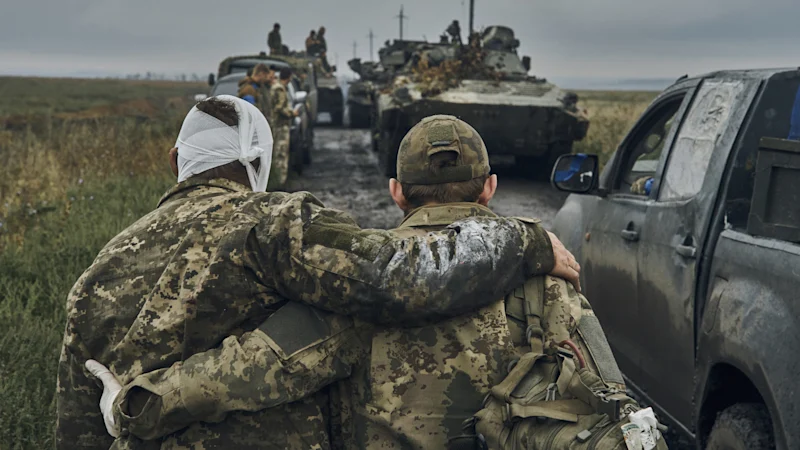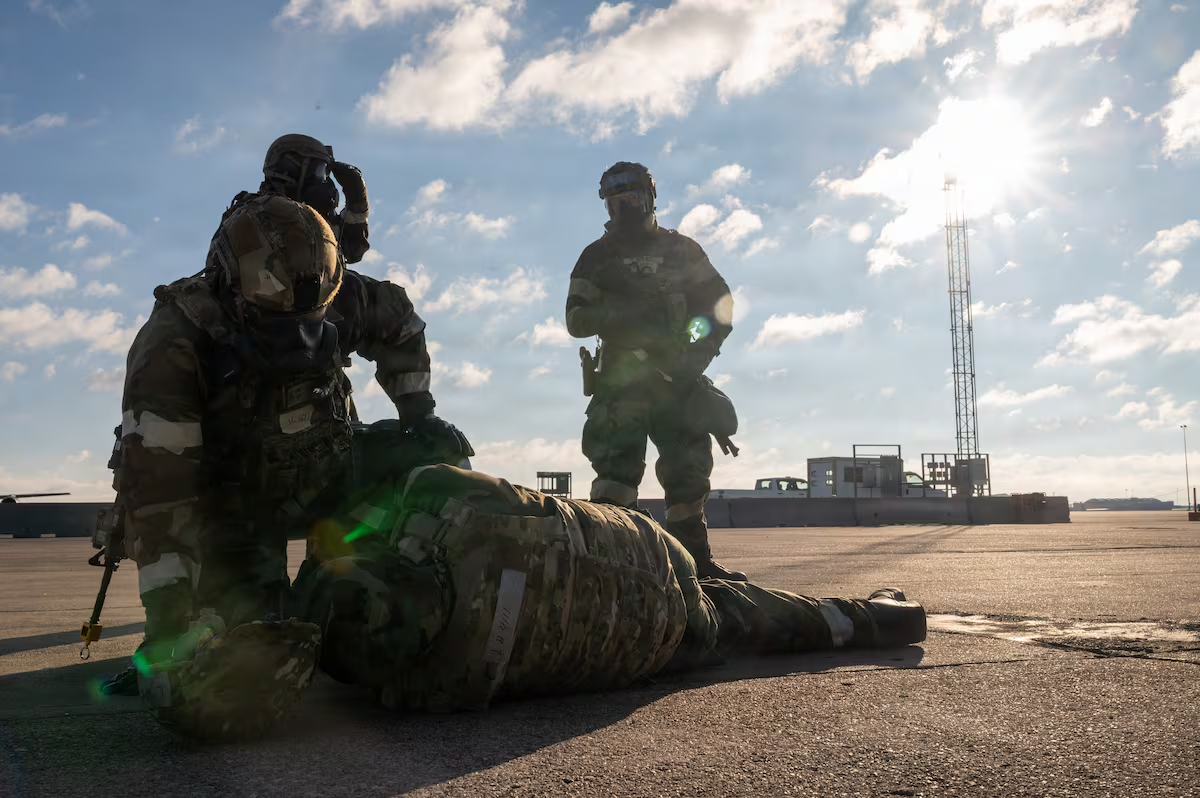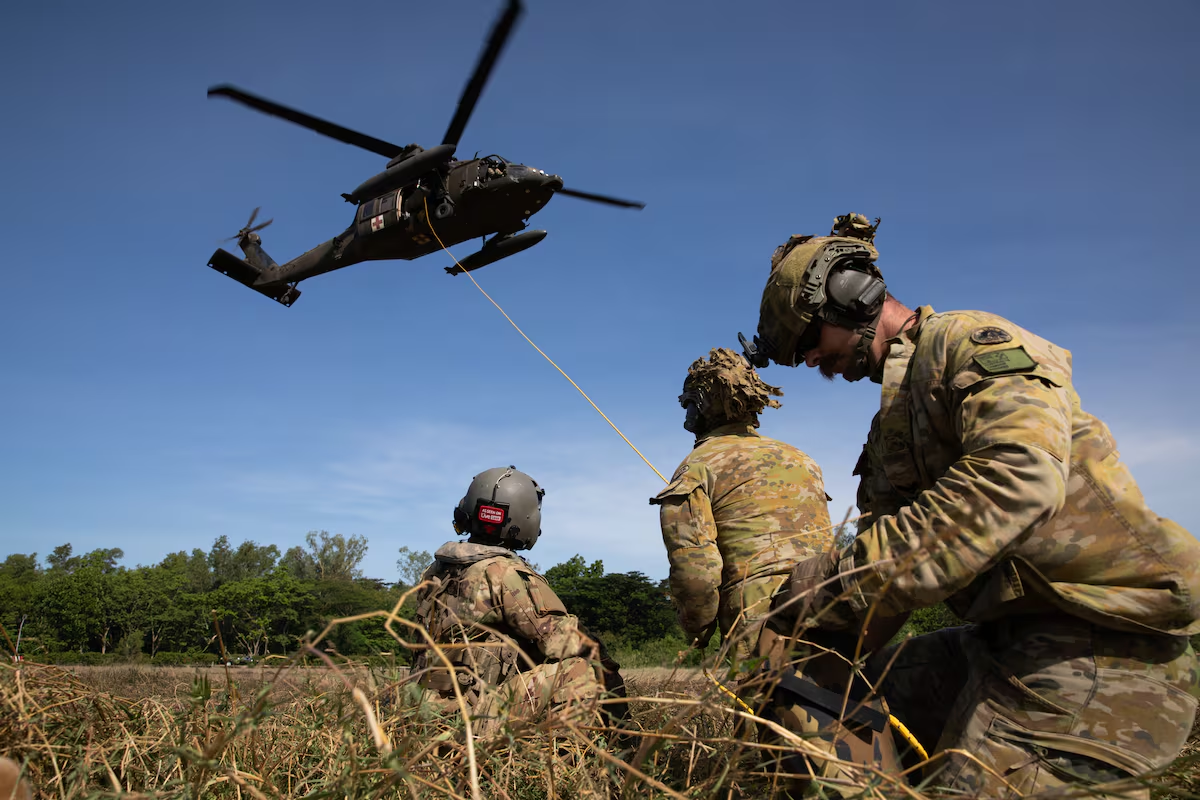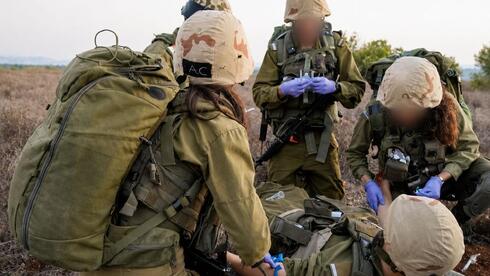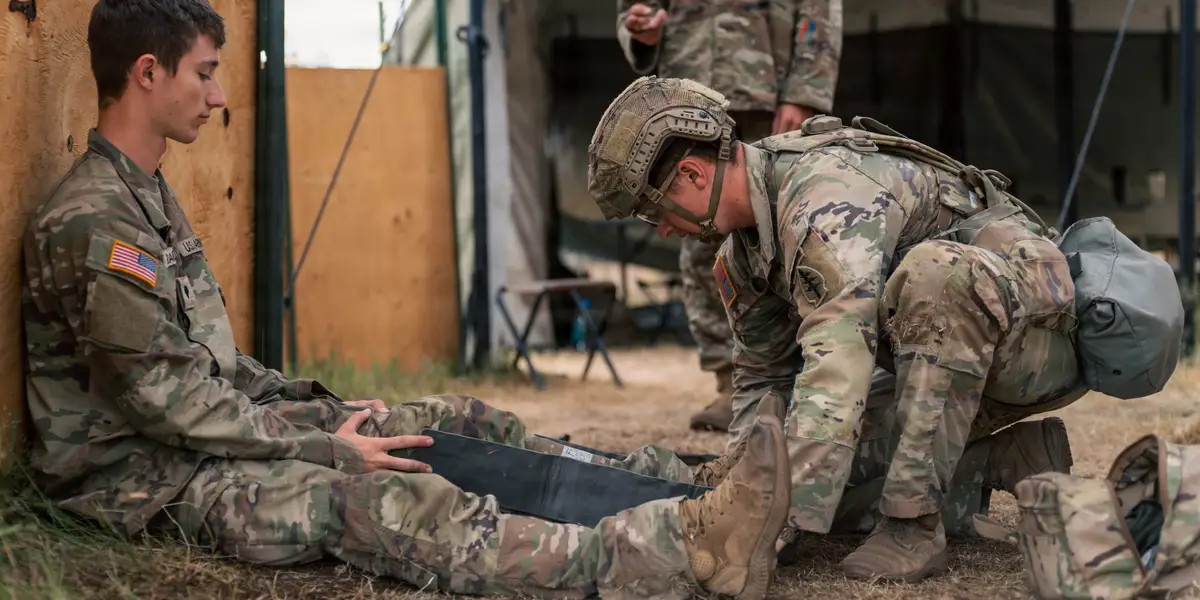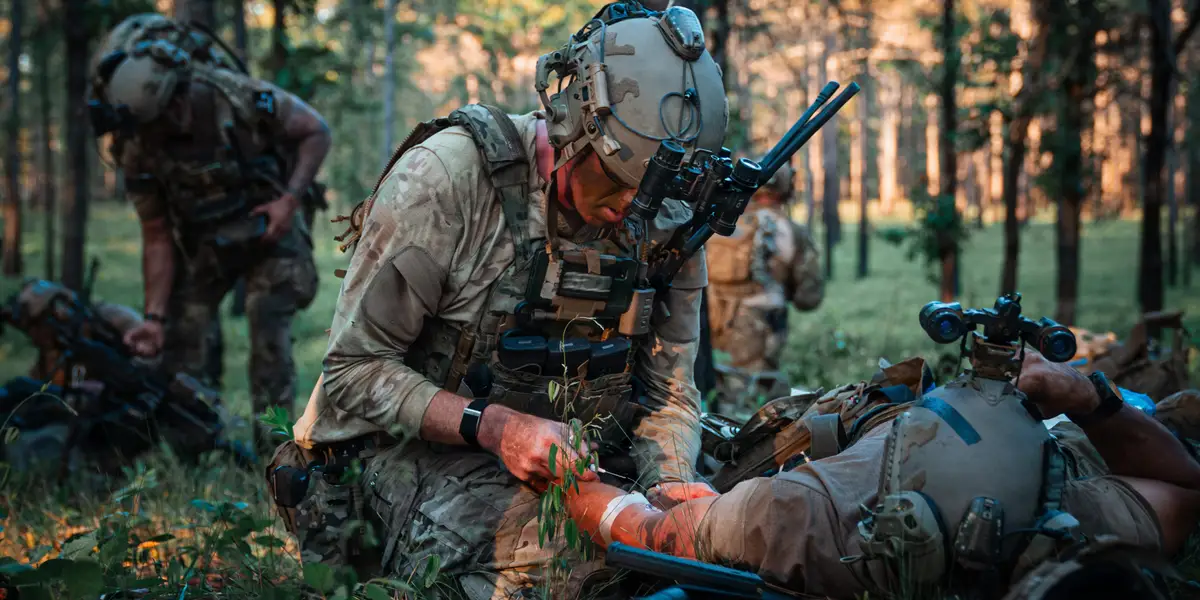
Military medics and trauma teams are training for a potential battlefield where they must care for wounded teammates for weeks before they can be evacuated.
Spc. Edgar Martinez/US Army
The corpsman strapped his patient onto the litter as the sound of swirling helicopter blades roared from a watchful instructor's hand-held speaker. Double-checking his IVs were secure, he and a stretcher team hoisted up their casualty and sprinted toward the landing zone amid flying debris from the helo's rotor wash — in this case, a leafblower.On this makeshift battlefield in the parking lot of the Army's Joint Special Operations Medical Training Center, medics had already quelled enemy fire, stopped the bleeding, drawn two bags of blood from teammates for the wounded, and carried him half a football field to a protected position before the "helicopter" arrived to whisk the injured soldier off to a military hospital nearby.Such a scene — a wounded US service member being swiftly evacuated to advanced lifesaving care — is familiar to veterans of the Global War on Terror and reflects the belief around which the American military has built its modern trauma system: medics triage the wounded, helicopters or Humvees arrive quickly to evacuate them to a higher-level care, and then surgeons take over.That combat casualty care chain is expected to fracture in a future large-scale war.During the post-9/11 wars, military medics routinely plugged gunshot wounds, stopped hemorrhage with tourniquets on limbs shredded by roadside improvised explosive devices, and cleared shattered teeth and debris from airways with their fingers.