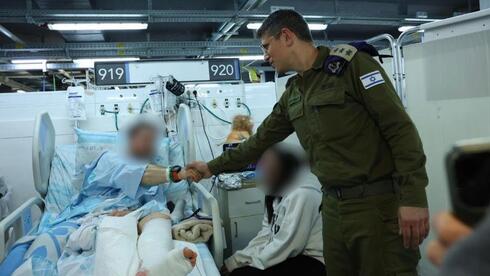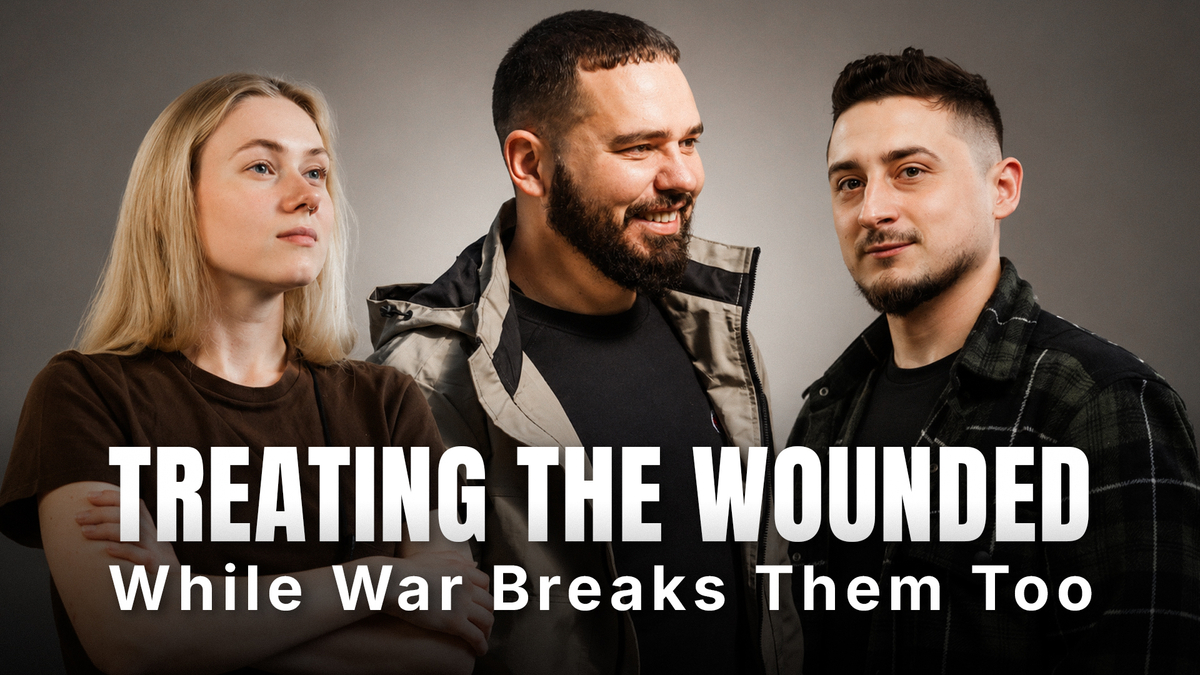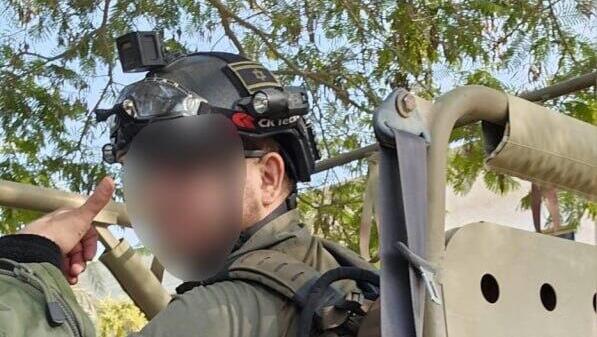
IDF combat medics wounded in Gaza recount treating comrades under fire before becoming patients themselves, describing the physical and psychological toll of their injuries, the long road to rehabilitation and their determination to return to serviceThey were used to being the ones treating wounded soldiers in the field, until the moment they themselves were injured and needed help. Now they are sharing the story of their injuries and rehabilitation through the eyes of caregivers who suddenly became patients.GalleryMaj. (res.) P. and Sgt. Maj. (res.) after being wounded, in the hospital "At the start of the assault on Shuja'iyya, we got a call about a lightly wounded soldier who needed evacuation," P. recalled. "He reached us with the unit doctor and we began evacuating him. A few minutes later, we were caught in an RPG ambush. There was an explosion and we saw the Eitan armored personnel carrier go up in flames. I caught fire myself. I put the flames out by slapping at my vest, which had caught fire near a grenade."At the same time, I realized one of my magazines had exploded. I did everything quickly to smother the fire. My fingers were gone. I understood my hand wasn't going to function, but that I had bigger dangers to worry about. Those are split-second thoughts. We shouted for everyone to dismount and went to open the rear ramp. That's when we came under a burst of small-arms fire. Everyone was wounded, but I didn't know how badly."Only after making sure his wounded comrades had been treated did P. allow himself to take pain medication."During the evacuation, after our communications and electrical systems failed, D. managed to report our situation. We were alone on the route. We had six wounded, including two in serious condition. What had started as one casualty needing stitches suddenly became everyone needing treatment. For us, it was a mass casualty incident."Maj. (res.) P. and Sgt. Maj. (res.) after being wounded before injuryEven amid the chaos, P. vividly remembers the way his close friend D. functioned."He handled everything sharply and professionally. Because of that, the relevant forces were waiting for us when we reached the protected position. He kept working as the battalion medic until the doctor told him, 'That's it. You're the patient now.'"P. was evacuated to Sheba, where he works as a nurse."I knew exactly who I wanted to be my hand surgeon. I'd worked with him many times in the operating room. I knew he was the person I needed."After his first surgery, which lasted about 10 hours, doctors told him he faced a long rehabilitation following a severe injury."Suddenly you're the patient instead of the caregiver. I was Superman and then, in an instant, I couldn't do things on my own anymore. The biggest blow was to my ego, not my body. It's a difficult adjustment. You learn to do everything with one hand."Despite the challenges, P. said his professional background became a source of strength."From the very beginning, I understood what had happened and what my limitations would be. It was relatively easy for me to come to terms with it because I knew I was facing things I'd already seen as a caregiver."After completing rehabilitation, and despite his medical profile being lowered to 21, making him formally unfit for military service, P. received special approval to return to duty."They saw that I could handle a weapon properly and also perform medical procedures. I came back two months ago and I'm already reporting for another deployment. It feels right and I'm ready."Sgt. Maj. (res.) D., 38, the battalion medic serving alongside P., was wounded in the same incident."We've served together for more than 10 years. He's my partner. It's much more than the fact that we were wounded together. I'm the battalion medic and he's the paramedic. We work together all the time. In every incident we had from October 7 until we were wounded, we were together."D. reported for reserve duty during the war after coping with the loss of his cousin, Dor Lazimi, who was killed in the battle at the Nahal Oz military post on October 7."At the beginning of the war, I kept trying to reach him. Only after four days did the IDF notify us that he had been killed," he said.An ambulance driver and volunteer with United Hatzalah, D. completed his regular service in the Paratroopers Reconnaissance Unit in 2010 before joining the battalion medical team, where he served until he was wounded in December 2023."After the explosion, I felt my arm and leg burning," he said. "My binoculars were covered in blood. I tried to wipe them clean, but it just smeared everywhere. I couldn't see anything. I didn't know what blood was mine and what belonged to others. I turned on the small flashlight on my helmet, moved my arm and saw it was still there. I thought, 'OK, I still have my hand.'"We're the reconnaissance unit's rescue team. When something happens to them, we're the ones who respond. Then it hit me: if I don't treat myself, no one else will. I can't just lean back and wait for someone to come. We have to take care of ourselves."D. was evacuated to Soroka Medical Center in Beersheba while fully conscious."I knew what was happening. What mattered most to me was finding out what had happened to the other wounded soldiers and to my friend P."He suffered shrapnel wounds to his arm and leg, hearing damage and post-traumatic stress that developed after the injury.Sgt. A. before the injury"That's my most significant injury," he said candidly about the psychological toll. "Because of it, I didn't work for nearly two years. I'm only now starting to return. At first, I didn't think much of the fact that I wasn't sleeping at night. It was the beginning of the war and I told myself everyone was like that, that it made sense. Then my memory and my thinking started to deteriorate."During rehabilitation, the hardest part was being away from his unit."My friends were getting wounded in the war and I wasn't there to help them. That's a very difficult feeling. Every evacuation alert, every helicopter bringing wounded soldiers to the hospital, I hear it."Sgt. A., 20, a combat medic with the Nahal Brigade's 932nd Battalion medical company, was also wounded on October 19, 2025, during an encounter with terrorists in which Maj. Yaniv Kula and Staff Sgt Itay Yavetz were killed."I knew them well from the fighting. Yavetz had a great sense of humor. I loved talking with him. We'd have fascinating conversations late into the night while on guard duty. I interacted a lot with Kula and realized how professional and compassionate he was. He always looked after his company and made sure no one lacked anything," he said.Sgt. A. before after surgeryHe vividly remembers the incident in which he was wounded."It was the first major incident where I provided life-saving treatment," he said, describing how what began as treatment for wounded soldiers quickly escalated into an ongoing event with multiple casualties."We finished evacuating the first casualties and were immediately sent to the next ones. They kept firing at us. It never stopped. I reached the last casualty under fire. I put on a tourniquet and then I was thrown by the blast from an explosion."A. was evacuated to Soroka, where doctors diagnosed the nerve injury he continues to recover from."The strength to get through rehabilitation comes from friends who visit whenever they get leave from the base, from our families who help with everything and from the people who fought shoulder to shoulder with us and were killed. We honor and remember them. It also comes from faith and hope that things will get better," he said."In rehabilitation, you strive to be the best you can. That's very important. The doctors here do everything they can. There are many limitations, but you have to keep your head up. There are highs and lows. Gradually I understood what I needed to do to move forward and rebuild myself in the best possible way."
From treating soldiers to fighting for recovery: ‘If I didn’t treat myself, no one else would’
IDF combat medics wounded in Gaza recount treating comrades under fire before becoming patients themselves, describing the physical and psychological toll of their injuries, the long road to rehabilitation and their determination to return to service
1,348 words~6 min read