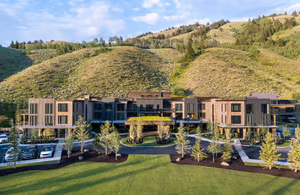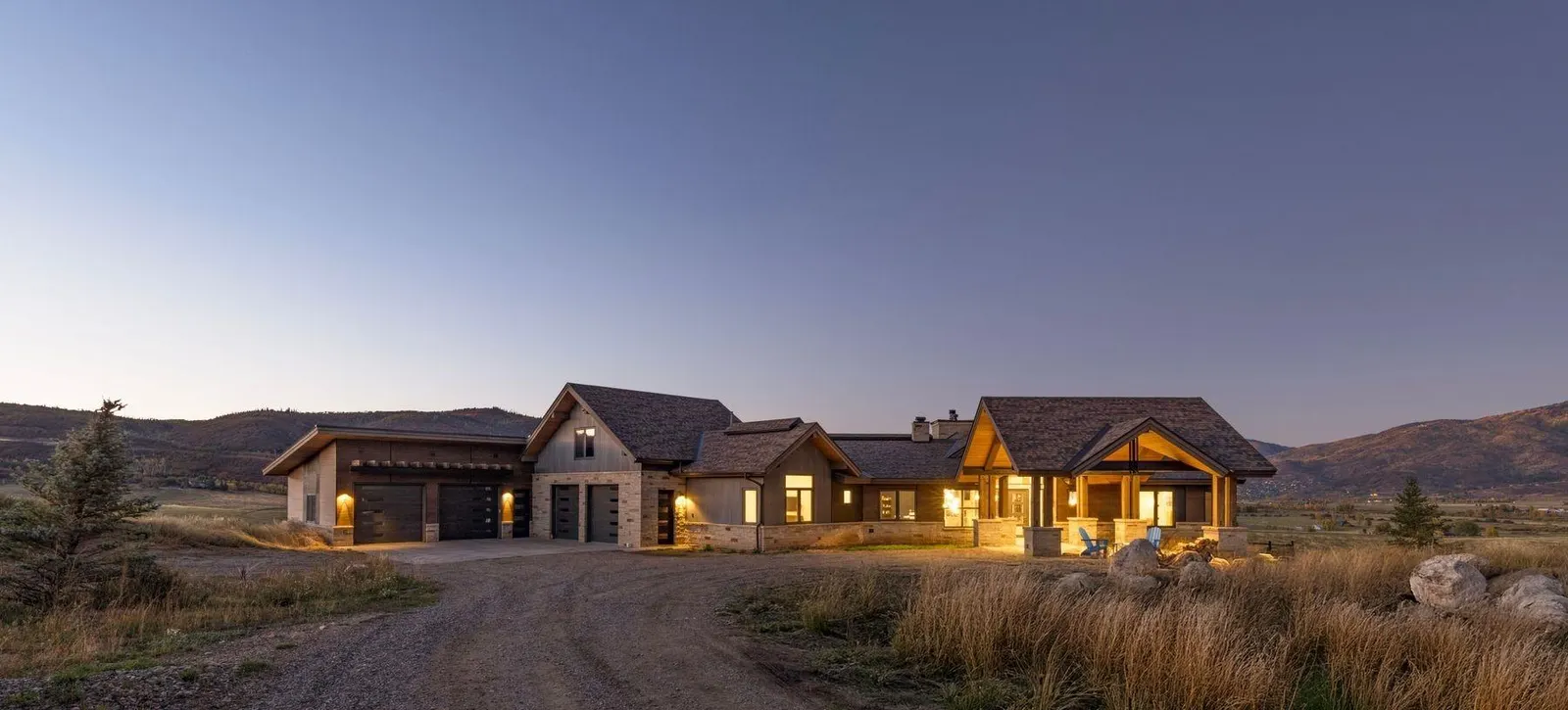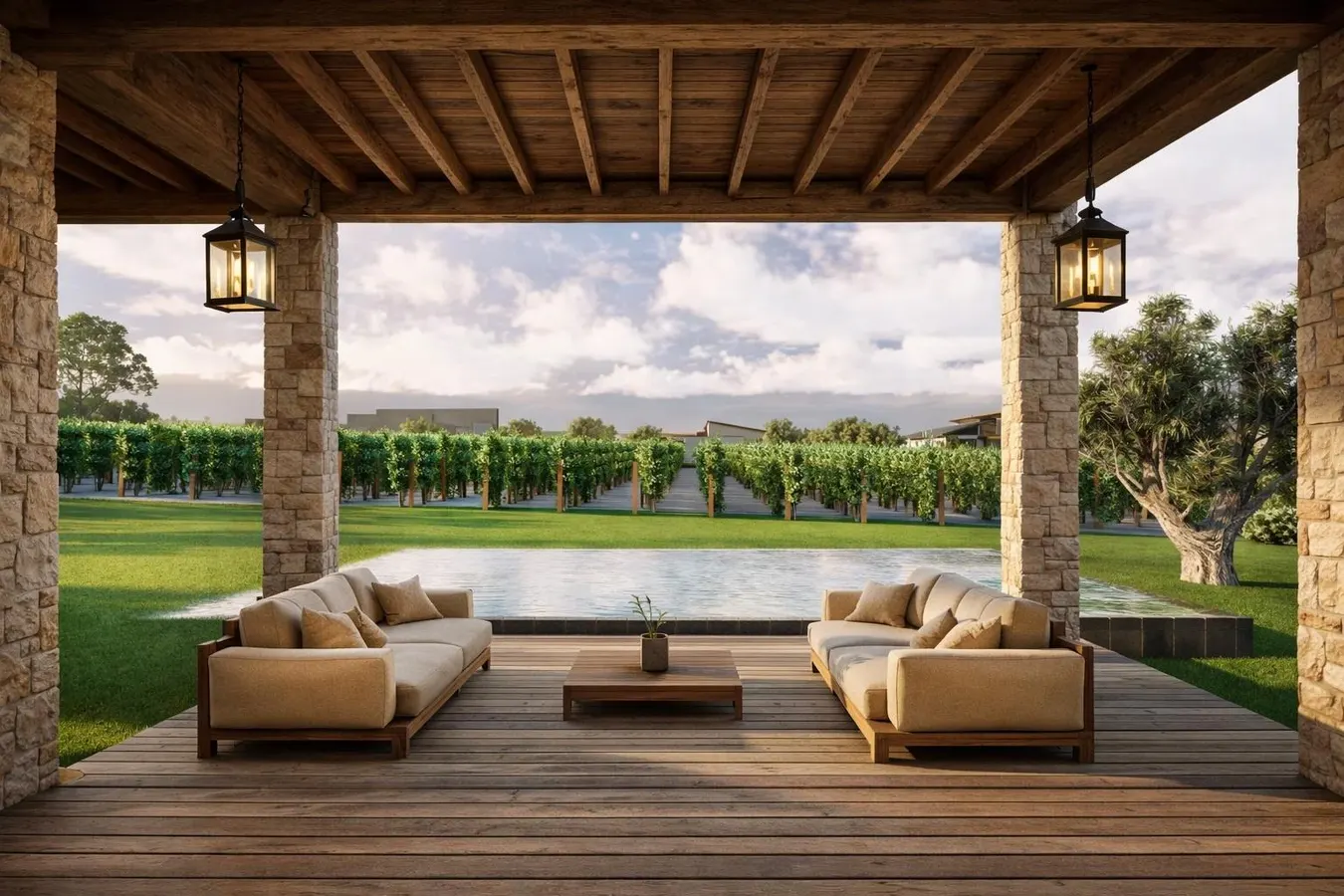
A private residence planned for Puerta del Lobo, a vineyard community in the Texas Hill Country.Puerta del LoboFor years, the best places to stay in the Texas Hill Country were guest ranches or small inns near wineries. Now five major hospitality brands (Canyon Ranch, Waldorf Astoria, Aman, Auberge, and Kimpton) are arriving rapidly. They are adding hundreds of rooms, branded residences, and a new kind of investment to this part of Texas.Until now, luxury in the Texas Hill Country has centered on small independent properties, often built around a winery or working ranch. What is coming is something else entirely. Destination spas, restaurants from Michelin-starred chefs, and private villa residences will spread across hundreds of acres. In these new developments, the hotel is only one part of a much larger private world.Carter Creek Winery Resort and Spa in Johnson CityCarter Creek WineryAs soon as you leave Austin, everything changes. The city fades away, and the road takes you through limestone hills, live oaks, and rivers lined with cypress trees. Peach stands pop up along the highway. When you get to Fredericksburg, you’ll find vineyards and tasting rooms around a downtown filled with old German stone buildings, and ranches spreading out in every direction.It’s easy to see why people compare this area to Napa. Both places are famous for their wine, food, beautiful scenery, and they attract people looking for a second home. But the Texas Hill Country is bigger and feels more like the Wild West. Here, you can taste wine, swim in clear rivers, ride horses, eat barbecue, and listen to live music. All of this gives the region a true Texas feel, not just a copy of California’s wine country.Hamilton Pool Preserve is a historic swimming hole in Dripping Springs.gettyWhy The Hill Country, And Why Now?Accessibility plays an important role. Fredericksburg, Dripping Springs, Spicewood, and Johnson City are all close enough to drive from Austin or San Antonio. Dallas and Houston also offer large markets nearby. Visitors can take a break in the countryside without needing to fly, and each town has its own unique scenery, so every trip feels new.The wine industry encourages visitors to spend more time in the area. Fredericksburg alone has over 75 wineries, vineyards, and tasting rooms, attracting people who want to enjoy weekends filled with wine, food, and outdoor fun. Well-known hotel brands are entering a market with high demand but not many full-service luxury resorts, choosing to join an established destination instead of creating a new one.Kathryn Sharrock, director of sales for Waldorf Astoria Residences Texas Hill Country, tells me in an interview that interest is coming from Austin’s tech and entrepreneurial communities, as well as families from Dallas, Houston, and San Antonio. She has also heard from executives moving to Texas, successful entrepreneurs, multigenerational families, and out-of-state buyers who discovered Fredericksburg while traveling through Texas. Sharrock says where buyers come from matters less than what they want: “They’re searching for a luxury experience with both privacy and community, an exciting wine scene, connection to nature, exceptional service in a destination that feels genuine.”Rendering of central pools at Waldorf Astoria Residences Texas Hill CountryWaldorf AstoriaSharrock also notes that people are using their second homes differently now. “Five-plus years ago, pre-pandemic, many second-home buyers viewed Fredericksburg primarily as a charming, occasional weekend getaway. Today, buyers are thinking much more intentionally about lifestyle and quality of life. Many work remotely or have greater flexibility than they once did, allowing them to spend weeks or even months here instead of just a few weekends a year.”Branded residences are making these new resorts a reality. Waldorf Astoria, Canyon Ranch, and Aman are all offering homesites or private residences alongside their hotels. By selling homes, developers get early funding, which helps pay for restaurants, spas, and other amenities that might not survive on room revenue alone. Homeowners enjoy hotel-level service and access to the property, while guests can stay in places that still feel private.Sharrock explains that buyers are looking for more than just a house. “They want lock-and-leave ownership, hospitality services, wellness amenities, curated experiences and the confidence that their home is professionally maintained while they’re away.” She adds that at Waldorf Astoria, villa owners can also join the resort’s rental program to help cover some of their costs.Rendering of 4-bedroom resort villa at Waldorf Astoria Residences Texas Hill CountryWaldorf AstoriaFredericksburg Gets Its First Luxury BrandsWaldorf Astoria Texas Hill Country, is the brand’s first hotel and residential project in Texas. It is being built on 106 acres just under a mile from downtown Fredericksburg. There will be 60 hotel rooms and suites, 37 resort villas that can join the Waldorf Astoria rental program, and 50 private residences. Right now, buyers can choose from three- and four-bedroom Resort Villas and Estate Homes, with prices starting at $3.5 million.Guests and owners will be able to enjoy restaurants and bars, an 11,000-square-foot spa and fitness center, two pools, and courts for tennis and pickleball. Dominique Crenn, the first woman in the United States to earn three Michelin stars, will lead the resort’s main restaurant. The menu will highlight Texas ingredients and open-fire cooking.The developers have experience from Napa Valley. Mark Harmon started Auberge Resorts, and Robert Radovan helped create Calistoga Ranch. Still, Sharrock says their goal is to keep the Hill Country’s unique character. As she explains, “The team behind Waldorf Astoria Texas Hill Country isn’t trying to transform the Hill Country into somewhere else.” She highlights the land-use plan: “We are only using around 30% impervious coverage, meaning we are going to have a ton of natural landscape. All villas and hotel rooms are one story.”Rendering of wedding at Kimpton FredericksburgKimpton IHGKimpton Fredericksburg is doing things differently. Its 210-room hotel will be the centerpiece of The Meuse, a 22-acre district near Main Street that will feature over 70,000 square feet of shops and restaurants. The hotel will offer a full-service restaurant, a poolside bar, a rooftop lounge, a 10,000-square-foot pool, and more than 18,500 square feet of indoor and outdoor event space. Construction on The Meuse’s retail area has already started, and the hotel is set to open in late 2027.Fredericksburg already has a full-service luxury hotel called the Albert Hotel, an independent boutique property with 105 rooms that opened in 2025. The new projects coming to the area are bigger and more focused on well-known brands.The Presidio is located on the grounds of Republic Boot Company’s iconic Wine Castle.The PresidioWine Producers Build Their Own Places To StayThe Presidio opened in Johnson City in June 2026 after the former Bentley Hotel was renovated and rebranded on the grounds of Republic Boot Company’s Wine Castle. The property offers 12 guest rooms and two two-story suites around a courtyard pool, inviting travelers to spend the night along the Highway 290 wine route instead of just visiting for the day.Llano Estacado Winery, one of the oldest in Texas, has been approved for a new development in Fredericksburg that will feature a winery, tasting room, restaurant, retail space, and a 41-room boutique hotel. The opening date for the hotel has not been set yet, but the project highlights how local wine producers now see lodging as a key part of the overall experience, not just an add-on.Carter Creek Winery Resort & Spa already uses a similar approach, offering villas and a spa along with a working winery, tasting room, and restaurant. The newer projects build on this idea by making lodging and real estate a bigger part of the wine experience.Further south, New Braunfels has approved plans for Gruene Court, a three-story luxury boutique hotel near the historic Gruene district. The proposal includes 150 rooms, a restaurant, meeting and event spaces, and plans to bring back the historic Tavern in the Gruene.Cava Passage, a stone tunnel leading to the cellars, part of a ritual arrival to the wine at Puerta del LoboPuerta del LoboPuerta del Lobo, a winery and hospitality group from Mexico, plans to bring a residential vineyard concept to the Texas Hill Country. The project will begin with 18 private estates, where owners can have their vineyards managed by professionals and make wine under their own labels. The plan also features dining options and a boutique hotel, though the opening date is still to be determined.Puerta del Lobo says it has spent over ten years refining this model in Mexico, and now plans to bring it to Texas. Founder Luis Miguel Correa explains that the vineyard is not just for show: “At Puerta del Lobo, wine is the foundation. From it grows a complete ecosystem that includes culinary experiences, hospitality, wellness, events, and ultimately, a residential community united by shared values.”Correa says buyers from Texas, California, and even colder regions are showing interest. He explains their motivation: “They’re looking for a lifestyle rooted in nature, wine, tranquility, and a community they genuinely want to be part of.”The Canyon Ranch property is a 600-acre wellness resort with 134 private residences, plus 37 treatment rooms, making it the largest spa in Texas.Canyon RanchCanyon Ranch Raises The Stakes On WellnessCanyon Ranch Austin is now accepting reservations for stays starting October 15, 2026. The resort sits on over 600 acres of ranchland with views of Lake Travis near Austin and will feature 141 guest rooms.The resort features a 40,000-square-foot spa with 37 treatment rooms. There is also a 12,000-square-foot medical center staffed by doctors and clinicians, offering diagnostic services. The 27,000-square-foot fitness barn includes studios, a gym, an outdoor training field, and recovery areas. Guests can enjoy five miles of hiking and biking trails, an equestrian program, tennis, pickleball, padel, and water sports. The culinary program is led by Texas-born chef Val M. Cantú, whose San Francisco restaurant, Californios, has earned two Michelin stars.Canyon Ranch is joining a part of the Hill Country known for wellness travel, but its medical, fitness, and spa offerings set it apart. With 134 residential homesites, it will be one of the largest hospitality and real estate projects in the region.Rendering of Amansanu living area of residenceAmanAman And Auberge Move Into Ranch CountryAmansanu will be located less than 90 minutes from Austin, but Aman has not yet shared the exact address. This will be the company’s first ranch-style resort and its sixth property announced in the United States. According to Aman chairman and CEO Vlad Doronin, the Texas Hill Country’s “rolling landscapes and an independent spirit” fit well with the brand’s philosophy for its retreats.Olson Kundig is designing the resort as a group of standalone pavilions, along with four- to eight-bedroom homes on plots of at least ten acres. The plans feature Aman’s first fully serviced stables, as well as riding and hiking trails, racquet courts, and a spa next to a natural creek. Texas is known for its large ranches and strong hospitality tradition, but the ultra-luxury market has mostly been overlooked. While Aman is known for its scale and privacy, this resort will also reflect the daily life of a Texas ranch.Rendering of Cottages at The Inn-Mirasol Springs, Auberge Resorts CollectionAuberge Resorts CollectionThe Inn at Mirasol Springs, managed by Auberge Resorts Collection, is planned as a hotel with about 71 rooms on a 1,400-acre property along the Pedernales River. The plans include a 14-acre farm, a restaurant, a spa, cottages, over 12 miles of trails, and river access for swimming, paddling, and fishing. Instead of one large building, the inn will be made up of smaller structures that follow the natural hillsides. This design, by Overland Partners, is similar to their work on Auberge's Stanly Ranch resort in Napa Valley, where standalone buildings are set among vineyards.Billionaire developer Stephen Winn has reserved about 1,000 acres as a conservation easement and built a research field station with the University of Texas to study the local ecosystem. Winn says the goal is to set a new standard for Hill Country development, hoping it will “guide and inform other projects into the future.” The site is next to Roy Creek Canyon, one of the area's few undeveloped places, and some local conservation groups have questioned how the project might affect the watershed.Newly launched Monolith Treehouse at Onera is elevated over 30 feet above Barron’s Creek.OneraRanch-Style Luxury Was Already HereInternational brands are now adopting a style of hospitality that local operators have perfected over the years. At Camp Lucy in Dripping Springs, guests can choose between resort rooms or cottages and enjoy Tillie’s restaurant and Folklore Spa on a 289-acre ranch. Onera, just outside Fredericksburg, offers 35 custom-designed suites, including treehouses, container homes, and safari-style tents, many with private hot tubs and forest views, all minutes from the wine trail.Farther west, guests at JL Bar Ranch can land their own jets on a runway that fits planes as large as a Gulfstream G550. Once there, they have 13,000 acres all to themselves, with only one group on the property at a time. Between hunts, guests can try out a Jack Nicklaus-designed chipping green, explore a 900-bottle wine cellar, or stay at Archer's Nest, a private villa built where the ranch’s original 1906 homestead once stood, complete with its own theater and pool. Paniolo Ranch near Boerne offers cottages, private hot tubs, and spa services across 100 acres. These places may not have international brand names, but they have provided privacy and a unique sense of place for years. Now, newcomers are trying to offer the same experience on a larger scale.Established resorts are investing heavily to keep up. This year, Hyatt Regency Hill Country Resort and Villas completed more than $100 million in renovations, updating rooms and villas and adding a 2.2-acre swimming lagoon with a white-sand beach.The shops in old historic buildings along Main Street through FredericksburggettyCan The Texas Hill Country Keep Its Character?People will look at the new hotels and ask if they fit into a place where water, open land, and a small-town feel matter every day. This question has become more urgent since the flash floods in the Hill Country in July 2026, which brought up new worries about drainage, emergency access, and building in an area that faces both drought and sudden storms.Correa believes that growth alone is not what matters most. “The real challenge won’t be how many communities are built, but how many are able to create a truly distinctive identity.”Some developers say they are listening to these concerns. Kimpton plans to use native plants that need less water and to install efficient plumbing. Mirasol Springs is designing its inn to take up less space and will have an organic farm that uses less water than traditional farms.Sharrock says the region’s growth should be managed with care. “Luxury buyers are looking for places that feel special, and preserving that sense of place will be critical to the region’s long-term success.”Correa also sees wine as a way for the region to stand out from Napa. He says Tannat has a lot of potential, and several wineries, including Puerta del Lobo, are investing in it. “We believe it has the potential to become one of Texas Hill Country’s signature varietals.”Comparing the Hill Country to Napa helps explain the growth in wine, wealth, and real estate here, but it does not fully capture what makes the area unique. You can spend your morning riding horses, your afternoon at a vineyard, and your evening dining at a chef-led restaurant, all while remembering that this is still Texas.MORE FROM FORBESForbesThe 15 Best Off-Grid Destinations For 2026, Per Lonely PlanetBy Jim DobsonTexas Hill Country
As Luxury Hotels Rush In, Will Texas Hill Country Become The Next Napa Valley?
Major resorts from Waldorf Astoria, Aman and Auberge are transforming Texas' most dynamic wine destination with wellness travel and branded residences.
2,575 words~12 min read