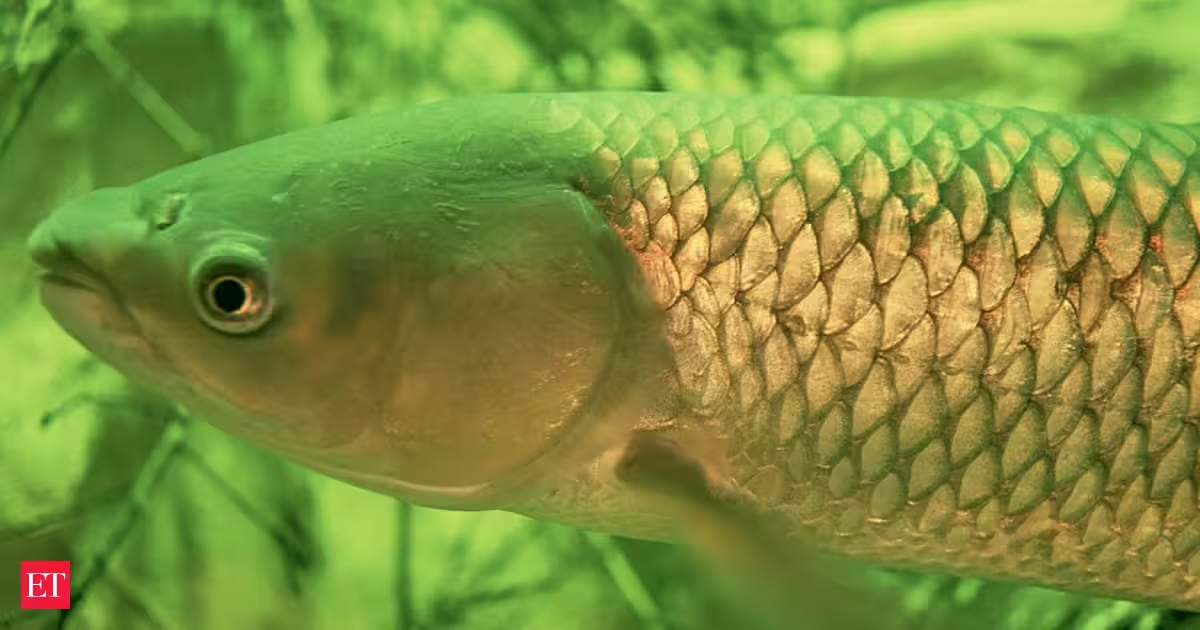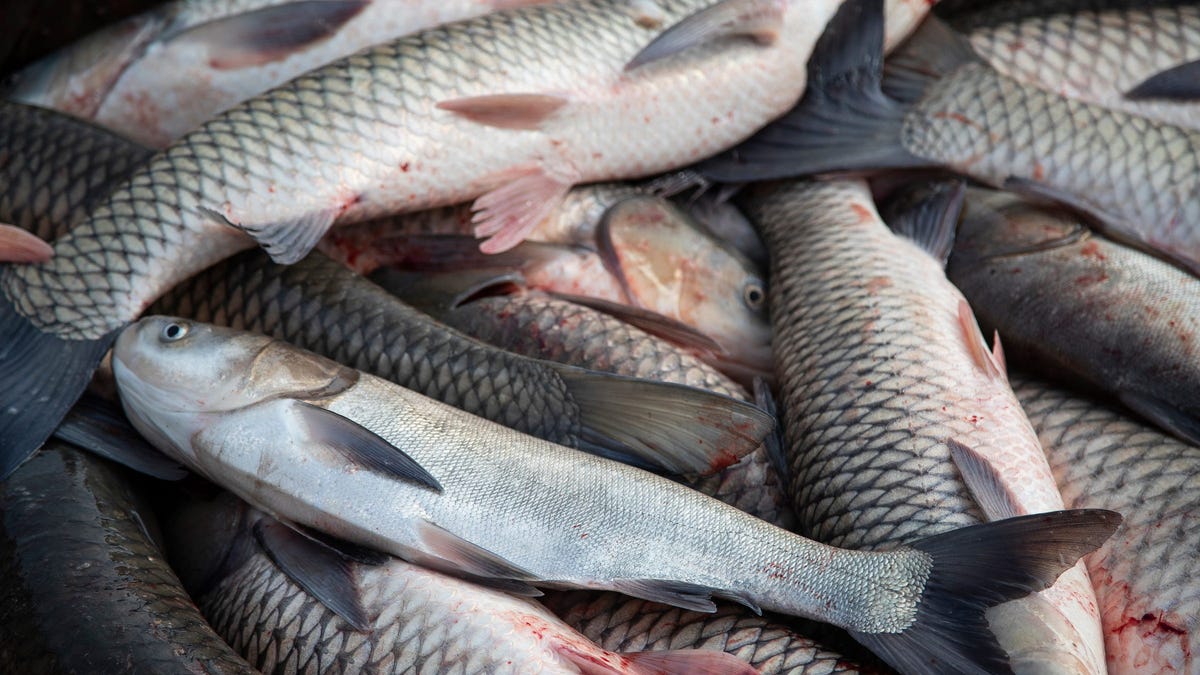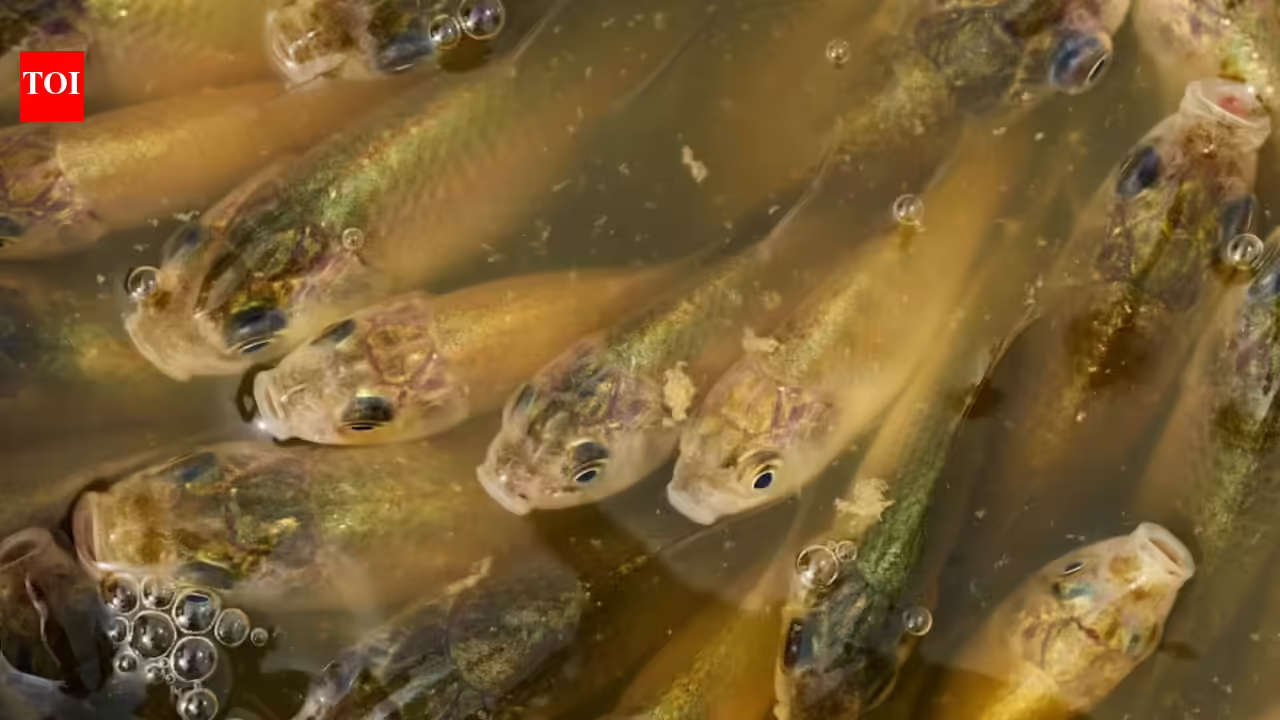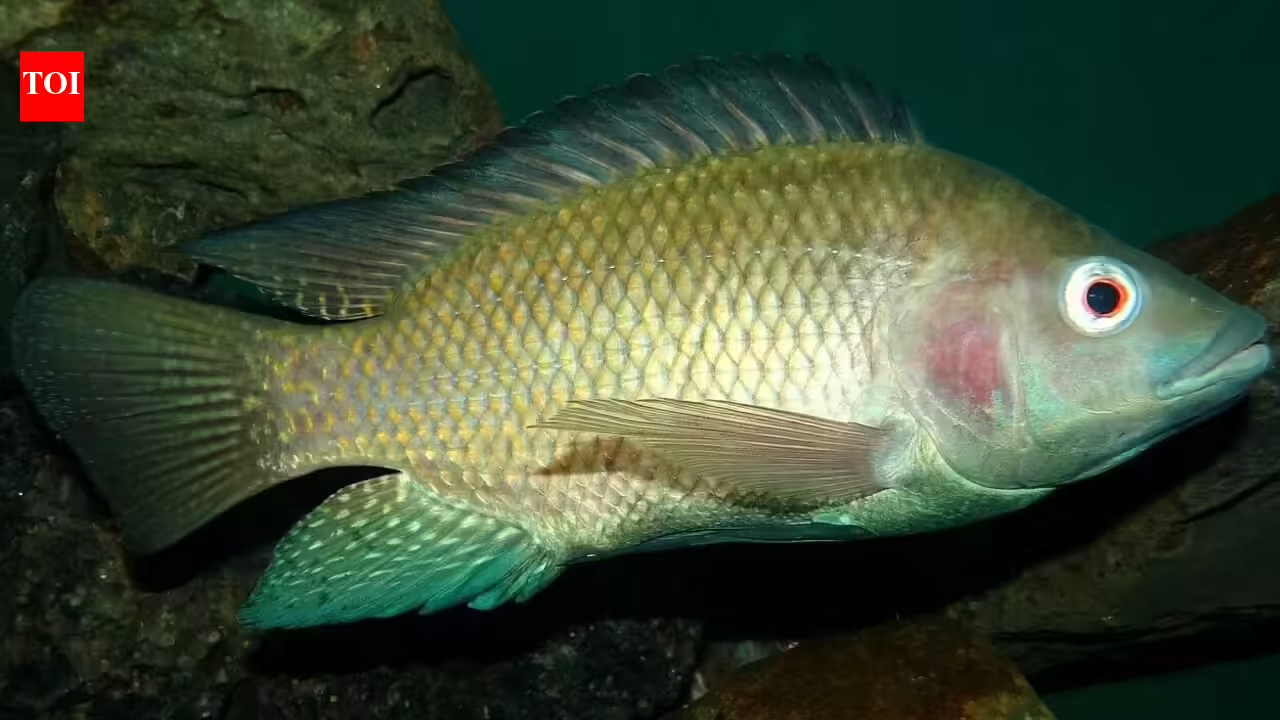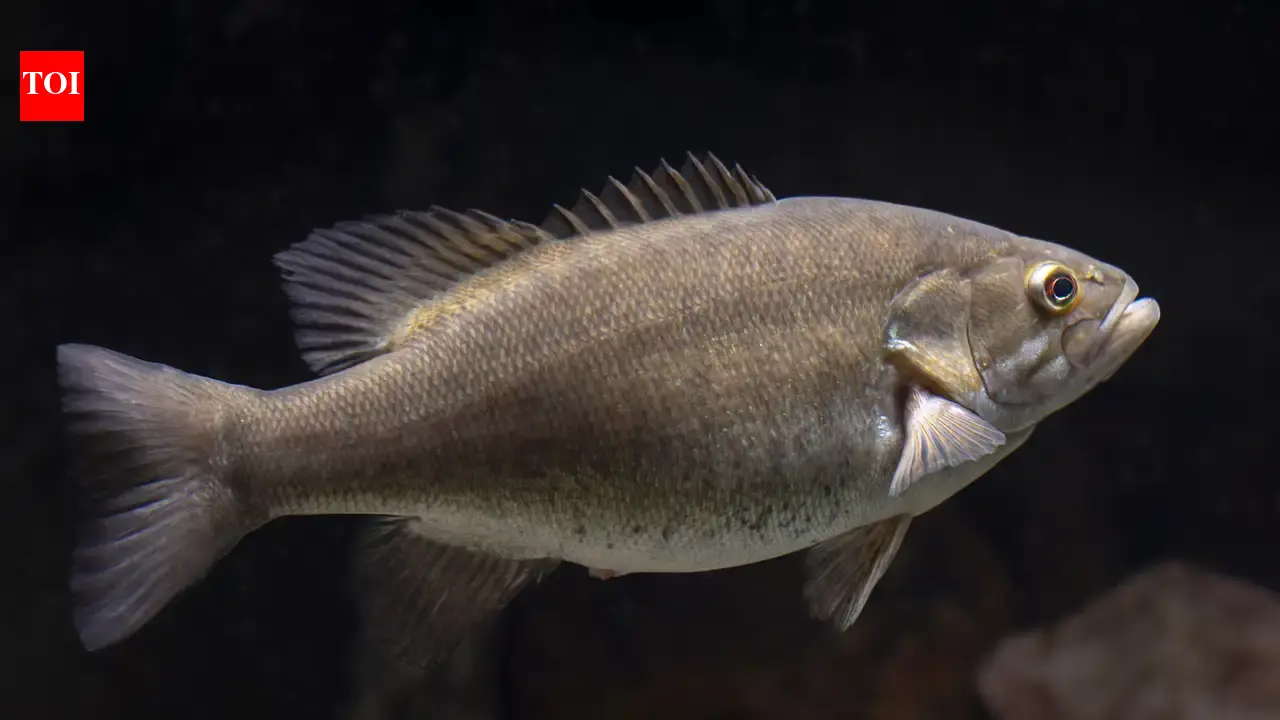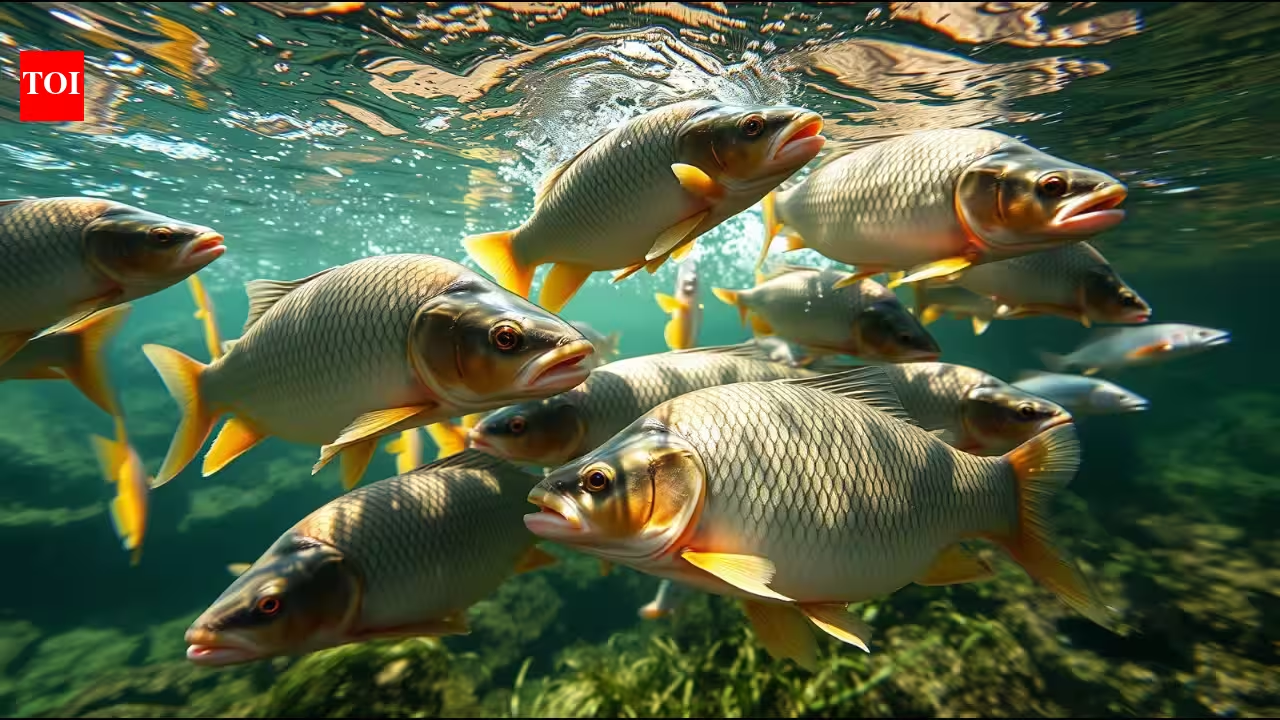
Representative Image of non-native fish that became a major invasive species problem in the United States (AI-generated image)In the 1970s, wildlife and aquaculture managers in the southern United States imported four species of carp from Asia, bighead, silver, grass and black carp, intending to use them as a natural, low-cost way to control excess algae, aquatic weeds and snails in fish farm ponds and wastewater treatment facilities. Within about a decade, flooding allowed a number of these fish to escape confinement and enter the Mississippi River basin. More than four decades later, these four species, now collectively known as invasive carp, have spread through major river systems across the central United States, reaching as far north as Minnesota and posing a well-documented threat to native fish populations and aquatic ecosystems along the way.Why these carp species were brought to the US in the first placeAccording to the United States Geological Survey, bighead, black, grass and silver carp were imported to the United States in the 1970s specifically to control nuisance algal blooms in wastewater treatment plants and aquaculture ponds, and in some cases were also intended for use as human food. Grass carp had actually arrived slightly earlier, brought in during the early 1960s specifically for aquatic weed control, while bighead and silver carp followed in the 1970s to help improve water clarity by feeding on algae and suspended organic matter.According to Illinois Extension, part of the University of Illinois system, black carp were introduced during roughly the same period specifically to control snails, other molluscs, and a parasite known as yellow grub within aquaculture ponds, rounding out the group of four species that would later come to be grouped together under the single term invasive carp.How the carp escaped and began spreading through US riversAccording to the US Fish and Wildlife Service, these fish escaped from farm ponds in the 1970s during flooding events, when rising water allowed them to leave their intended confinement and enter the lower Mississippi River basin. The Minnesota Aquatic Invasive Species Research Centre, based at the University of Minnesota, notes that bighead and silver carp specifically escaped following severe flooding that caused catfish farm ponds and treatment facilities to overflow their banks, allowing the fish direct access to connected river systems for the first time.Once loose, the carp proved remarkably well suited to spreading through the Mississippi River basin's extensive network of interconnected waterways. According to the USGS, the fish had already spread into the Mississippi, Missouri and Illinois rivers within roughly ten years of their initial escape, establishing self-sustaining breeding populations across a rapidly expanding range.How far invasive carp have actually spreadThe spread of these four species has not been uniform. According to the US Fish and Wildlife Service, grass carp have proven the most widely distributed of the four species across North America, having been detected in all of the Great Lakes except Lake Superior, while bighead, silver and black carp have remained largely confined to the Mississippi River basin and its major tributaries, though their range within that system continues to expand northward.That northward spread eventually reached Minnesota. According to the Minnesota Department of Natural Resources, the state's first invasive carp capture was a grass carp found in a pond near Winona in 1977, followed by a bighead carp captured in Lake St. Croix in 1996, and the state's first silver carp captured in Mississippi River Pool 8 in 2008. No black carp have been captured in Minnesota waters to date, though the state continues active monitoring in case that changes.Why invasive carp threaten native fish and aquatic ecosystemsThe ecological damage caused by these species stems largely from direct competition with native aquatic life. According to the USGS, invasive carp compete directly with native species for food and habitat, and their rapid population growth in heavily affected areas has disrupted the broader ecology and food web of major Midwestern rivers. Silver and bighead carp in particular are filter feeders, straining large volumes of plankton and microscopic organic matter directly out of the water, food that native species including paddlefish, gizzard shad and young game fish rely on to survive.Beyond competing for food, silver carp carry an additional, more immediate hazard: a tendency to leap several feet out of the water when startled by the sound or vibration of passing boat motors, creating a genuine safety risk for boaters and water recreation users in heavily infested waterways.What is being done to slow the spread todayAccording to the National Park Service, state and federal agencies including the USGS, US Fish and Wildlife Service and state departments of natural resources continue actively monitoring the Mississippi River basin and its tributaries for invasive carp, studying methods to prevent their further spread into new watersheds. Minnesota's Department of Natural Resources has run a dedicated monitoring and containment programme since the early 2000s, including fisheries sampling, tagging, and environmental DNA surveys conducted in partnership with federal agencies, with the state's broader Invasive Carp Action Plan most recently revised in 2024.More than fifty years after these four species were first brought into the country as a practical pest control solution, invasive carp remain one of the most persistent and closely studied invasive species challenges facing river systems across the central United States, a case study in how even a well-intentioned biological control effort can produce consequences that continue playing out across an entire river basin for generations.
How four fish imported to clean ponds became one of America's biggest invasive species problems
In the 1970s, wildlife and aquaculture managers in the southern United States imported four species of carp from Asia, bighead, silver, grass and black carp, intending to use them as a natural, low-cost way to control excess algae, aquatic weeds and snails in fish farm ponds and wastewater treatment facilities. Within about a decade, flooding allowed a number of these fish to escape confinement and enter the Mississippi River basin.
899 words~4 min read