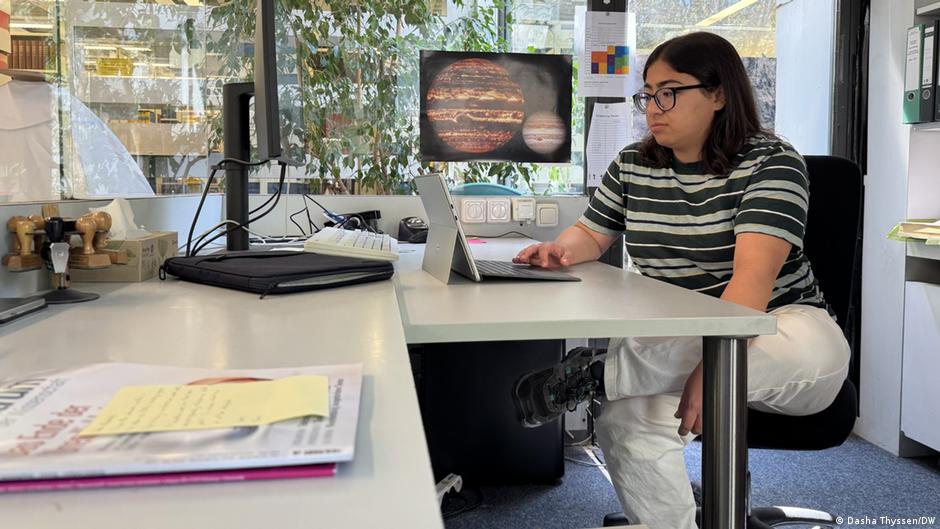
When Anahita Abdollahi starts her shift, she first checks her emails to make sure she's up to date on all the library requests. The 26-year-old master's student from Iran describes her job as a "part-time librarian" — she helps people find books they need for their studies, answers phone calls, and waters the plants.
Abdollahi says she likes "almost everything" about her job at the University of Cologne's physics library — the only exception is the occasional tedious task, such as taking inventory of the library's collection. But even that doesn't bother her too much — after all, she only works twice a week for around five hours at a time.
This type of employment is known in Germany as a "minijob", whichthe country's government is considering eliminating in its current form.
Minijobs popular with women and students
A minijob is a form of part-time employment in Germany which pays a maximum of €603 (around $685) per month. As long as employees don't earn more than this amount, they don't have to pay social insurance contributions or income tax.