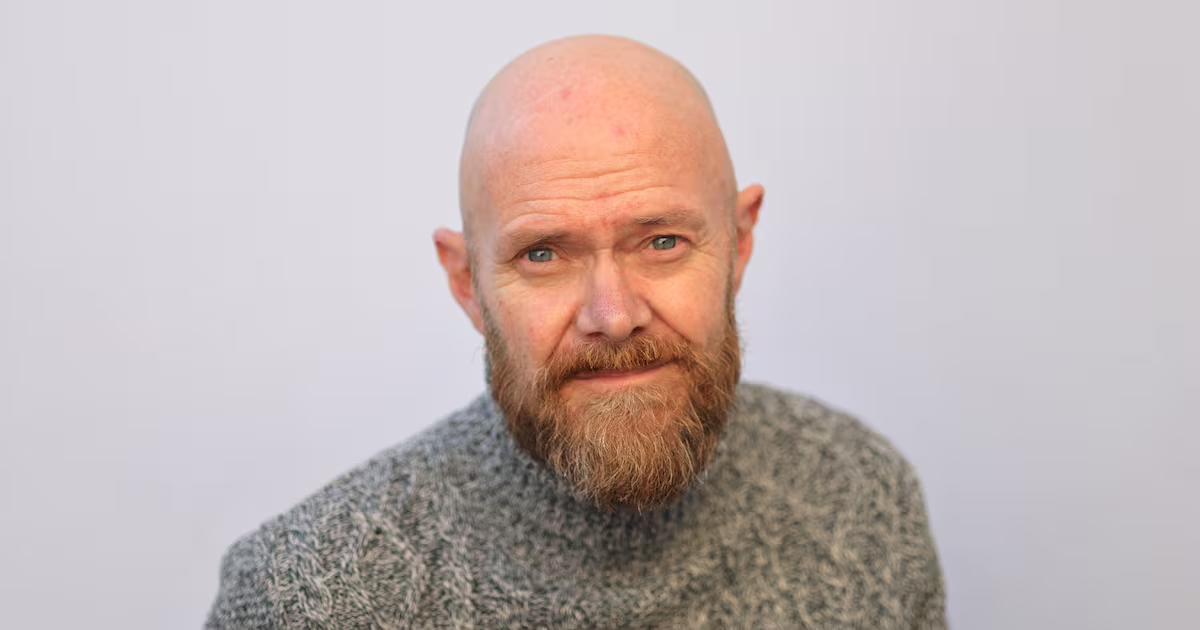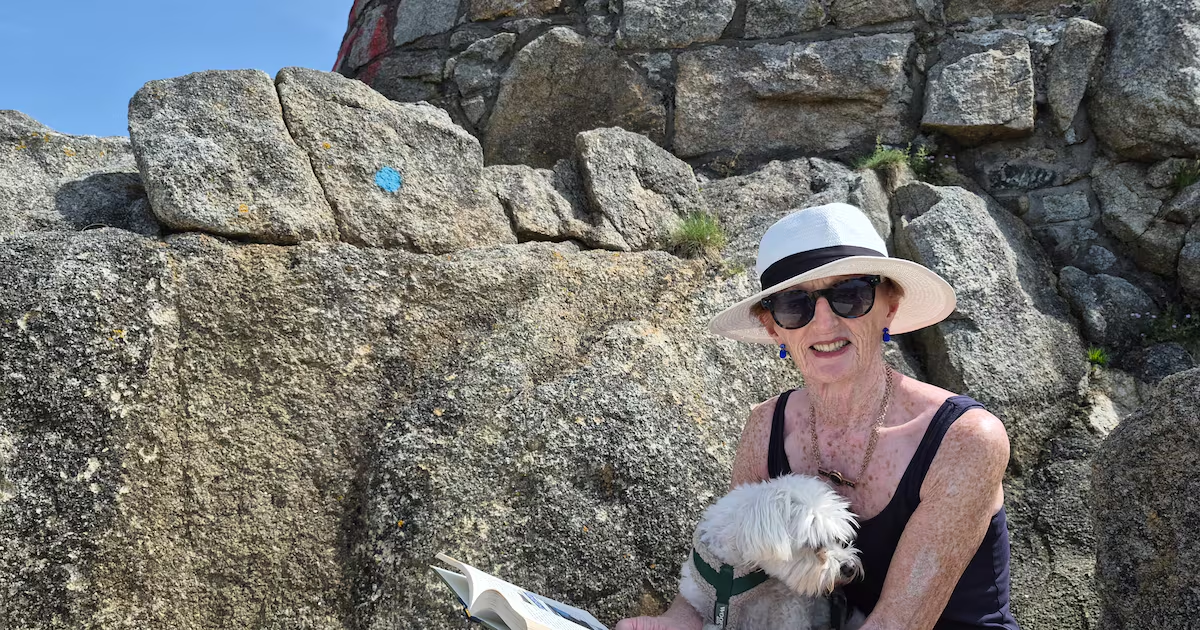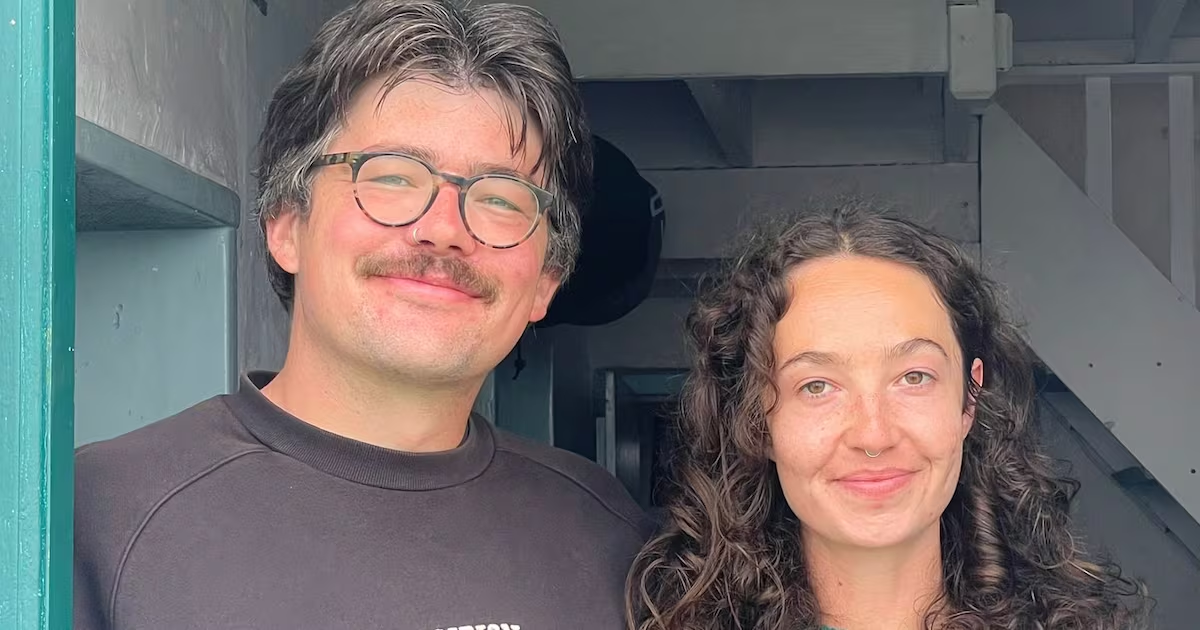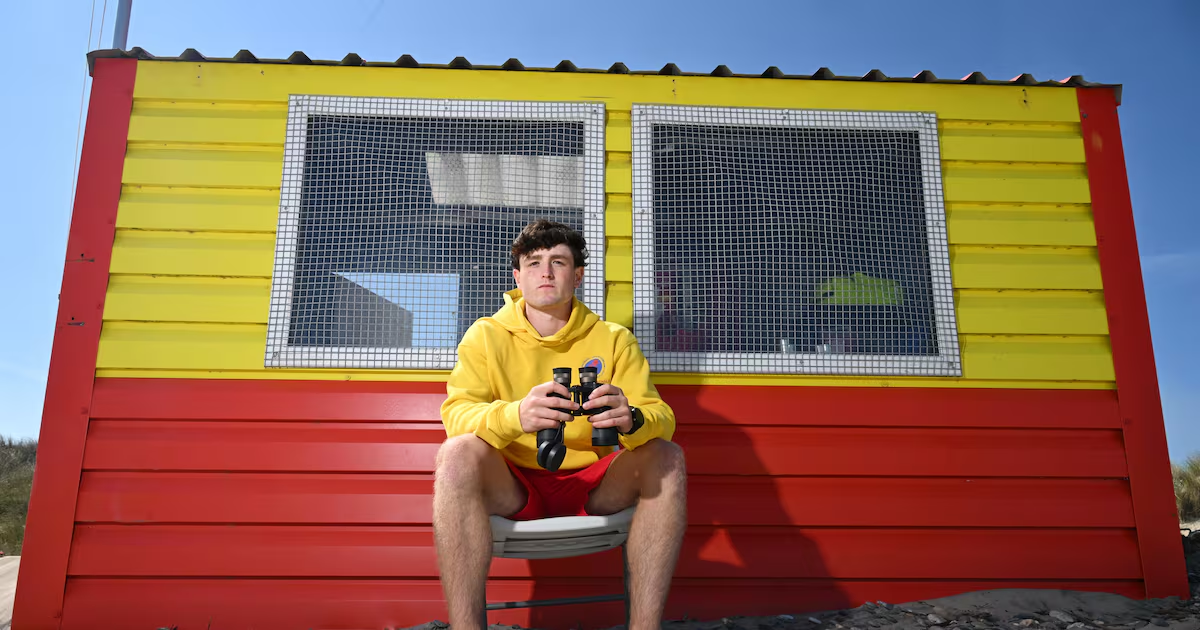
Summer is a time when pressure eases and idleness can feel more virtuous than productivity. Schools are off, exams are done, and work slows as every second email is met with a chirpy out-of-office reply. But that’s only part of the story. For every Irish scene of beach swims, ice-cold cider in the sun and waking up somewhere new ready to experience something magical, someone is working their hardest behind the scenes.From lifeguards to camp organisers, we spoke to some of the thousands of people whose job it is to make summer happen.The Brittas Bay lifeguard: ‘On warm days, you could have 100 people in the water’Kai Fitzsimons is a lifeguard on Brittas Beach in Co WicklowKai Fitzsimons: 'You have to be good on the rescue board, and you have to be quick.' Photograph: Bryan Meade Living in Wicklow, I grew up around the water. I started doing water-safety weeks in secondary school, and it was just a natural progression into doing the lifeguard course. It’s really lovely to be able to work right beside the sea. I work on Brittas beach, and I’m almost spoilt by how nice it is.During the summer season, there are always three of us on duty: two in the hut and one on patrol. Our patrol zone is about 100 to 200 metres from flag to flag. Then there is another patrol zone with different lifeguards, another 800m up the beach. Patrolling is quite an active job, and sometimes it can be nerve-racking, especially on busy days. When you hear someone say “lifeguard”, your head just snaps around to see if they’re looking for help or what’s going on.Usually, it is people walking by the hut and pointing it out to their kids. It’s rare enough, but when you do hear someone shout for help, your stomach almost does drop, and then you just have to be ready to go, ready to do whatever you can to assist them.Kai Fitzsimons: 'I can’t see myself doing any other job through college. I’d be miserable working in a bar or a shop.' Photograph: Bryan Meade I keep my fitness up with running and swimming. You have to be good on the rescue board, and you have to be quick.Brittas is quite a touristy beach. On warm days, you could have 100 people in the water. You can see if someone is a weak swimmer, and when panic sets in, people forget the simple things. That’s the danger.[ ‘There is nostalgia to the ice-cream van - it says it’s not all doom and gloom’Opens in new window ]There was a guy at the weekend, and we had to get him out. He had swallowed water; he was weak, and it was difficult to get him on the board. His family was on the beach, and once we got on to shore, his mom came over and hugged him, and you could tell they were in shock.I don’t think the family were excellent swimmers, so they couldn’t go out and help him themselves. I think it was tough for them that they were almost helpless in the situation and unable to give their son a hand.Another fellah had a seizure at the weekend outside the flags. We got the defibrillator just in case. He didn’t need it, thank God. But you’ve got to be ready for anything. You’ve got to go and do what you can. Sometimes we get people coming down with barbecues or a lot of alcohol. It’s a pain for us if we have to go and give out about petty stuff like that when we could just be watching the water.[ How to stay safe in water: Don’t drink alcohol before swimming and the ‘simple questions’ to askOpens in new window ]This is my second year doing lifeguarding. I can’t see myself doing any other job through college. I’d be miserable working in a bar or a shop. I’m really lucky that I get to be out in nature. The Skelligs boat captain: ‘I don’t know how the monks did it on boats without engines’Rachel Devane is a boat captain for Skellig Michael Cruises in Portmagee, Co KerryRachel Devane of Skellig Michael Cruises, Portmagee, Co Kerry. Photograph: Stephen Power I grew up in Portmagee, and I’ve been looking at the Skelligs my whole life. I remember the first time I got to go. I could see why people loved it. It’s just crazy what is built there. A monastery in the middle of the ocean. Insane.I was born into a fishing family. My grandpa was a fisherman, and he built a trawler in Dingle in 1981. He called it the Marber Therese after his sisters. In later years, my dad decided he wanted to do tours around the Skelligs. When he built his boat, he called it the Marber Therese II.I worked in the booking office first, but I couldn’t wait to get out on to the water. I got my deckhand certificate when I was 16. I did that for a few years, learned a lot and then decided I wanted to captain a boat myself. When I turned 18, I was able to get my passenger boat licence. I just fell in love with it. I was the first female captain ever to do Skellig tours.[ Photo essay: Skellig Michael reopens for summer visitors to sun, swells and puffinsOpens in new window ]The landing can be challenging due to the swell and the wind at the pier. You have to be careful. You have the lives of 12 passengers in your hands. At the start, I used to get nervous, but the more you do it and get used to it, the more you learn. You just have to take precautions every day.The monks built three different staircases on Skellig because they’d land on whichever side suited best and with the most shelter, depending on wind, tide and swell that day. It was three times the work. I don’t know how they did it all on boats without engines. Rachel Devane: 'I love talking to people from all around the world, seeing how far they have come to see Skellig Michael.' Photograph: Stephen Power We go out in up to 3m swells. Sometimes people love it. It’s like a rollercoaster. Other people are terrified. We have people getting sick every day from the motion.Our season starts in April and continues till late October. The island is open from May till the end of September. We work seven days a week in the summer, weather dependent, so it is pretty full on. I tend to do one landing tour and two other tours every day. It is tiring. You’re drained when you come home. But it is fabulous out there, and the wildlife is pretty cool.Boat captain Rachel Devane shows visitors Skellig Michael. Photograph: Stephen Power There are 10,000 puffins on Skellig Michael, and they nest next to the staircase that you climb. They almost look fake, they’re that close. We have loads of dolphins, and sometimes we get minke whales, sperm whales and basking sharks. When Star Wars was filming on Skellig, it was a big deal. For a few years afterwards, people couldn’t get a seat on the landing tours because Americans had booked up all the seats. We still get people coming out dressed up with their lightsabres and going up Skellig pretending they are Luke Skywalker.Whenever someone hands you the phone and asks you to take a video, you know the ring is coming. It’s lovely. People often propose on the top of the rock or on the boat. I love the summer months, meeting people every day, talking to people from all around the world, seeing how far they have come to see Skellig Michael.The bean an tí: ‘We call doing the shopping an Olympic sport’Michelle Doocey is a bean an tí at Coláiste Acla on Achill Island, Co MayoMichelle Doocey, bean an tí at Coláiste Acla on Achill Island, Co Mayo, with her husband. We call doing the shopping an Olympic sport. You’re buying so many litres of milk, tonnes of butter, six packets of ham, six packets of cheese, bags and bags of chicken nuggets and burgers. You definitely get some strange looks going around the shop.I have 16 boys in the house. It sounds tougher than it is. They get themselves up around 8.20am, and I have breakfast for them. They make their own sandwiches, get ready, and they’re out the door by 9.40am. As long as I have dinner ready for when they get back in the late afternoon, they’re not too bad. They always come back ravenous.My husband is here too, and we do everything by halves. It is a nice, easy-going lifestyle. We are both secondary school Irish teachers, and we work in Kildare during the year and then when term finishes, we come down here till the end of August. I’ve been a Bean an Tí for two years now. For eight years before that, I was a teacher in the coláiste. There’s definitely a difference in the kids’ Irish after the two weeks. The house is a great chance for them to practice, and as we are both Irish teachers, it’s handy for them that they can ask us questions and we can help them out. The teenagers who come here are so well-mannered. You build up a rapport with them, and you can have the craic. This year, I had a group of boys who were absolutely fabulous. We got on really well. They have a comórtas na dtithe, a house competition, in the coláiste. We were gunning to get first place the whole time. It was a Saturday evening, and I was waiting for the lads to come back in with the result. They came in the door all upset, saying we didn’t win.[ Meet the Irish college class of summer 2026: ‘Students don’t really miss the phone’Opens in new window ]But then two of them snuck around to the back door with the trophy. We were delighted, and they knew I was so happy for them and all the effort they put in. Sometimes we get little thank-you cards from parents. People appreciate you looking after their kids, and the kids appreciate it, and that makes it all worthwhile.It’s just so easy to work here. Everybody is so approachable and friendly. It’s more like a holiday, but with some work thrown in. I wouldn’t think twice about it if there was an opportunity to move and work here full-time. The guest house owner: ‘It was like destiny that I ended up here’Young Im, Kim (Jess) is co-owner and manager of Allihies Coppermines Lodge on the Beara Peninsula, Co CorkYoung Im, Kim: 'Allihies has a very welcoming environment. The community is so good, the neighbours are so nice' We have a really busy and really short season. It starts on June 1st, and I tell people: “Don’t talk to me. I’ll be grumpy for three months.”The whole day is laundry, cleaning, checking the booking sheet and checking people in. I put the first wash on at 9am. I get some help from a cleaning lady who comes at 10, and then it’s continuously non-stop washing. There’s usually a lot of sand from the beach in the showers, and there’s been more than one red wine stain, but it’s not too bad. And then all of a sudden it’s 3pm and people start checking in, and then we go again. I do yoga to relax my body after the hard work. I go to the beach, put a towel on the sand and let the dogs run around. I stretch, listen to the waves and feel the breeze. Allihies has a very welcoming environment. The community is so good, the neighbours are so nice. There are a lot of artists and musicians here, and if there is any event going on in the village people participate and gather.It was like destiny that I ended up here. I moved to Perth from Korea and I was studying early childhood education there when I met an Irish man in an Irish bar. Magical. My husband’s mother is from Allihies, and it’s like home to him. He wanted to move back, and this place was on the market. It is a big property and has so much potential. I thought, okay, maybe let’s give it a go, but I was nervous too. I loved Australia so much, and it was a question of whether I wanted to give up my life there and start something new again. The decision was made when we came to visit family here. It was my second time in Ireland, and we got stuck here with Covid. We couldn’t go back to Australia, so we asked our friends to pack up our things and ship everything over.There was a lot of work to do when we bought this place because it had been closed for a few years. It used to be a hostel, and we turned it into a lodge. At the beginning, we didn’t even know how much to charge. It’s been five years since we opened, and everything’s turned out well. September is probably my favourite month. It’s more balanced. The weather is good, and we get a lot of cyclists and walkers. We officially close from the October Bank Holiday, and in the winter, the village becomes a mysterious place. You know the sea is on your left side, but you can’t see anything. In the winter, I try to go to South Korea to see my family. I’m from the countryside, an hour from Busan. It’s similar vibes to here. People try to help each other, you take your time, there’s no rush.The summer camp organiser: ‘If a kid wants to do something, we’ll make it happen’ Siobhán Kavanagh is director of programme and medical at Barretstown Children’s Charity, Co KildareSiobhán Kavanagh: 'We are helping to restore fun in kids’ lives and preparing them to go back out there with some resilience and confidence.' Photograph: Alan Betson I was a nurse in the children’s oncology unit in Crumlin for 21 years. I was always aware of Barretstown. I would see kids leave the hospital, go to Barretstown, and when I met them for the next appointment, they’d be smiling ear to ear. The parents would say to me that it was like the old child had come back. I jumped at the chance to join the team here as head of nursing in 2022. Now, I look after all the programme and medical needs for the camp. Summer is our busiest time, but it’s also our best time. We have six weeks of camps across June, July and August. For each programme, we have 125 children who come here without their parents, for up to six days. We have fishing, canoeing, climbing, high ropes, we do arts and crafts, music, photography development and Stem. We try to be inclusive of every child.Cancer dramatically changes the trajectory of a child’s life. They go from being in school, having relatively normal lives, doing sports and activities. But then all of that stops. Hobbies, school, everything is put on pause, and they become isolated. Their normal day-to-day life can just be negotiating between adults, hospital treatments and appointments. Our summer camps are completely free and give kids a chance to come to a medically safe environment, where we are also supporting their holistic needs, social needs and peer connection. We are helping to restore fun in their lives and preparing them to go back out there with some resilience and confidence, whatever the next phase of their illness might be.Siobhán Kavanagh: 'the kids are meeting people who are on the same journey as them.' Photograph: Alan Betson If a kid wants to do something, we’ll make it happen. Take our new high ropes course; it’s a dual high-ropes course, so someone can be totally wheelchair bound, and we can still get them around it. It’s about putting kids in challenging positions, but we always ensure success, so campers walk away feeling they’ve been successful.At camp, the kids are meeting people who are on the same journey as them. So they might feel isolated in their community, but when they come here, they get to see someone else who has no hair, or someone else who lost a leg because of an oncology treatment. Things that were very abnormal at home are normal in Barretstown. Everyone here is rooting for every child. We always get some lovely emails from parents after the kids come home, saying that an away camp is something they never thought could happen. These parents trust us with their precious cargo, and we make sure we handle them with such care and that we give back a child who can say how brave and strong and creative they are.The dancing barman: ‘We start around 10.30 in the morning and finish at 2am’David Geaney is a five-time world Irish dancing champion and bar manager at The Dingle Pub, Co KerryDavid Geaney, The Dingle Pub: 'Summer is 10 months long' We always laugh that we only have two seasons in Dingle, winter and summer, and summer is 10 months long. It runs from St Patrick’s Day to the end of November. We make hay while the sun shines and then hibernate in the winter.Right now I’m working seven days a week. My grandparents built the place 50 years ago, and they had the same attitude. My parents too; they’ve been in the pub almost 30 years now, and they’ve always done seven days. It’s never been a question. We start around 10.30 in the morning and finish at 2am. There are a couple of hours to wind down, and then you’re back again. Sometimes I don’t think people see that side. They don’t see the cleaning or the setting up and the stuff that goes on behind the scenes. It can be tough, it can be gruelling, but I wouldn’t be in the game if I didn’t enjoy it as much as I do. Technically, I am a bar manager, but in the summer season, you have to immerse yourself in everything. I go from taking in deliveries, to being a chef, to pulling pints and then at night, I perform with our second band of the evening. It’s probably where I am most at ease. There are loads of photos of me dancing around the bar, but nobody seems to recognise me. People will be asking me what time the dancing is, and then I see them wondering, “Why is the bar tender setting up?” and then you start, and they’re so surprised.David Geaney: 'I’ll see six strangers chatting to each other like best friends because they were part of the routine' I don’t think it’s what people expect when they’re coming into the pub to see Irish dancing. They think it’s going to be a quick show, but it’s up to 30 minutes. It’s fun, and the people we get in the bar are just amazing. They’re willing to come up and sing even though they can’t sing, and they come up and dance even though they can’t dance. I think it creates a really cool atmosphere. When I finish, all of a sudden I’ll see six strangers chatting to each other like best friends because they were part of the routine. I’ve performed all over the world, from Canada, to Japan to the US, and obviously it’s an amazing feeling, but when you’re inside in your own place and it is full to the brim and everyone is smiling and enjoying themselves, and you’re giving them a unique experience that they probably can’t have anywhere else, there is a serious element of pride there.
From a lifeguard to a bean an tí: Meet the people behind an Irish summer
Be it a bean an tí, a Skelligs boat captain or a dancing barman, it takes a lot of effort by someone behind the scenes for the holidays to work
3,313 words~15 min read