Story audio is generated using AI
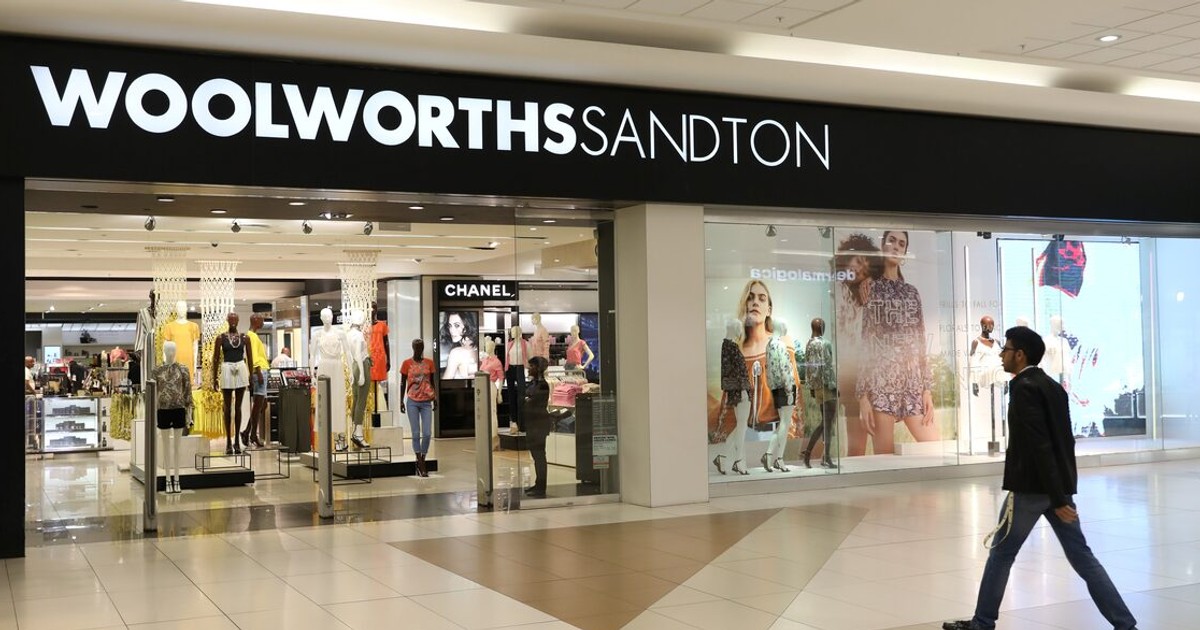
JSE-listed clothing retailers have seen billions of rands wiped off their market value this year as a weak economy, intensifying competition and cautious consumers curb spending on discretionary goods.TFG, the owner of Foschini, Sportscene and Jet, has been the biggest casualty, with its share price plunging about 35% since the start of the year and touching levels last seen six years ago. Over the past 12 months, the stock has lost roughly half of its value.Its peers have also come under pressure. Truworths has declined 12% year to date, Woolworths is down 14%, and Pepkor has shed about 20%. Mr Price has proved to be the most resilient among the major clothing retailers, slipping just around 2%.Stephan Erasmus, an investment analyst at Anchor Capital, said TFG’s full-year results, released in June, largely explained the severity of the market reaction.Out of fashion (Nolo Moima) “TFG’s results arguably did the damage,” said Erasmus. “Its headline earnings per share for the year to March ultimately fell by a third, so that derating is justified in my view.”TFG’s performance was weighed down by a significantly weaker second half, as trading conditions deteriorated across its key markets in South Africa, the UK and Australia. Erasmus said investors have not only been reacting to historical earnings performance but have also been lowering their expectations for future profits as the outlook for South African consumers deteriorated during the year.“For the other clothing retailers, the market has been marking down what it expects them to earn next year as the consumer outlook worsened,” he said.Makwe Masilela, chief investment officer at Makwe Fund Managers, says investors are increasingly concerned that traditional clothing retailers are being forced to sacrifice margins to remain competitive while shoppers have become far more selective in their spending. Picture: Supplied (SUPPLIED) Makwe Masilela, chief investment officer at Makwe Fund Managers, said the sell-off reflects not only cyclical weakness but also structural changes reshaping the apparel industry.“Given the increased competition not just from each other but also from online retailers like Shein and Temu, our local retailers have had to frequently embark on discounts to sell their stock,” he said. “Bear in mind that consumers are also dealing with elevated inflation and interest rates.”According to Masilela, investors are increasingly concerned that traditional clothing retailers are being forced to sacrifice margins to remain competitive while shoppers have become far more selective in their spending.Neither Woolworths nor Truworths grew earnings materially on an adjusted basis in their latest reported interim periods, “so modest deratings there are hard to argue with”, Erasmus said.Pepkor, however, stands out as an anomaly in the sector.“Pepkor is the one I would question,” Erasmus said. “It grew its normalised Heps [headline earnings per share] from continuing operations by early double digits in its half-year to March and is still the second worst-performing share of the five.” Mr Price, meanwhile, has faced a different set of challenges. Erasmus said its share price weakness was linked more to investor concerns around its European acquisition than to trading performance.“Mr Price is a separate case. Its fall came after the European acquisition announcement, so it was about a specific decision rather than trading conditions, and, even so, it has held up better than any of them this year.”Masilela believes Mr Price’s resilience also reflects the strength of its business model.“The fact that they’re largely a cash business must count for something,” he said, noting that cash sales account for about 91% of the retailer’s total sales. That reduces exposure to bad debts and provides greater resilience during periods of weaker consumer spending.Despite the negative sentiment surrounding the sector, most of the retailers continued to report sales growth in their most recent reporting periods. The challenge, however, has been converting those gains into improved profitability, analysts said.Erasmus said Mr Price managed to expand gross margins in the year to March, although investors remain cautious about the execution risks associated with its European expansion. Pepkor delivered the strongest earnings growth among its peers in the six months to March. Woolworths achieved comparable sales growth of more than 5% in Food and over 6% in Fashion, Beauty and Home in the half-year to December, yet still experienced margin pressure across both businesses.Truworths’ South African operations remained under strain, with local sales falling 3.6% in the six months to December, while growth was largely driven by its UK-based Office business. TFG, by contrast, saw all three of its operating divisions record declining profitability in the year to March.“In my view, Pepkor is outperforming, while TFG is clearly the laggard,” Erasmus said.The sector’s struggles mirror broader consumer weakness. Consumer confidence declined between April and June, with higher-income households recording a sharper deterioration than the overall index. According to Erasmus, the spending squeeze appears to be more pronounced at the upper end of the market than among lower-income consumers.Masilela said South Africa’s macroeconomic backdrop continues to weigh heavily on retailers’ earnings prospects. “Since Covid-19, consumers consider value-for-money products, but they don’t just buy clothing for the sake of buying. High unemployment and low consumer confidence further dim the prospects.”Competition from international online retailers like Shein and Temu has also intensified. “Access to affordable online international apparel retailers like Shein and Temu has revolutionised the industry, even globally,” Masilela said. “The presence of international retailers like H&M locally also plays a role in changing consumer spending behaviour.” Looking ahead, the fortunes of each retailer will depend on different factors, said Erasmus.He said that for TFG, investors will be watching for a recovery in gross margins. Pepkor’s focus will be on cash generation and reducing debt, while Woolworths faces the challenge of protecting margins in its fashion, beauty and home division under new CEO Sam Ngumeni. Erasmus added that Mr Price’s outlook hinges on the successful integration of German retailer NKD, which management expects to become earnings accretive from the second year. For Truworths, much will depend on the performance of Office UK, which now contributes roughly half of group trading profit.Should South Africa’s consumer environment improve, Pepkor and Woolworths could be among the biggest beneficiaries, given that more than 80% of their revenue is generated domestically. Business Times