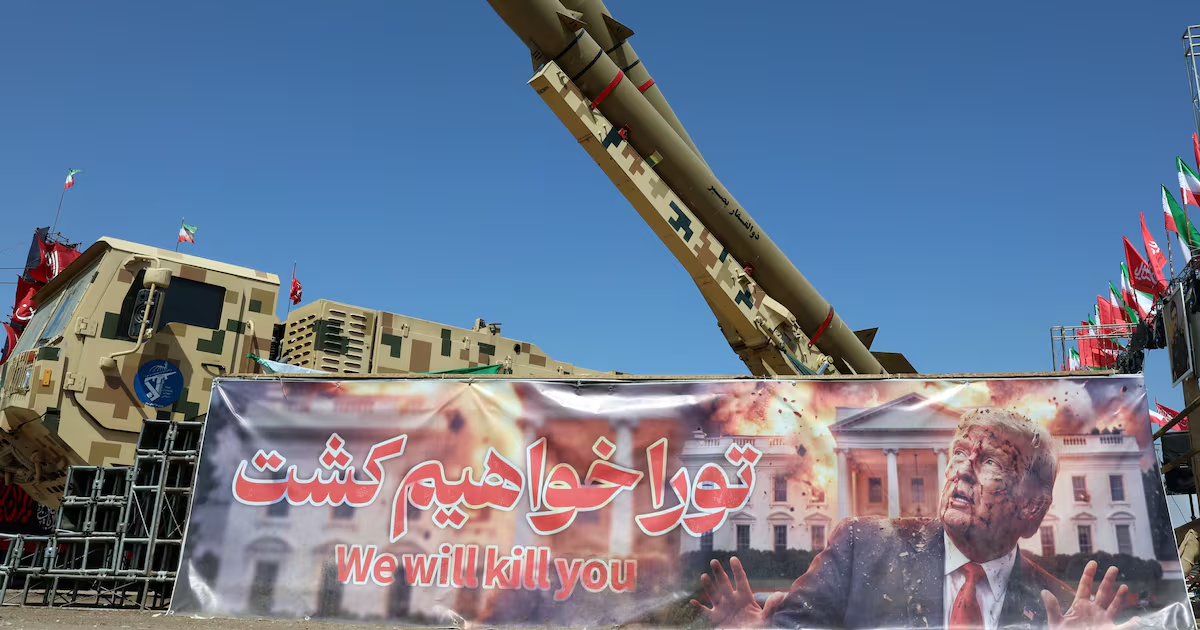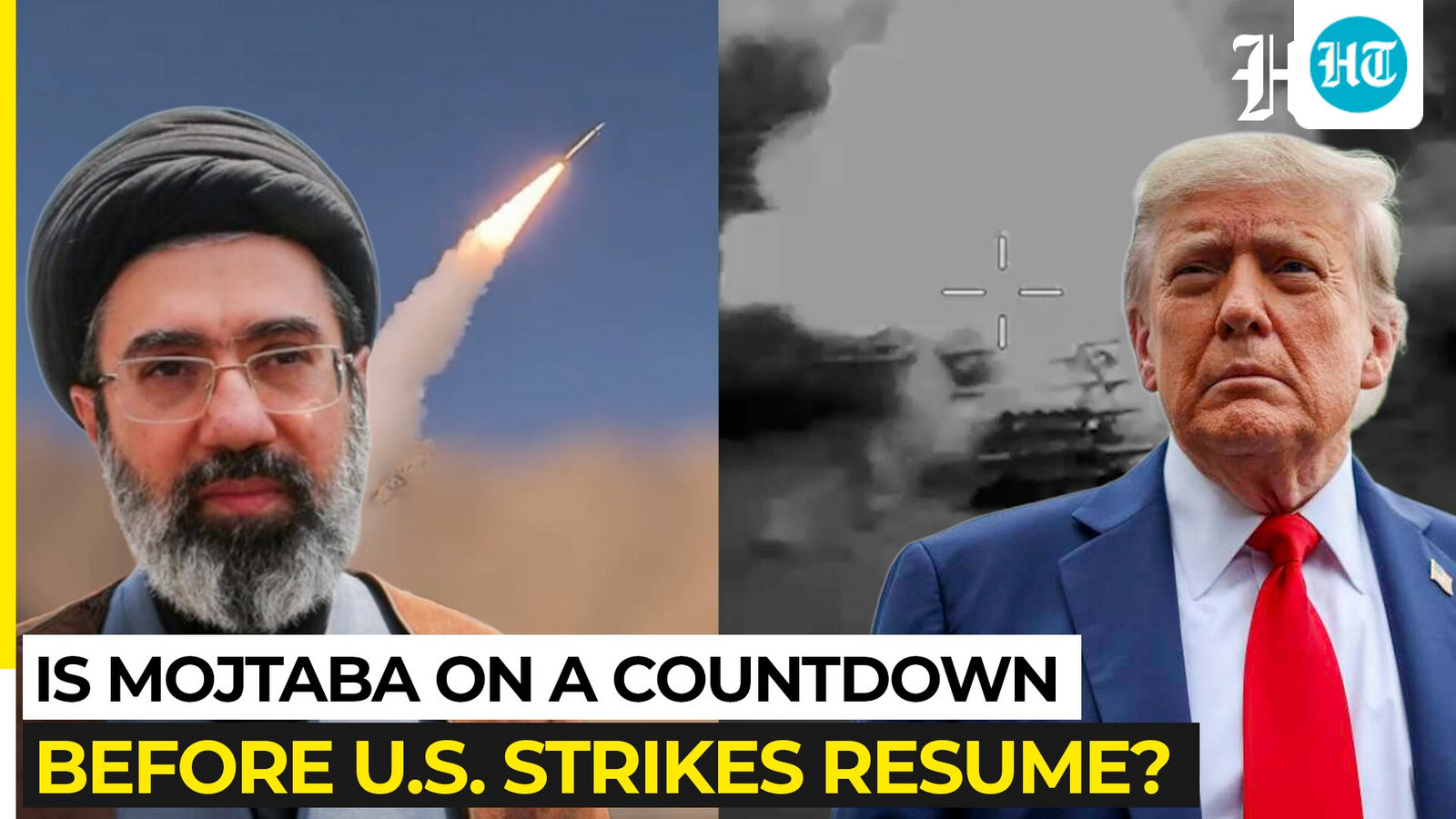
The question today is no longer whether Donald Trump will choose war or negotiations with Iran. That door remains ajar, opened and closed according to his political calculations and mercurial instincts. The world has grown weary of this dangerous cycle. The real contest unfolding alongside the wait for a presidential decision is not the overthrow of the regime in Tehran but the dismantling of the geopolitical architecture the IRGC has built over four decades. The measure of success will not be military strikes or another round of negotiations. It will be determined in Iraq, Yemen, Syria, and Lebanon, where the new American strategy is being tested and where Iran’s ability to preserve its regional influence will ultimately be decided.For all the latest headlines, follow our Google News channel online or via the app.The IRGC remains the true center of power in Iran’s regional project. It commands the proxies, directs the militias, and defines the priorities of confrontation. Washington’s Departments of State, Defense, and Treasury increasingly treat these arenas not as separate files but as one interconnected strategic theater. That is the approach of Donald Trump’s national security team, in contrast to the Witkoff-Kushner camp, which continues to press the president to focus narrowly on a Hormuz agreement while postponing every other issue, from Iran’s nuclear ambitions and missile program to its regional proxies.Iraq has become the pivotal arena in this shift. Its importance extends beyond geography. It is the bridge linking the Gulf to Syria and Lebanon, making every effort to reintegrate Iraq into its Arab environment a direct challenge to the foundations of Iranian influence.Saudi-Iraqi relations have therefore entered a decisive phase. The issue is no longer limited to investment or economic cooperation but has become part of the effort to construct a new regional balance. Tehran understands that losing Iraq politically would represent a strategic defeat for its broader regional project, which explains why IRGC-linked factions have sought to obstruct Iraq’s opening toward Saudi Arabia.Last week’s reported joint American-Saudi military operations against Iraqi factions affiliated with the Revolutionary Guard marked an important strategic development. Saudi Arabia has moved beyond containing escalation toward participating in collective deterrence designed to protect regional security and maritime routes. It reflects a broader reassessment of the assumption that avoiding confrontation would prevent Iranian retaliation. Experience has demonstrated otherwise. Yemen has become the most urgent test. The Houthis are no longer merely an Iranian proxy operating inside Yemen. They have evolved into a strategic instrument capable of threatening international navigation through the Bab al-Mandeb Strait. Tehran seeks to compensate for any loss of leverage in the Strait of Hormuz by creating an equivalent pressure point in the Red Sea.The international effort to protect maritime navigation therefore extends well beyond safeguarding commercial shipping. Its strategic objective is to prevent the Revolutionary Guard from reproducing the Hormuz model in Bab al-Mandeb through its Houthi proxy.Syria represents the decisive link in Iran’s land corridor to the Mediterranean. The issue is no longer the interception of individual weapons shipments but preventing the reconstruction of the logistical network that connected Iran to Hezbollah through Syrian territory for years.Turkey has consequently become an indispensable partner in stabilizing Syria and preventing the return of that corridor. As this reality becomes more firmly established, Lebanon’s future grows increasingly tied to developments inside Syria. President Joseph Aoun’s visit to Turkey should therefore be understood in this broader strategic context, particularly regarding border security and preventing Syrian territory from once again serving as the logistical lifeline sustaining Hezbollah.Tehran is likely to compensate for the loss of the Syrian corridor by activating its allied factions inside Iraq to destabilize Syria or reopen older channels of influence. This represents one of Damascus’s most serious challenges and one it is preparing to confront through coordination with Saudi Arabia, Turkey, and the United States.Prime Minister Nawaf Salam’s visit to Baghdad reflected more than economic cooperation. It pointed toward a new relationship between two states confronting the same challenge: consolidating state authority, establishing the state’s monopoly over arms, strengthening Arab partnerships, and combating entrenched corruption. If the Revolutionary Guard succeeds in preserving its political, economic, and military dominance over Iraq through allied factions and systemic corruption, responsibility will rest not only with Tehran but also with Washington, whose post-2003 policies dismantled Iraq’s institutions and opened the way for Iranian penetration.Today Iraqi oil revenues continue to pass through New York before reaching Baghdad. The corruption exposed in this process is a profound failure for Iraqi officials, but it also raises difficult questions for American authorities that were aware of how these financial mechanisms benefited the Islamic Republic. Washington should seriously examine whether Iraqi oil revenues can continue flowing unchanged if they are used to finance armed groups aligned with the Revolutionary Guard.Iran retains significant instruments of influence, and the Revolutionary Guard remains capable of activating its proxies across multiple fronts. Yet the central issue is no longer confined to uranium enrichment or another negotiating round. The contest now concerns the geography through which Iranian influence has been projected across the region.The Islamic Republic continues to regard its proxy network as strategically inseparable from its nuclear program, missile arsenal, and drone capabilities. Assuming that dismantling this regional structure will be easy would be a serious misreading of the challenge, even if Iran’s Syrian architecture collapsed with remarkable speed after the fall of Bashar al-Assad’s regime.Hezbollah has become the weakest link, particularly after Hamas’s military collapse in Gaza and its acceptance of disarmament. Hezbollah was once Tehran’s principal strategic asset, extending Iranian influence to the Mediterranean and beyond. That reality has been transformed by Iran’s strategic losses in Syria and by the Gulf states’ increasingly explicit partnership with the United States against IRGC-backed militias.Israel’s sustained military pressure further constrains both Hezbollah and the Revolutionary Guard, while Iran’s worsening financial crisis – driven by economic pressure and restrictions on maritime trade – reduces its ability to sustain proxy forces across the region.The Houthis have consequently become Tehran’s most valuable remaining regional asset. They have been equipped with missiles, drones, explosive boats, and advanced weaponry capable not only of threatening international navigation but also of drawing Saudi Arabia into direct confrontation.US Central Command appears to be planning for precisely these contingencies. Its strategy includes expanding operations against Iranian drone production and launch facilities, recognizing drones as Tehran’s preferred low-cost weapon against the Gulf states and Jordan. Washington is unlikely to lift maritime pressure unless Iran retreats simultaneously on Hormuz, its nuclear program, ballistic missiles, and regional proxies – a concession Tehran is unlikely to make.Iran will therefore mobilize its remaining proxies, particularly the Houthis and factions within Iraq’s Popular Mobilization Units. The survival of these proxies has become inseparable from the Revolutionary Guard’s own future.For that reason, developments in Iraq, Yemen, Syria, and Lebanon will shape the future of Iran’s regional project far more than any communiqué issued after negotiations or any temporary ceasefire.The decisive battle now stretches from sustained American military pressure on Revolutionary Guard command structures inside Iran to the dismantling of the regional network Tehran painstakingly constructed across the Arab world.It is there – not at the negotiating table – that it will ultimately be decided whether the Revolutionary Guard can preserve its regional architecture or whether the Middle East has truly entered a new era in which the balance of influence is being fundamentally redrawn.
Battle to dismantle Iran’s IRGC geography: From Yemen to the Levant
The question today is no longer whether Donald Trump will choose war or negotiations with Iran. That door remains ajar, opened and closed according to his
1,225 words~6 min read