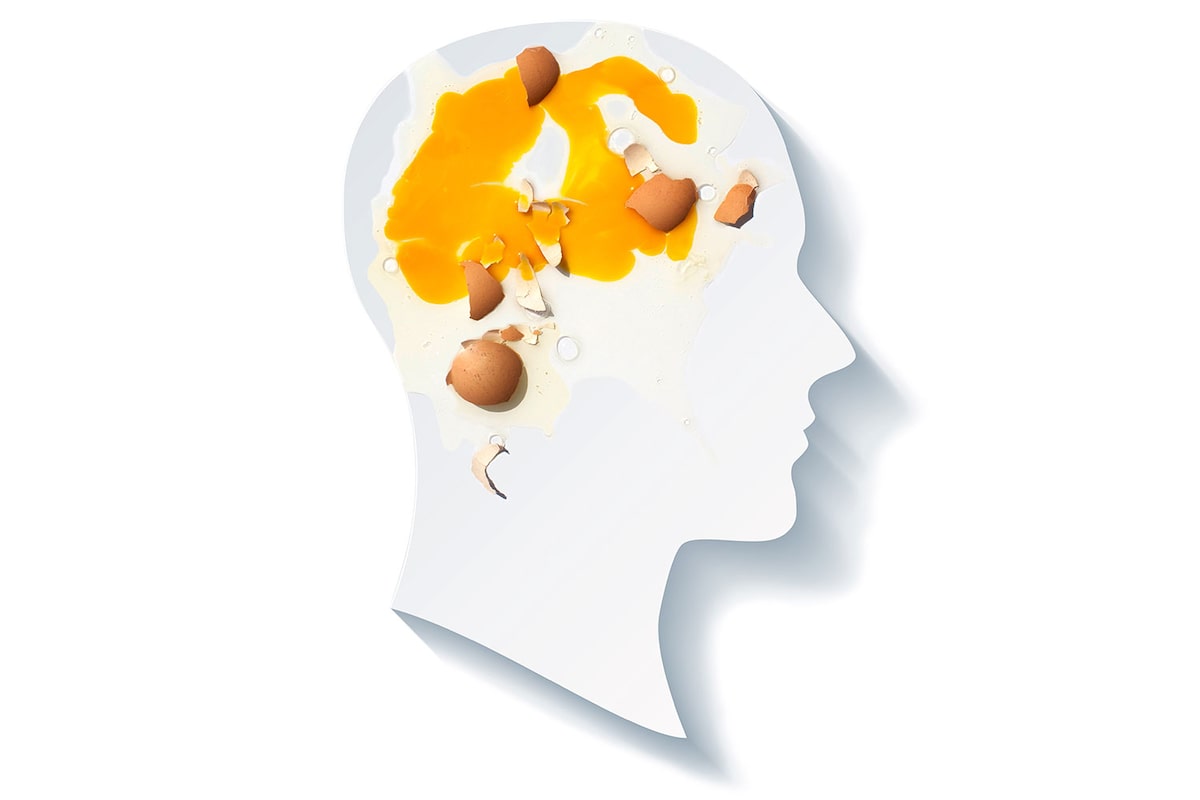
Research suggests that regular AI use can produce cognitive surrender, where people accept AI output with minimal scrutiny, gradually overriding their own intuition
| Photo Credit:
Thinkhubstudio
Technology is doing two things simultaneously. It is concentrating power — in organisations, in economies, and in the hands of states. And it may be changing how people think. The first reduces the willingness to question assumptions and take risks, and the second weakens the capacity to question. The combination raises a question that has received surprisingly little attention: are the conditions that enable innovation and large societal change under threat?Those conditions come down to three things. Cognition — the ability to analyse and understand. Creativity — the ability to generate new possibilities. And the willingness to question accepted assumptions. For large societal change, you also need participation and collective action — and historically, that has been led by young people. Many large shifts have come from ordinary people stepping out: the Indian independence movement, the Civil Rights Movement, women’s rights.How power is concentratingThe visible shift due to technology is in concentration of power. At the organisation level, bargaining power seems to be shifting. In recent decades, particularly in the tech sector, there was a move towards more employee-friendly policies — bringing your whole self to work, greater latitude to push back. Some of this was driven by the need to attract and retain talent. That seems to be reversing. As AI makes roles more easily replaceable, it is changing how both employers and employees perceive power. This shift affects not just economics, but also how freely people question, speak up, and take risks. That caution is the enemy of innovation.At the level of economies, we are seeing the K-shaped pattern world over. Technology-driven markets tend to favour scale and network effects, naturally leading to concentration at the top. Consequently factors like reduced social mobility and wasted talent can impact innovation, unless there is some form of intervention.At the level of the state too, we see state capacity expanding globally. The state has always had disproportionate power. Now tech has expanded its capacity in extraordinary ways. Digital trails, tracking, facial recognition, the ability to process and analyse data at scale. The executive’s ability to monitor and act has multiplied.Other institutions have not quite kept pace. Judiciary, media, legislature. Technology has strengthened them too — courts, media, organising — but unevenly. Where these institutions do not evolve at the same pace, the imbalance becomes sharper.There is also the behavioural impact. Even the possibility of being identified can change how people act. For example, we’ve seen people worldwide choosing not to participate in protests because they assume they can be tracked. Mobilisation is not disappearing, but it is changing form through digital mobilisation movements. The question is whether these newer forms are as effective in driving real change as physical mobilisation once was.AI may be changing how we thinkAlongside this, there is another shift that is less visible but potentially critical: the way people think and learn.With AI increasingly doing the early work of synthesis and problem-solving, especially for students and early-career professionals, the process of thinking itself could change. If people rely less on working things through on their own what happens to depth of understanding over time? Does that affect the ability to connect ideas and form independent views? Early evidence is concerning. A widely cited MIT study found students who used ChatGPT for essay writing showed lower brain engagement and creativity — an effect that persisted months later, even after they stopped using it.Creativity depends on this foundation — on effort, exposure and the habit of thinking things through. It is also linked to the freedom to question assumptions. Research suggests that regular AI use can produce cognitive surrender, where people accept AI output with minimal scrutiny, gradually overriding their own intuition. If both the depth of thinking and the ability to question change, creativity could be affected.Longer-term, if AI models are trained on human thought, and that thought becomes shallower over time, what does that mean for the quality of AI itself — and for the innovation built on top of it?The China counterBut does any of this really matter? China is frequently cited as evidence that significant innovation is possible without freedom as we define it. It presents the sharpest challenge to the implicit assumption that questioning and participation are preconditions for change. China has seen enormous transformation — urbanisation, gender role shifts, generational value changes — without dissent in the Western sense.But it is state-directed change, not citizen-driven. And do states have adequate incentives to solve the defining problems of the coming decades — inequality, climate, algorithmic governance, the concentration of power itself? Perhaps not uniformly so. That is the open question this piece doesn’t pretend to answer.So where does that leave us?If power concentrates and the habit of thinking independently weakens at the same time, all three conditions — cognition, creativity, and the willingness to question — come under pressure together.We could be moving towards a phase where the capacity for deep innovation and large societal change quietly erodes — through questioning less, participating less, thinking less deeply. That is worth paying attention to before it becomes difficult to reverse.The writer led Crisil and ONI. She is the author of the bestselling book, ‘Leadership Beyond the Playbook’Published on August 1, 2026