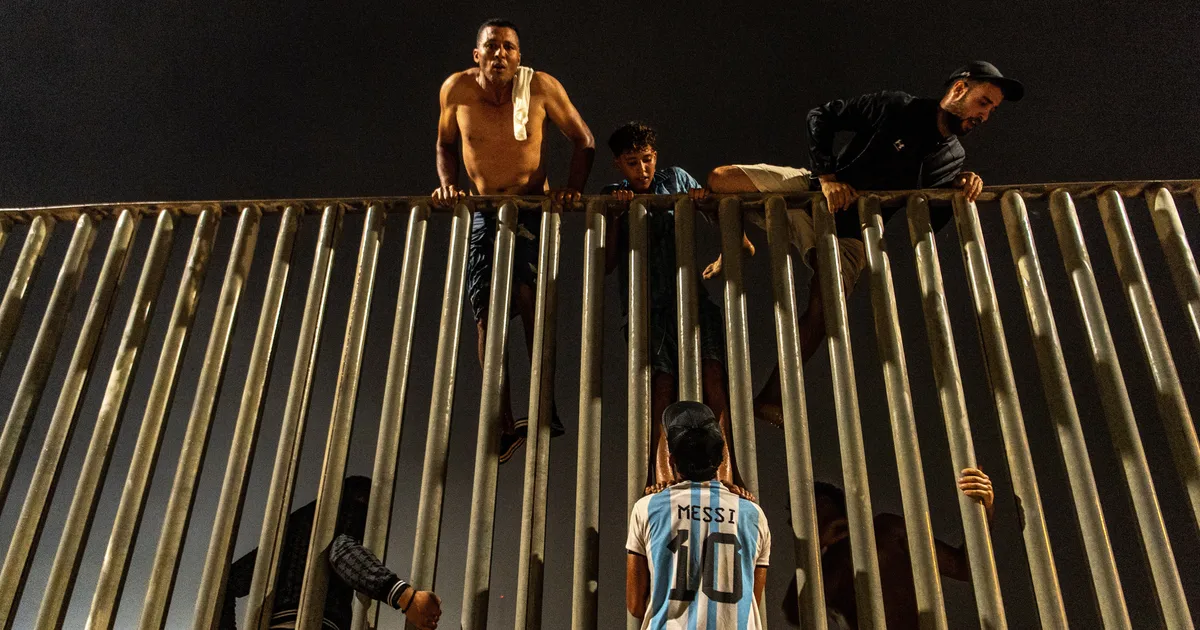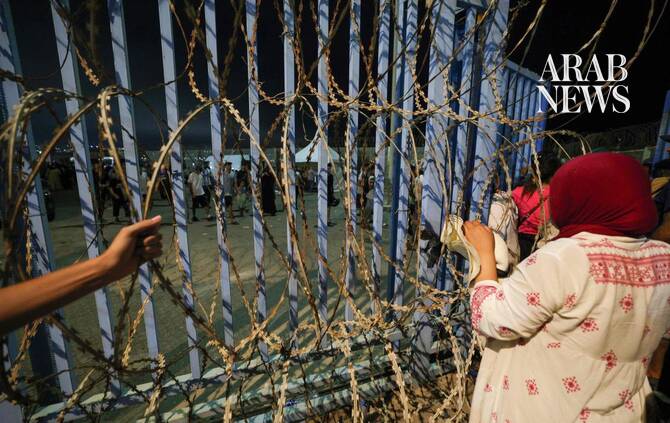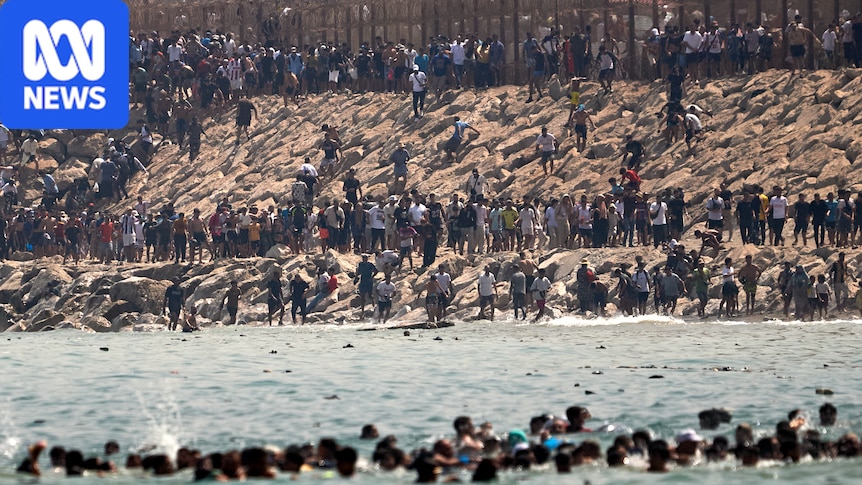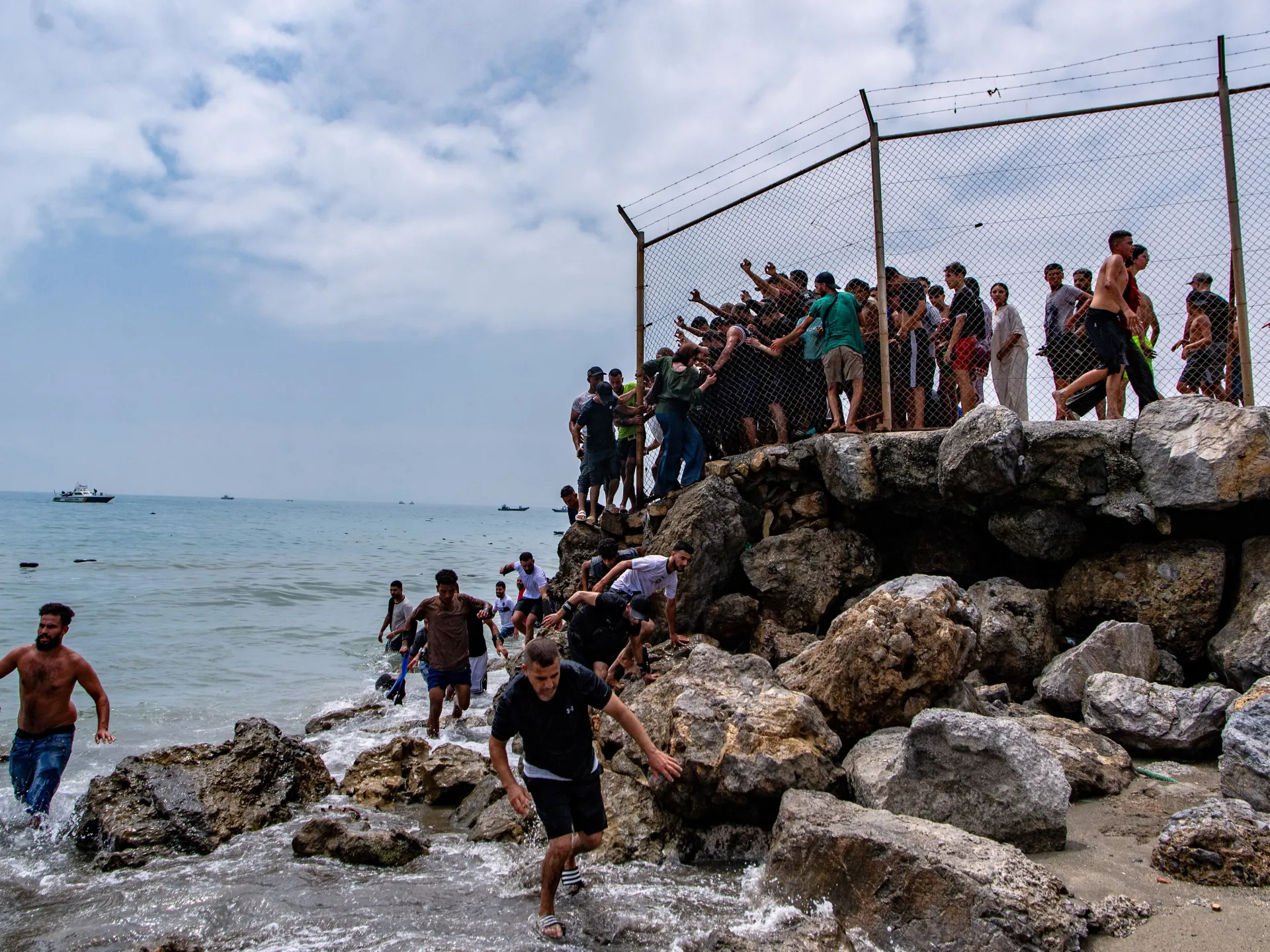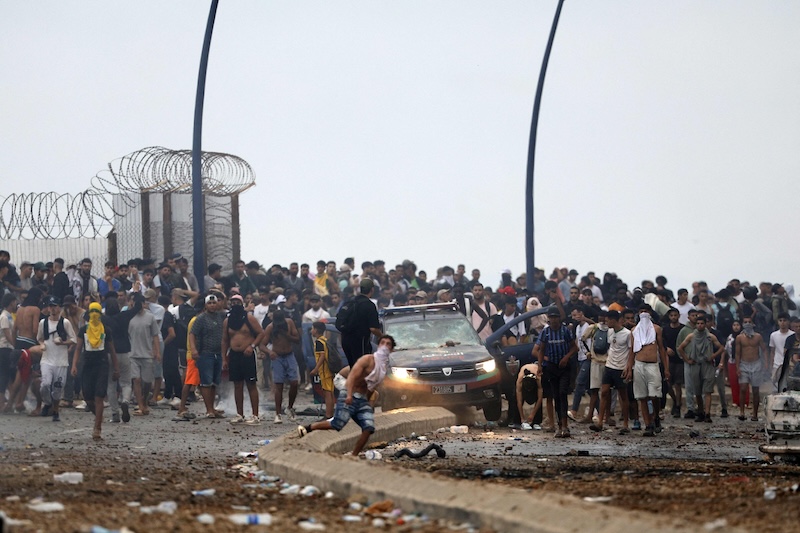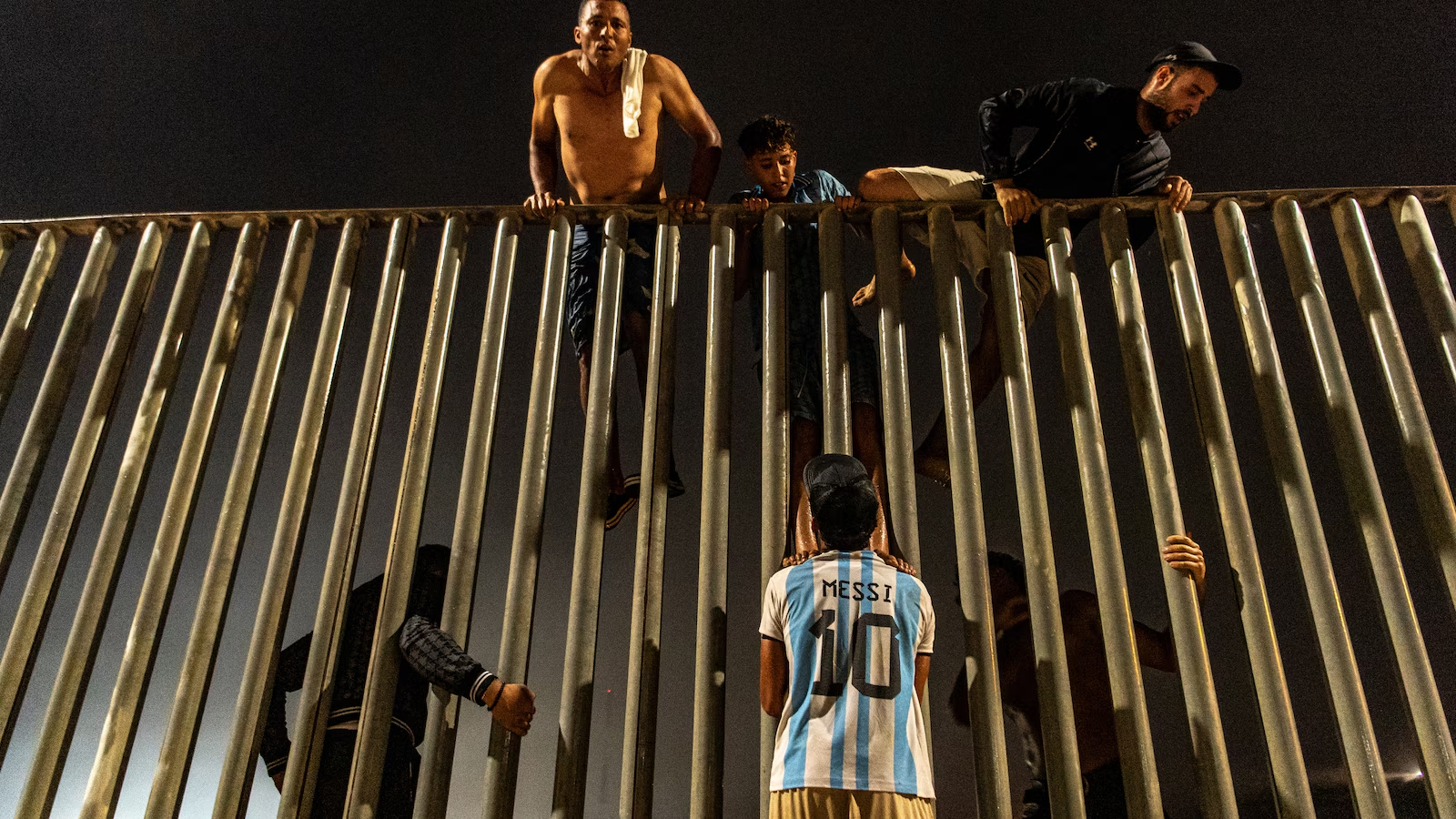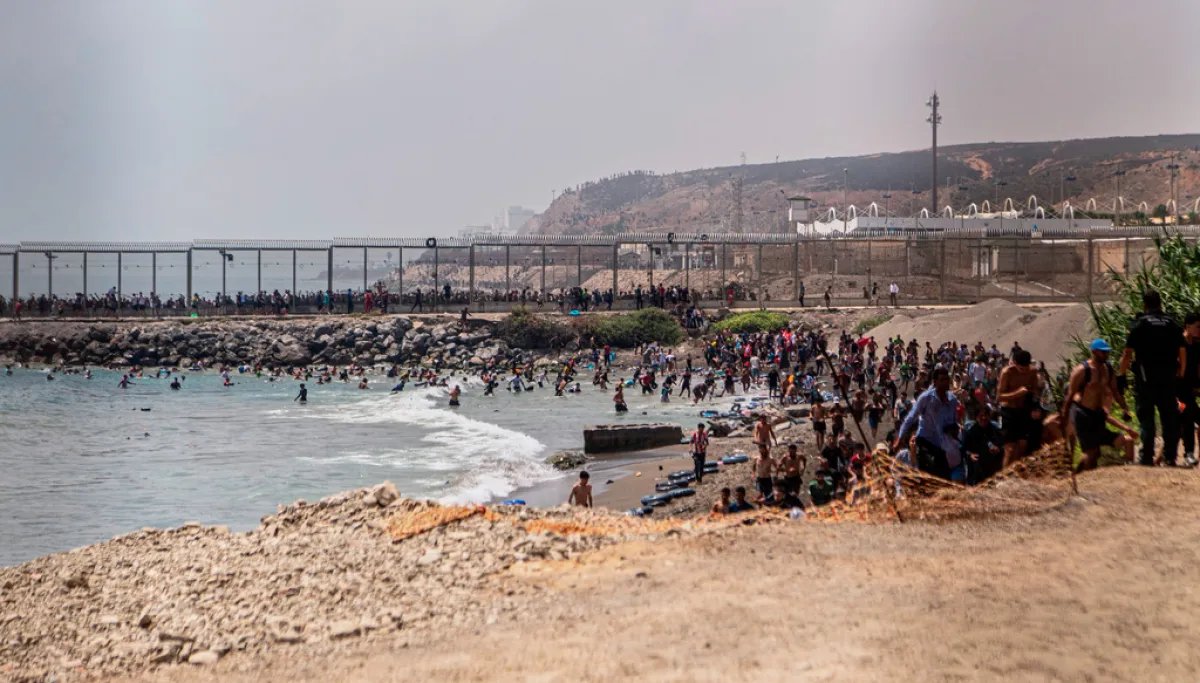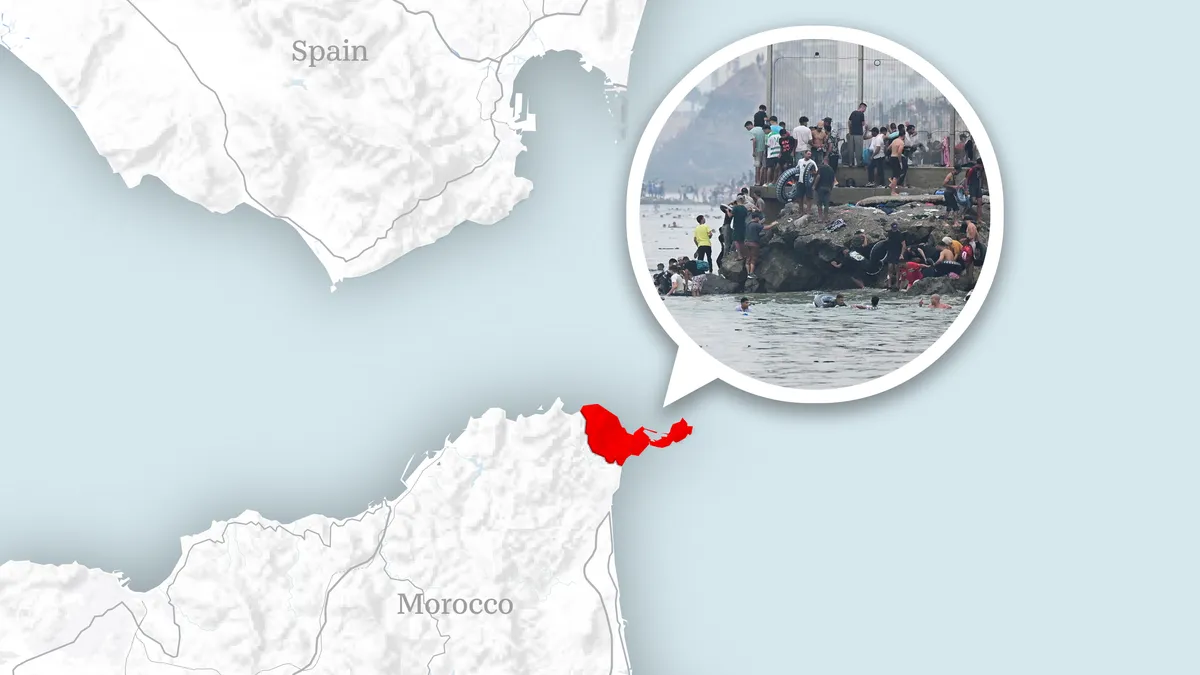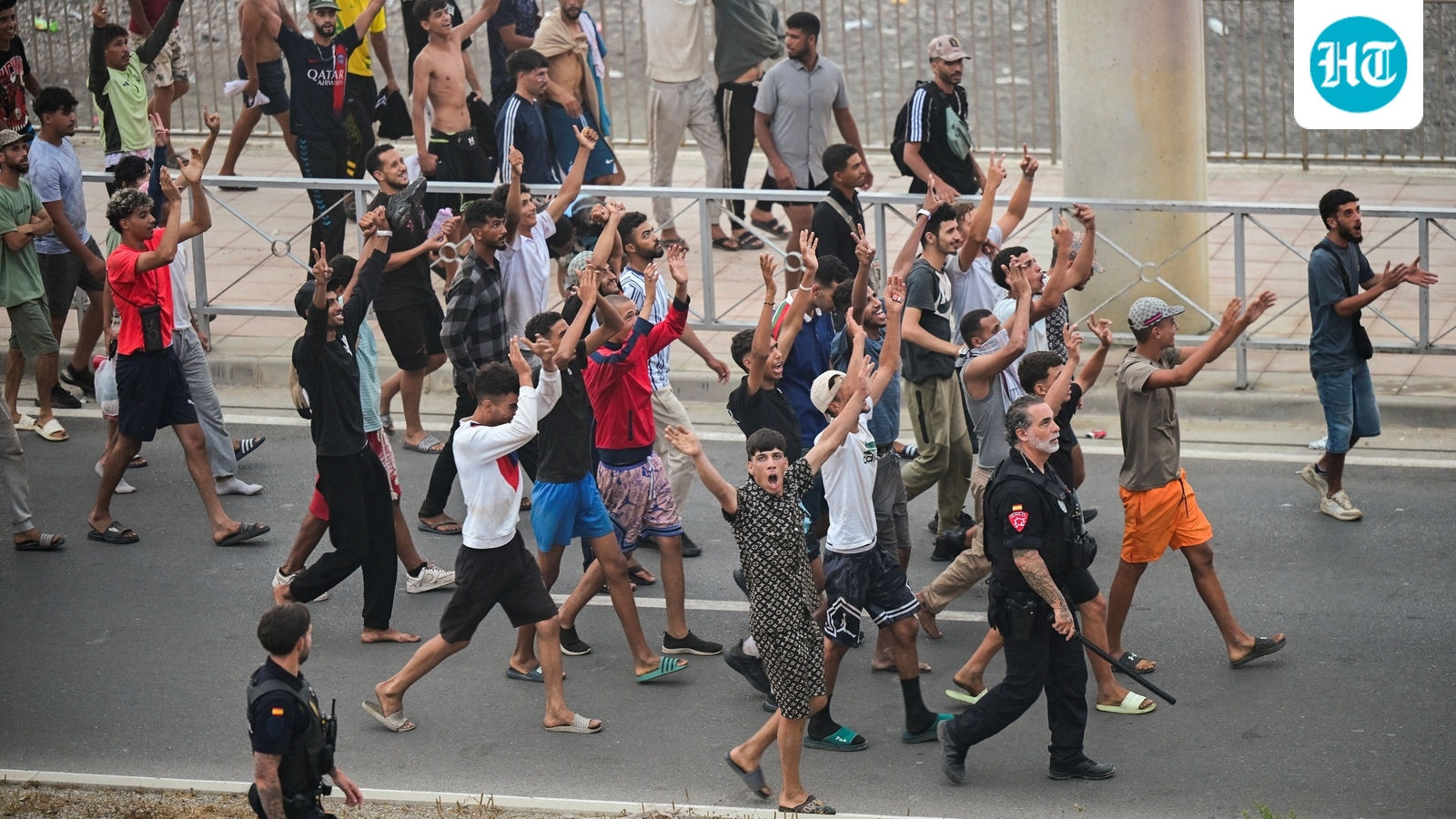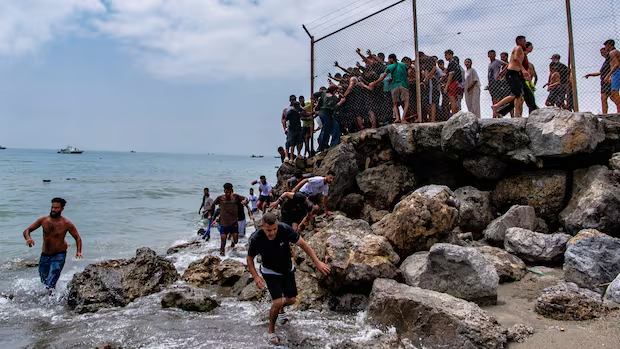
Authorities have described it as "absolute chaos," "unsustainable" and "a violation."At least 57 people have died after tens of thousands of migrants breached the Moroccan border into Spain's Ceuta enclave by land and sea, causing shock and division in Europe.Current estimates are some 60,000 people crossed into the Spanish enclave in North Africa on Thursday — and by Friday evening, that an estimated 48,300 had returned to Morocco.Many had arrived by sea, by swimming the five kilometres from the Moroccan town of Fnideq. Others attempted to cross from the nearby town of Belyounech, which is a shorter distance. "It took me two hours," a swimmer in a wetsuit told France 24, the French public broadcaster."It was very tough," said another swimmer.Some of those who crossed appeared to be children and unaccompanied minors, prompting a warning from a Moroccan NGO that taking children on irregular migration journeys puts their lives in danger.WATCH | Spain deploys military after thousands enter Ceuta:Spain deploys military after thousands of migrants enter CeutaJuly 30|Duration 2:03Spain deployed troops to reinforce police after thousands of migrants crossed from Morocco into the Spanish enclave of Ceuta in North Africa. The scene was reminiscent of 2021, when about 10,000 migrants entered the territory.Spanish authorities said 57 bodies had been recovered on the Spanish side of the border and that there could be additional casualties on the Moroccan side. They said some drowned and some were crushed while trying to climb the breakwater that holds the border fence. A Moroccan that Agence France-Presse only identified by his first name, Abdelhakim, said he walked 14 kilometres to reach the Morocco-Spain border, then attempted to cross by sea."I found myself completely submerged and saw two men die right before my eyes," he told the news agency. "That's when I backed away and remembered that I have two children of my own, and that I couldn't risk my life."Here's what we know so far about what happened, and why.What is Ceuta?Ceuta and the larger Spanish territory of Melilla, which is some 400 kilometres east, are located on the northern shores of the Mediterranean coast at the tip of Africa. Both autonomous cities belong to Spain and share the European Union’s only land borders with Africa.Both also periodically experience surges in attempted crossings by migrants seeking to reach Europe, but the scale of Thursday's rush appeared unprecedented.The city of Ceuta is an 18.5-square-kilometre peninsula with a population of about 83,000 people (so, when 60,000 crossed the border in a day, the population surged by 73 per cent). It's separated from mainland Spain by the Strait of Gibraltar.In Spanish possession since 1580, Ceuta is home to a mixed population of Christians and Muslims, and Spanish and Moroccan residents and day workers. Morocco does not officially recognize Ceuta and Melilla as Spanish territory, and often refers to them as occupied lands.Why is it a migrant destination?Spain is a main point of arrival into Europe for migrants seeking better economic opportunities or an escape from violence in their home countries.Ceuta and Melilla are heavily fortified, as the territories are seen as a destination for those trying to reach Spain from Morocco and other parts of Africa. Typically, many migrants who reach Ceuta or Melilla are immediately turned back, while others held in migrant shelters are processed and can apply for asylum in Spain.As NPR noted even back in 2014, "African migrants keep arriving by land and sea — straining public services — to reach an African city with European health care." Many of those interviewed on Thursday told various media outlets they had come to Ceuta in hopes of finding work.Moroccan Fatima Zahra told AFP she'd attempted the crossing because she wanted to try her luck with a better job, adding she works "under appalling conditions." "Migration is about improving our lives. We agreed we would try the idea of crossing and trust in Allah," Ayoub El Abyad told Reuters, after completing the journey by hitching rides with two drivers. PHOTOS | Thousands cross into Ceuta:Why the rush Thursday?It's not immediately clear what caused the rush for the border, although authorities in Ceuta and Madrid have linked it to a recent decision by the Spanish Supreme Court that ruled migrants arriving by sea could not be summarily deported, unlike those who cross by land or climb the border fence. Spanish Prime Minister Pedro Sánchez blamed human smugglers.At least 57 migrants dead after thousands breach border into Spain's Ceuta enclave'Absolute chaos' as thousands of Moroccan migrants breach Spain's Ceuta border"It appears that this interpretation of the Supreme Court’s ruling spread like wildfire over the past few hours through the networks of human trafficking organizations, triggering the kind of mass surge we witnessed yesterday," Sánchez said. That said, some activists in Morocco argued that most migrants would have been unaware of such a legal decision. According to Spanish broadcaster RTVE, the ruling spread on social media on Thursday, which reportedly encouraged people to try to enter Spain by swimming to Ceuta. Hespress, an English-language Moroccan news site, reports that a public Facebook group with 20,000 members shared maps, tips and even where to get diving fins to help with the crossing.But AFP says it may have started with rumours of a rare border opening."I woke up in the morning and heard that Ceuta had opened," Fatima Zahra told AFP. "Suddenly they heard that the borders were open and that some young people had crossed, so everyone ended up here," said another Moroccan named Karim.According to local media in Morocco, videos circulating online show people carrying elderly family members on their backs, or their babies into the sea. What else could be behind sudden surge?As Reuters points out, while the surge was sudden, it was also years in the making. In Morocco, where deep-seated anger toward poor public services and rampant poverty spilled over into major protests last year, many young people spend years waiting for a chance to cross the border in search of better prospects. Migrants from Morocco arrive at the Spanish border in Ceuta on July 31, 2026. (Fabian Bimmer/Reuters)A quarter of Moroccans aged 15 to 24 are not in education, employment or training, official data shows.Calm seas at this time of year make swimming a more feasible option for migrants, Mauricio Valiente, director of Spanish refugee charity CEAR, told Reuters. In a post on X, Spain's civil police association said there had been too few officers in place to monitor the fence during the surge on Thursday, making them unable to stop the rush. Meanwhile, Matteo Villa, a migration researcher at the Italian Institute for International Political Studies, told the Guardian that politics was most likely involved, noting that a recent trip by the Spanish prime minister to Algiers likely angered a lot of Moroccans.Villa said it's possible Morocco may have loosened the border to show it has "the upper hand.""The events ... serve as an unmistakable stress test for Mediterranean power dynamics," Amine Ayoub, a fellow at the Middle East Forum who lives in Morocco, wrote in Ynet News.WATCH | 'Absolute chaos':'Absolute chaos': Spain to deploy military after thousands of migrants enter Ceuta enclave6 hours ago|Duration 3:34The Spanish government has said it will deploy its military to restore order at its border with Morocco in Ceuta after thousands of migrants streamed into the small Spanish territory. The head of Ceuta's Civil Guard union described the sudden border breach as "absolute chaos," adding that the border has "totally collapsed."What was the response?Spain deployed its armed forces and additional police to restore order in Ceuta. Spanish authorities said they would try to expel those who had entered illegally as quickly as possible.On the Moroccan side of the border, security forces beat back crowds with batons and tear gas at the gates to Ceuta, trying to prevent more from storming across. Migrants from Morocco also attempted to cross into Melilla, where they clashed with police. By Friday afternoon, most migrants were trying to leave Ceuta. Migrants walk toward the border with Morocco to leave Ceuta, Spain, on July 31. (Fabian Bimmer/Reuters)Why did so many go back to Morocco?Rachid Sbihi, who leads a local workers' association representing Civil Guard officers, told the Associated Press that thousands of migrants, including unaccompanied children, were left sleeping in parks and on sidewalks, while others roamed the streets aimlessly. Several hundred people could be seen returning to Morocco through border posts and holes in the fence, with some saying they could not find food or shelter in Ceuta.Moroccan media reported that several people who returned have shared videos online describing two days without water and have to sleep outside. Some returnees have also reportedly said they expected to keep going to mainland Spain, but instead found themselves stuck."Honestly, I don't even know why I came. And now I'm going back," a young Moroccan man, who said he was from Tangier, told Reuters. "There was no food inside Ceuta and we were kicked out badly by the [Spanish] army," said another returnee identified as Ayman, 20, a hairdresser. That said, multiple media outlets reported that migrants were still trying to enter Ceuta on Friday by swimming around the breakwater.Migrants on the Moroccan side of the border in Fnideq wait to try to cross to the Spanish enclave of Ceuta on July 31. (Stringer/Reuters)
What is Ceuta, and how was the Spanish enclave near Morocco breached by 60,000 migrants? | CBC News
Current estimates are some 60,000 people crossed into the Spanish enclave in North Africa on Thursday — and by Friday, that an estimated 48,300 had returned to Morocco. Here's what we know.
1,548 words~7 min read