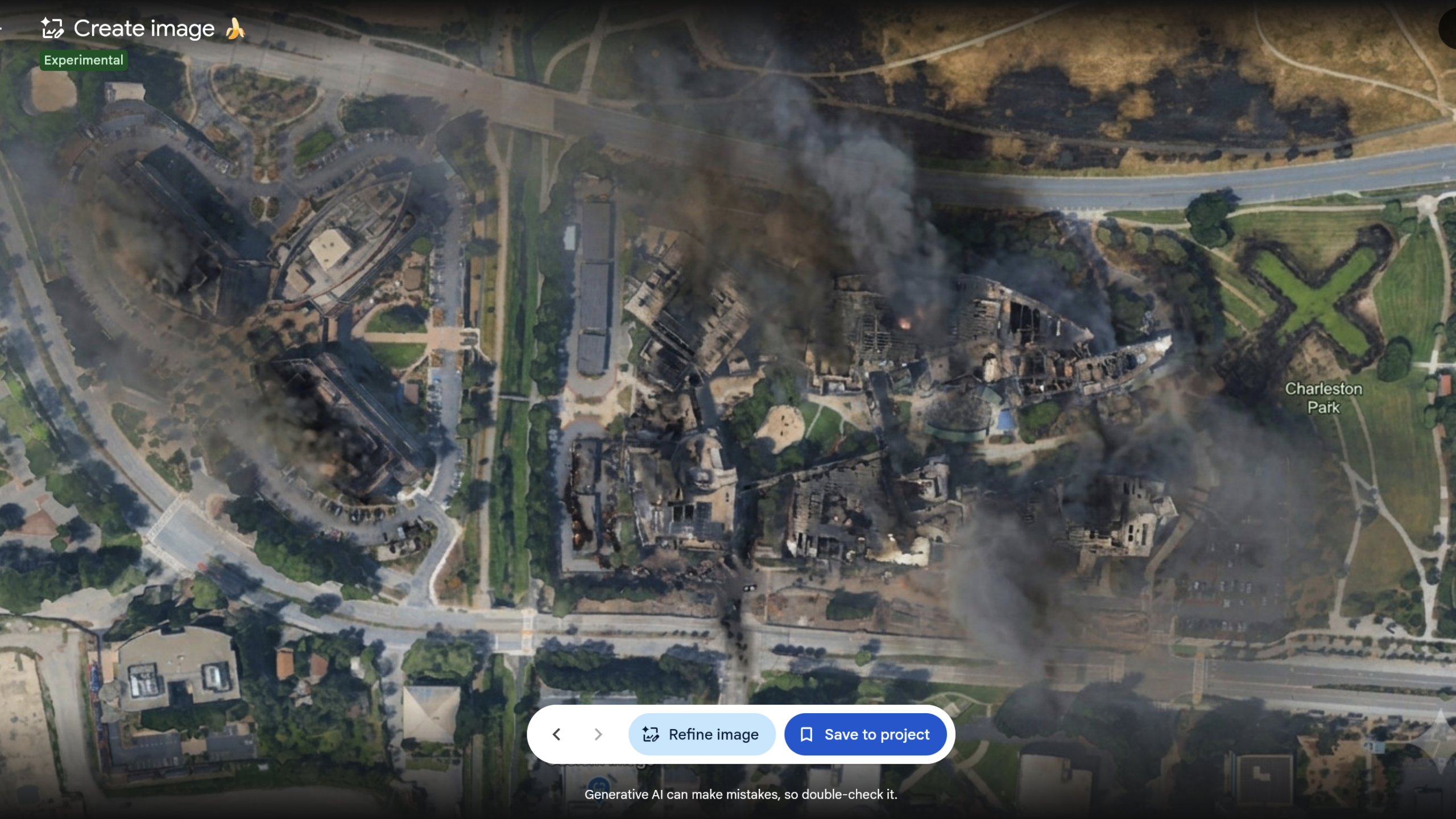
Previous Ars testing of Google’s SynthID system has shown that Google’s digital watermark can persist despite substantial image edits and data loss. However, Ars also encountered the issue of SynthID limiting image checks to about 10 per day.
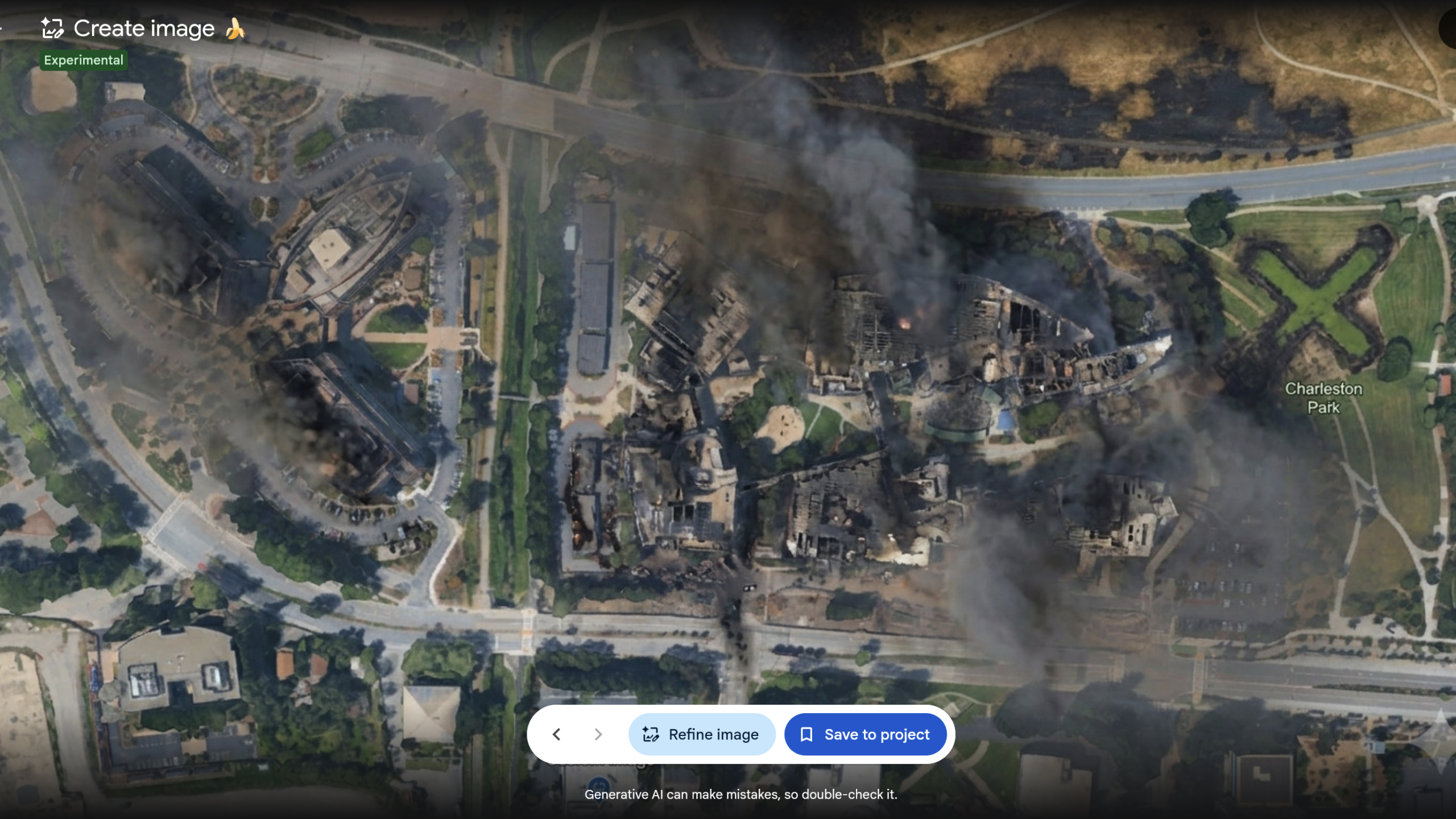
When Ars prompted Google’s Gemini app to run a SynthID check on several AI-modified images generated within Google Earth—before Google removed the Google Earth feature—Gemini responded that it had “detected digital watermarking indicating that part or all of this image was generated or edited using Google AI tools.”
But Ess questioned why Google’s policy on preventing the creation of AI-generated images on harmful topics had not stopped him from depicting scenes such as a hospital with a bomb crater in Gaza. He also expressed skepticism about primarily relying on Google’s SynthID watermarking system and Google’s AI tools for verifying whether an image is AI-generated.
“Fakes do not travel as clean files with their credentials intact,” Ess wrote. “They travel as screen recordings, re-encodes, screenshots of screenshots, filmed off somebody’s phone in a hurry.”
Indeed, Google’s SynthID was unable to provide any image verification when Ars used a smartphone camera to take a photo of an AI-altered image made using the Google Earth feature.