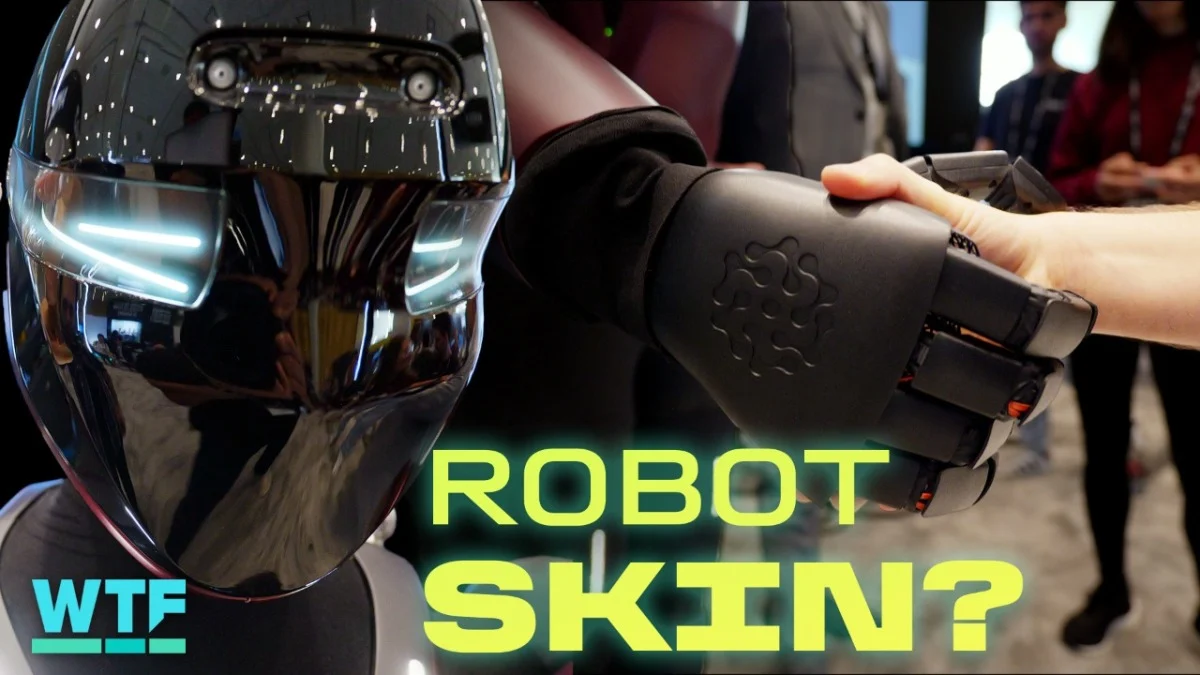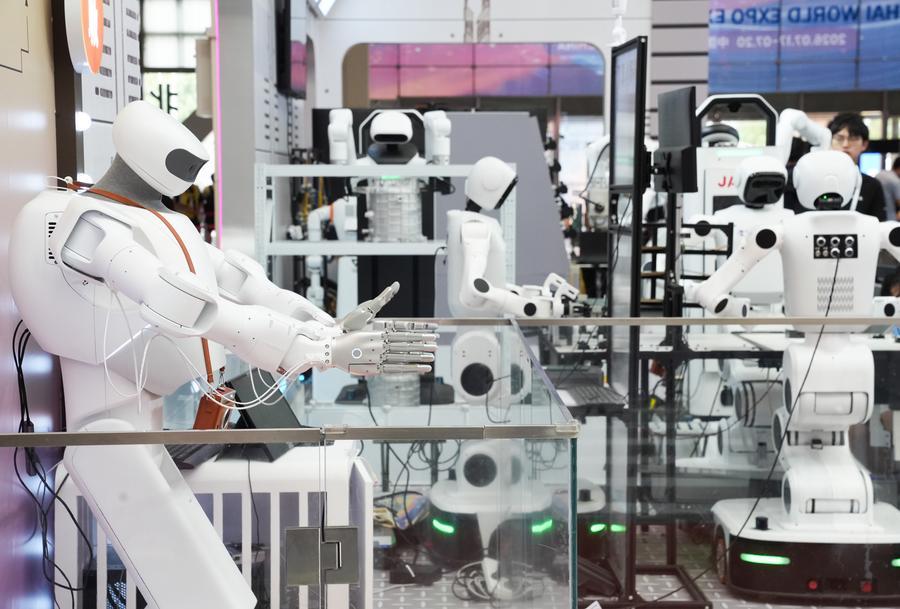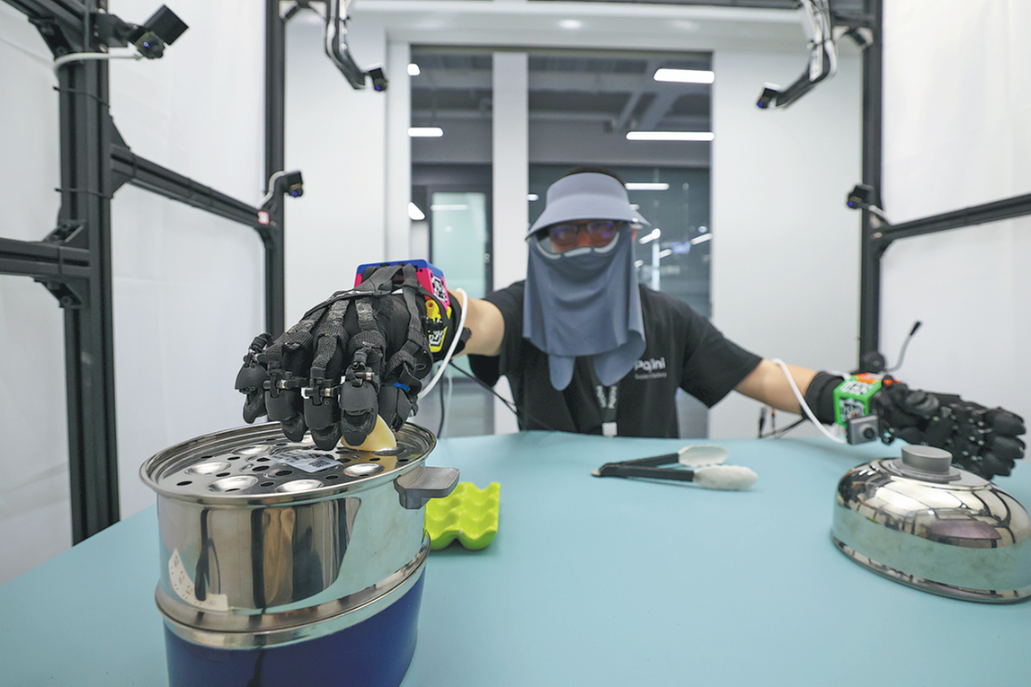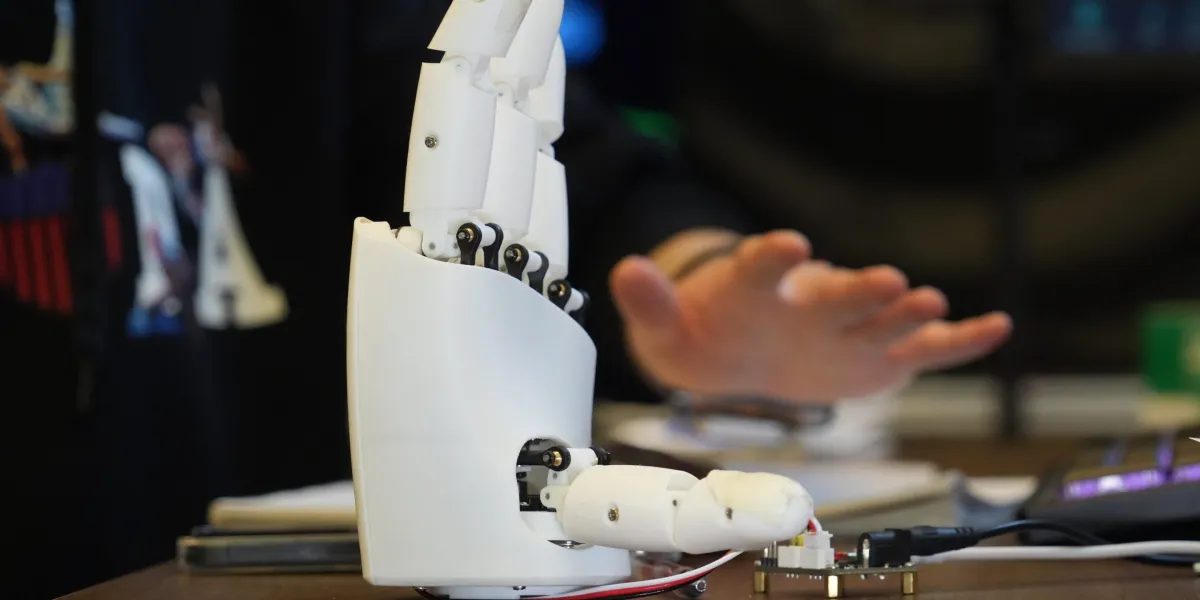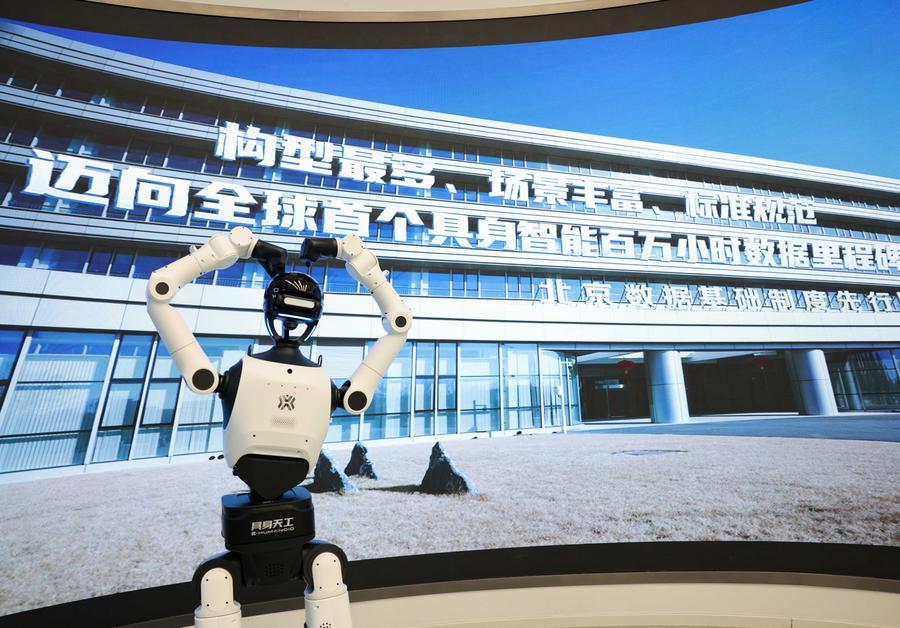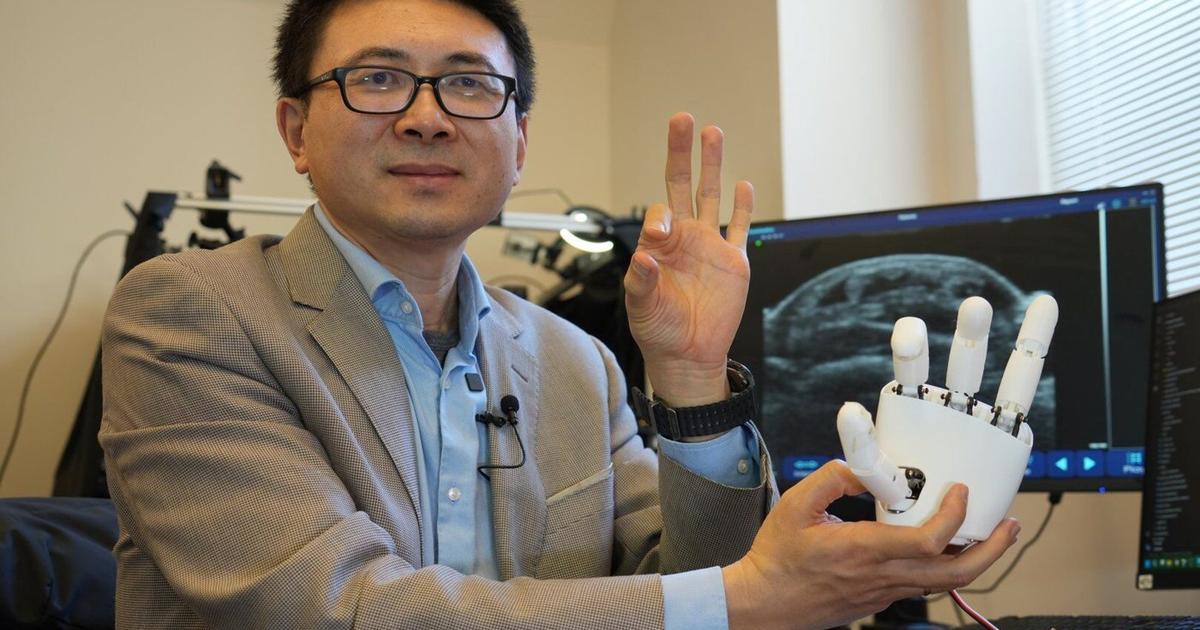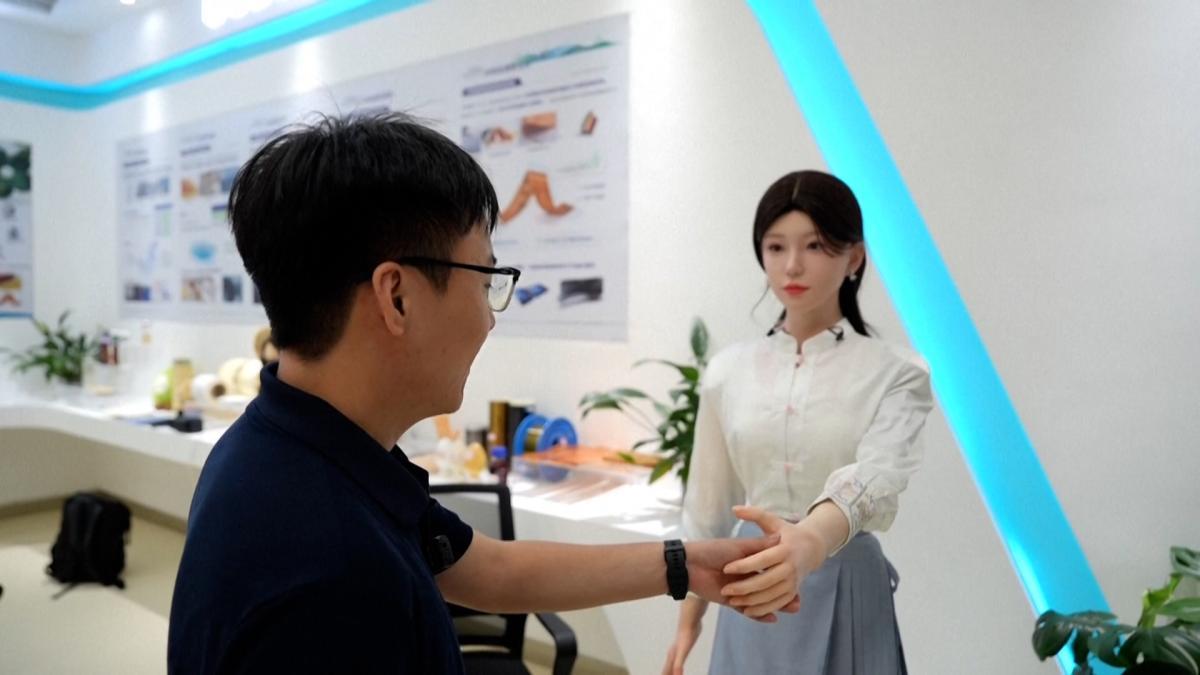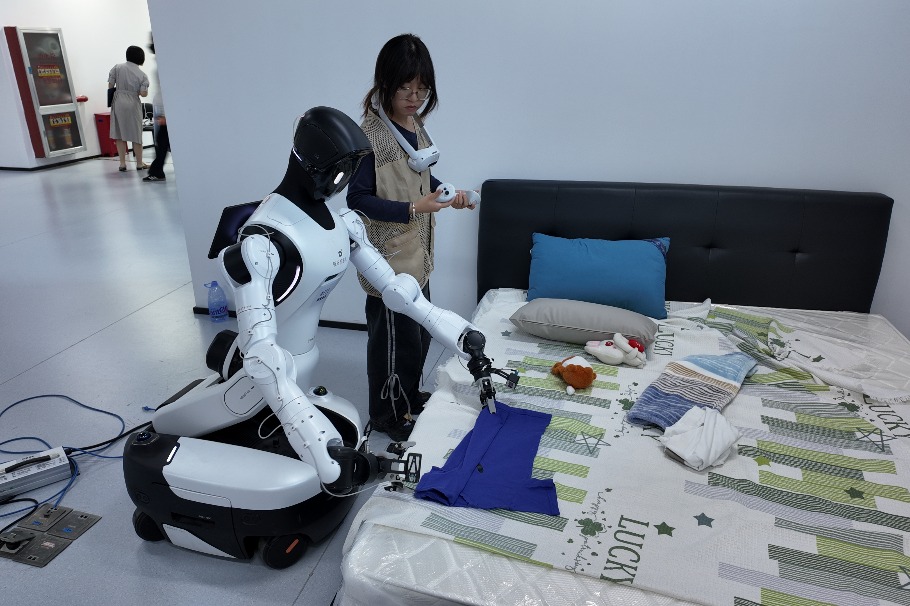
A humanoid robot being trained at the Institute of Flexible Electronics Technology of THU, Zhejiang, in Jiaxing, Zhejiang province, on July 30, 2026. [Photo by Song Yi/chinadaily.com.cn]
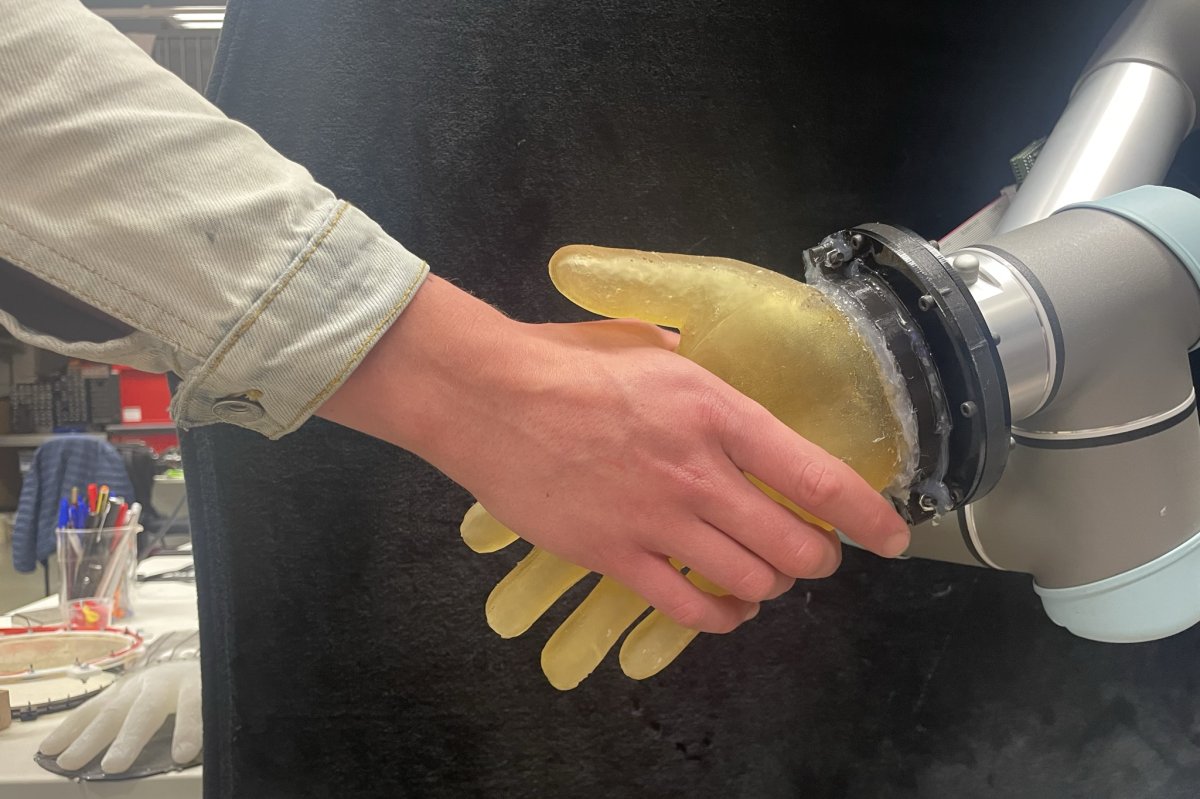
A form of flexible electronic skin developed by the Institute of Flexible Electronics Technology of THU in Zhejiang could help humanoid robots move beyond basic motion by giving them a sense long missing from AI training: touch.
Humanoid robots need large volumes of real-world interaction data to perform complex tasks. Yet most model training relies heavily on visual information and motion trajectories, leaving robots unable to fully perceive the physical properties of the objects they handle.
The institute's flexible tactile sensing terminal is designed to close that gap. Made with its integrated flexible-device manufacturing technology, the electronic skin is thin, stretchable and able to conform to curved surfaces such as robotic fingertips and arms.
Once attached, the sensors allow a robot to detect pressure, temperature and texture in real time. Combined with force-control algorithms, the system delivers force feedback at a frequency of 1 kilohertz and a resolution of 2 percent, enabling the robot to adjust its grip continuously rather than rely on preset movements.