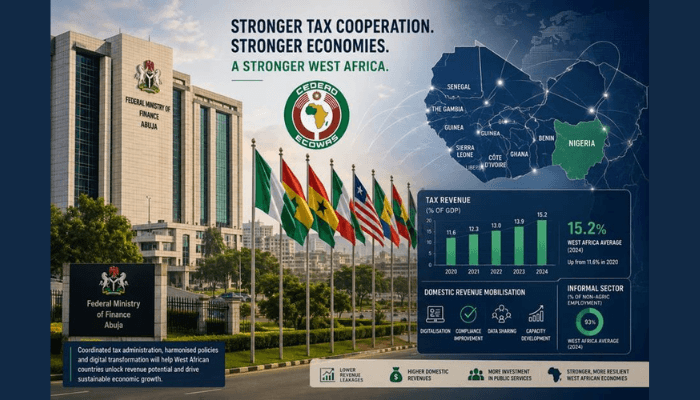
Nigeria’s current fiscal realities demand not only an aggressive drive to increase government revenues but also a deliberate effort to reduce the cost of generating those revenues. In recent months, public discourse has focused largely on expanding the tax base, improving tax compliance, and diversifying government revenue sources.
These are undoubtedly important objectives. However, far less attention has been paid to a fundamental question of public financial management: how much should the government spend to collect its own revenue?
This question has become increasingly significant because Nigeria currently operates one of the most generous cost-of-collection regimes among developing and emerging economies. Three major revenue-generating agencies namely the Nigerian Revenue Service (NRS), formerly the Federal Inland Revenue Service (FIRS); the Nigerian Customs Service (NCS); and the Nigerian Upstream Petroleum Regulatory Commission (NUPRC) are statutorily permitted to retain fixed percentages of the revenues they collect to finance their operations.
The NRS retains 4% of non-oil revenues, the NUPRC retains 4% of royalties, rents and other revenues from the oil and gas sector, while the Nigerian Customs Service retains as much as 7% of customs duties and levies.